
When you’re at the bookstore surfing for a good read, you’re often trying to get a sense of the tone and texture of a book. This is a big part of a story’s appeal: not just what happens or who it happens to, but how the story is told.
First impressions last. The first few lines of your story, regardless of the medium, are some of the most important. Each stage of your story from the exposition up to the ending resolution matters a great deal, but no one will get there if the story doesn’t draw them in first.
The hook is a literary device that captures your audience’s attention and makes them want to stick around to see what comes next. I detailed different types of hooks with some tips and mistakes to avoid in another post.
To better understand how you can craft your own masterful hook, in this article I’ll take a closer look at 3 key elements of a great hook and go over a few more examples. Finally, I’ll give you a Story Weapon you can use to cast your hook with precision.
A strong hook draws readers in by creating intrigue, establishing a clear voice and tone, and hinting at the story’s deeper themes, all within the opening lines. The most effective hooks act as a microcosm of the entire story and are often refined only after the full draft reveals what the story is truly about.
The 3 key elements
Creating intrigue
It’s like the age-old tradition in performance art: always leave them wanting more. Audiences aren’t won by artists who give away all their secrets, especially from the start. It’s mystery and suspense that brings someone in from the door to their seat, and finally to the edge of that seat.
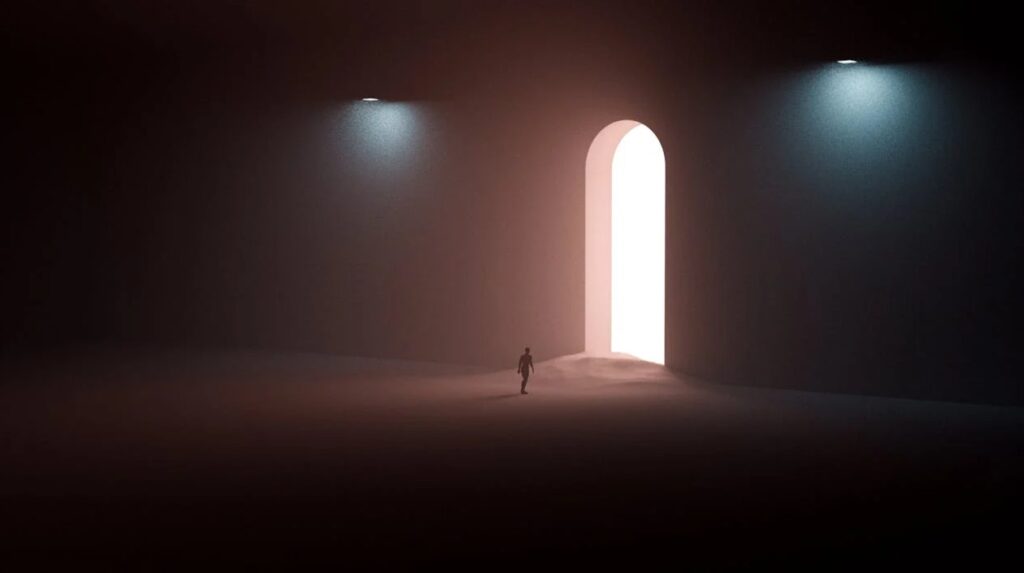
When you’re writing your own hook, think of it as a chance to flirt with the reader. The art of flirtation isn’t based on being fully forthright, but unpeeling the layers of yourself slowly. Show the other person that there’s more to you than meets the eye.
The opening line of your book is your chance to introduce a question that needs answering; the only way the reader will get a satisfying answer is to keep reading.

Style and tone
Make it clear to the reader the style and tone of the book they’re getting. The voice of the narrator, whether it’s droll or colorful, should ring out in the first few lines. From there, the reader can make a judgement call about if it’s the type of story that they want to approach.
A story about catching a murderer, for example, could be gruesome, scary, charming, funny, or even erotic. Don’t cast your net too wide, however. The more specific and clear the voice is in the hook, the more appealing it will be.
Even if you manage to piss off the reader in the first few lines, there’s a chance they’ll continue through the first page at least. A bold, abrasive narrator can still be effective as they provoke a response rather than leaving the reader indifferent. Readers might continue out of curiosity or if they feel challenged. However, anger alone isn’t enough to sustain interest.
If the irritation feels shallow or repetitive, readers are more likely to put the book down. The key difference is purpose: if the anger serves the character, theme, or intrigue, it can be a powerful hook. If it feels careless or too manipulative, it risks pushing them away before you’ve had time to develop the story further.

Establishing the theme
The best opening hooks, as you’ll see in some examples below, manage to act as a microcosm of the whole story. There’s a reason they stick out in our memory. Though they may not mention the plot itself or even the characters that really matter, there’s something about the hook that encapsulates what the story is saying.
The first few words, the first sentence, or the first paragraph should be a snapshot of what’s to come. You could even say that the best hooks become iconic symbols for the story that follows.
Let’s take a look at some examples to see how other writers have managed to pull off this magic trick.
Examples of opening hooks
One Hundred Years of Solitude by Gabriel García Márquez
“Many years later, as he faced the firing squad, Colonel Aureliano Buendía was to remember that distant afternoon when his father took him to discover ice.”
This checks several boxes for a great hook. There’s mystery as we wonder why he’s facing a firing squad, and again with the mention of discovering ice. It immediately invites the question: “What does that mean?”
The voice is clear; it’s a bit detached with a lean to posterity.
And it begins to touch on themes addressed throughout the story — solitude, fate, memory, cyclical time, magical realism. It references a memory from some distant afternoon in Colonel Aureliano Buendía’s childhood where finding ice was a world-changing event for a young boy.
Though a reader might not consciously note these elements at first glance, the combination creates a feeling and that feeling is what invites them to keep going.
1984 by George Orwell
“It was a bright cold day in April, and the clocks were striking thirteen.”
Orwell leans heavily on the mystery in this one. The voice isn’t as clear, but it hardly matters. The idea of a clock striking thirteen is enough. This slight absurdity and an invitation to a world where clocks have more than twelve numbers–this is the wriggling bait on the hook.
The Princess Bride by William Goldman
“This is my favorite book in all the world, though I have never read it.”
One of the most unique aspects of this book is the story within a story; it’s consciously an adventure romance and a commentary on books of the sort. The comments from Goldman about the fictional author of the book persist throughout the text, and we get our first taste right at the start.

The Haunting of Hill House by Shirley Jackson
“No live organism can continue for long to exist sanely under conditions of absolute reality; even larks and katydids are supposed, by some, to dream. Hill House, not sane, stood by itself against its hills, holding darkness within; it had stood so for eighty years and might stand for eighty more.”
The idea of a house itself being insane is explored throughout the text, and the insanity seems to spread to the people that walk within. This is how a hook can encapsulate the theme; it’s only after we finish the story that we can look back and appreciate the hint we were given.
Lolita by Vladimir Nabokov
“Lolita, Light of my life, fire of my loins. My sin, my soul. Lo-lee-ta: the tip of the tongue taking a trip of three steps down the palate to tap, at three, on the teeth. Lo. Lee. Ta.
She was Lo, plain Lo, in the morning, standing four feet ten in one sock. She was Lola in slacks. She was Dolly at school. She was Dolores on the dotted line. But in my arms she was always Lolita.
Ladies and gentlemen of the jury, exhibit number one is what the seraphs, the misinformed, simple, noble-winged seraphs, envied. Look at this tangle of thorns.”
Another example that has it all and does it all. This is perhaps the textbook example. The reader can clearly hear the voice of the narrator and gets a hint at what’s to come. The mystery of a tangle of thorns literally calls for you to step into it.
The theme is referenced in his characterization of the seraphs (or angels) as misinformed and simple. The idea that they couldn’t comprehend the “glory” of his sin; that’s the heart of this novel.
Your story weapon: Perfecting your hook
Now comes the hard part. If you’ve already got an opening to your book, using the guidelines here can be a helpful way to approach the editing process.
Spending time on the hook is a kindness to the story you wrote. It doesn’t matter if your story is a slow burn; this is your chance to light the match.
Think of your story as a close friend you’re introducing to someone else. How would you express your affection for that person? If you can feel the same for your story, you’re sure to do it justice in the hook.
The key to remember is that perfecting your hook is an iterative process, and that it is only by understanding the fullness of your ending that you can create a dramatic hook that sets it up in a meaningful way.
Ready to put these ideas into practice? Revisit your opening pages with fresh eyes, experiment boldly, and see how a sharper hook can transform the way readers enter your story in one of my next workshops: The 90-Day Novel, The 90-Day Memoir, Story Day