



Intertextuality reminds us that no story exists in isolation; every piece of writing echoes, responds to, or transforms the stories that came before it.
One of the best parts of writing is that you do it alone, but you’re not alone. It’s a bit like being a singles tennis player. You stand on the court alone, far from your peers and your rivals, far from your heroes. Even though every stroke of the racket or stroke of the pen is made in relative solitude, the very act is social. You’re joining a community of writers; there are countless others out there.
The topic for this article is intertextuality, a relationship between stories with each author adding something new to the conversation. In this article, I’ll explore different options to establish that relationship, show how writers can intentionally use intertextuality to deepen meaning and engage with the stories that shaped them, and I’ll offer you a Story Weapon to use this skill in your own writing.
This blog explores intertextuality as the social fabric of writing, illustrating how authors deepen their work by echoing, inverting, or parodying existing stories. By viewing literature as an ongoing global conversation, it encourages writers to intentionally engage with their influences to transform old tropes into original contributions.
Flipping a story
One way to intentionally create a relationship between your story and another is to flip a story that you love on its head. This is like the professional version of fanfiction. A great example of inverting a story is Jorge Luis Borges’ short story The House of Asterion. It’s a retelling of the Minotaur and Theseus story — originally a Greek myth. You’ve probably heard some version of this before. The hero enters the labyrinth to slay the monster inside and finds his way out with a magical ball of thread. In doing so, he ends the horrific tradition in the land of Crete of sacrificing seven young men and seven young women to the half-bull, half-man monstrosity.
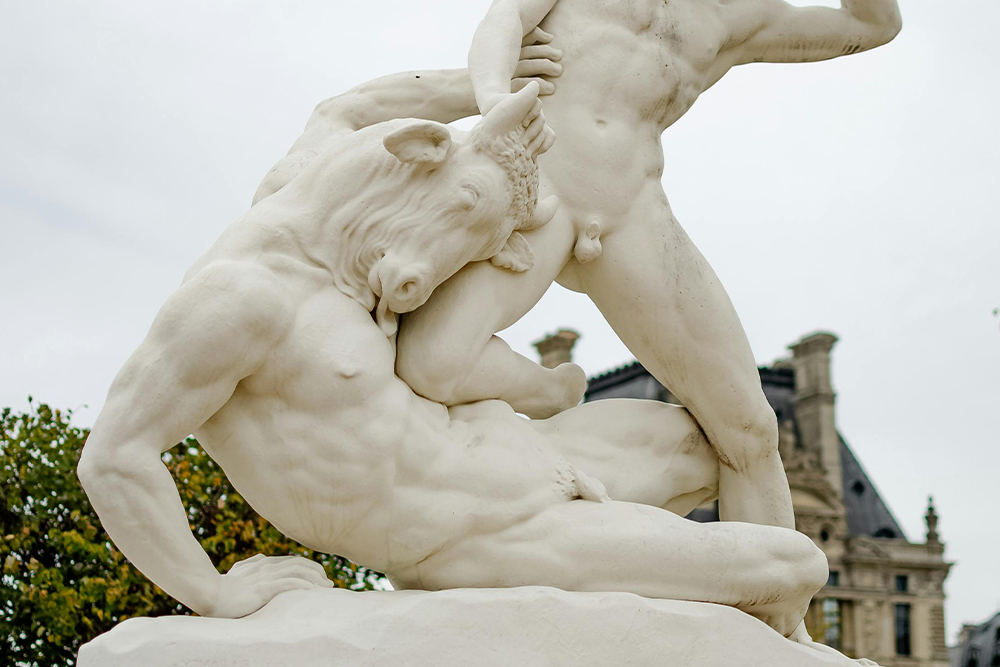
In The House of Asterion, the story plays out a bit differently.
For one, Borges gifts the Minotaur with the soul of a philosopher. The story is told in the first person perspective, with the reader unaware of the narrator’s identity until the very end. The narrator muses upon his life of solitude in a strange house, making comments like: “The fact is that I am unique … Annoying and trivial minutiae have no place in my spirit, a spirit which is receptive only to whatsoever is grand.”
Secondly, the description of the sacrifice is different. The narrator describes some of the ritual as:
Nine men enter the house every nine years so that I may deliver them from all evil. I hear their footsteps or their voices in the depths of the galleries of stone and I run with joy in search of them. The ceremony lasts a few minutes.
The third difference in this version of the story is the relationship between the Minotaur and Theseus. Rather than fearing the hero, the Minotaur is waiting for him. Indeed, Theseus is the balm to his wounds. The Minotaur claims: “The solitude does not pain me because I know that my redeemer lives, and in the end he will rise above the dust.”
The end is then a tragic one; to the reader who isn’t aware of the story’s intertextuality with the myth of Theseus, it would come as a great shock. The final line of the story is: “‘Would you believe it, Ariadne?’” said Theseus. ‘The minotaur hardly put up a fight.’”
The main difference between this sort of intertextuality and straight-up fanfiction is the way in which Borges explores the one-dimensional nature of the original myth. His short story does more than retell the tale, it offers an argument about the idea of hero worship and the deep relationship between the slain and the slayer. It offers the ugliness of monsters as something that should arouse sympathy, rather than horror. The delight in comparing the two stories, the light the later tale sheds on the former, and the space in between them — these are the joys of intertextuality.
“No poet, no artist of any art, has his complete meaning alone. His significance, his appreciation is the appreciation of his relation to the dead poets and artists. You cannot value him alone; you must set him, for contrast and comparison, among the dead.
– T.S. Eliot
A greater conversation
Some stories reference ongoing debates in the public sphere and deal with questions humanity is still exploring. When that’s the case, intertextuality provides a way for an aspiring author to join the conversation. Their argument takes the form of a story and the way that they engage certain themes offers a way to write back to another author, who may have been thinking about the same ideas in a previous century.
One such story is John Steinbeck’s East of Eden, which serves as an allegory for the story of Cain and Abel (as well as giving us a great James Dean performance in the 1955 film version).
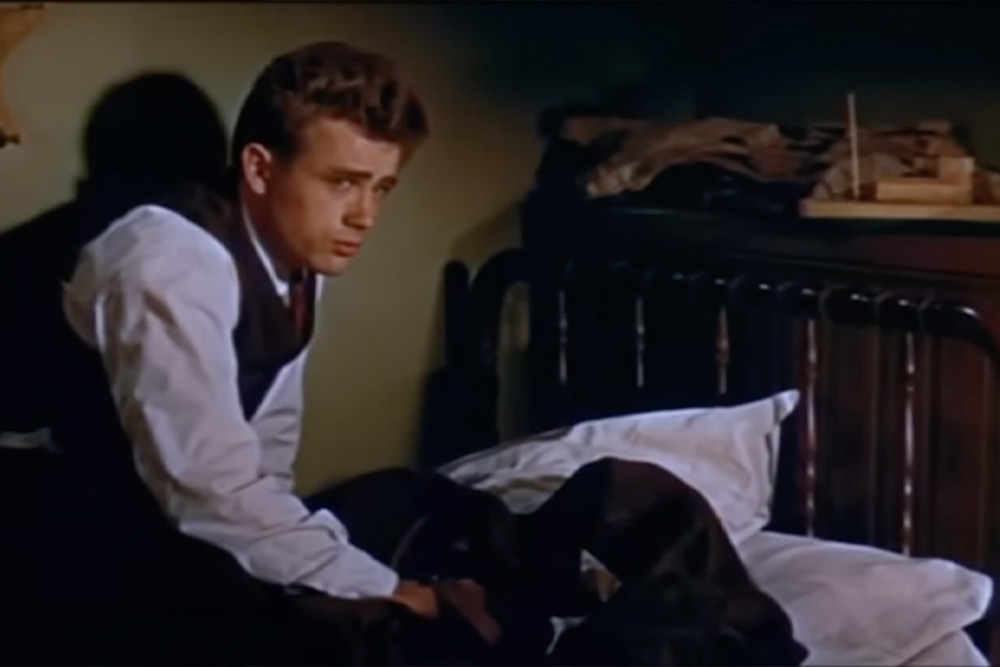
If you’re interested in intertextuality, this book has to be first on your list. The reason it’s such a great example is that Steinbeck is very clear about the conversation that he’s entering. He also does so with great reverence for the original story of Cain and Abel — after all, it is a story from the Bible.
The characters in the story debate and discuss the original in great detail. They don’t, however, comment on the way in which their own lives mirror the original. There are two sets of brothers who mirror Cain and Abel: Charles and Adam, and Adam’s sons Caleb and Aaron. You don’t have to look too hard to notice the intertextuality there. Just in case you don’t sense it, Charles is marked with a visible mark on his forehead in the story — which for him would be a “mark of Charles” in lieu of a mark of Cain. The title itself references the original story, which includes the line “So Cain left the Lord’s presence and settled in the land of Nod, east of Eden.”The difference between this sort of intentional intertextuality and the case of Borges’ inversion of the myth of the Minotaur is subtle but important. In the original myth of the Minotaur, there isn’t really a conversation occurring. The story is part of many myths involving the hero Theseus: the imagery of the labyrinth, the thread, and the mysterious monster have echoed throughout the world of art since its creation. In the story of East of Eden, there’s a conversation and a question that exists in the original. The question is: “Am I my brother’s keeper?” The question is such a great one that you can look at Steinbeck’s masterpiece as just one man’s answer.
Cultural echoes and transformations
References
Not all examples of intertextuality are so involved with another story. One simple and great way to weave your text into the tapestry of literature is to simply accept that your fictional characters might make reference to other works of art, just as people do in real life.
The references you use are a creative choice. If your character compares a situation to a Shakespeare play, that tells us something about the world and that person. If they make a joke about Spongebob, you’re making an assertion about when the story takes place (presumably, after Spongebob aired). The books, movies, and plays that your characters make reference to are invitations to intertextuality and offer a bridge between your world and ours.
Remakes
Every remake is also a case of intertextuality, believe it or not. Each new Batman is a comment on the last one, and every new depiction of the Joker invites comparisons to Cesar Romero and Heath Ledger’s performances. There are plenty of wonderful plays that reinterpret, remix, or simply recast a famous text.
The creative choices made by the writers and actors offer the opportunity for the audience to think about previous iterations; the new versions offer a modern interpretation of a period piece. Depending on how good the remake turns out, there’s the potential to breathe new life into an old story. This type of intertextuality might be unique to plays and movies; you’d have a tough sell remaking an older book!
Parodies
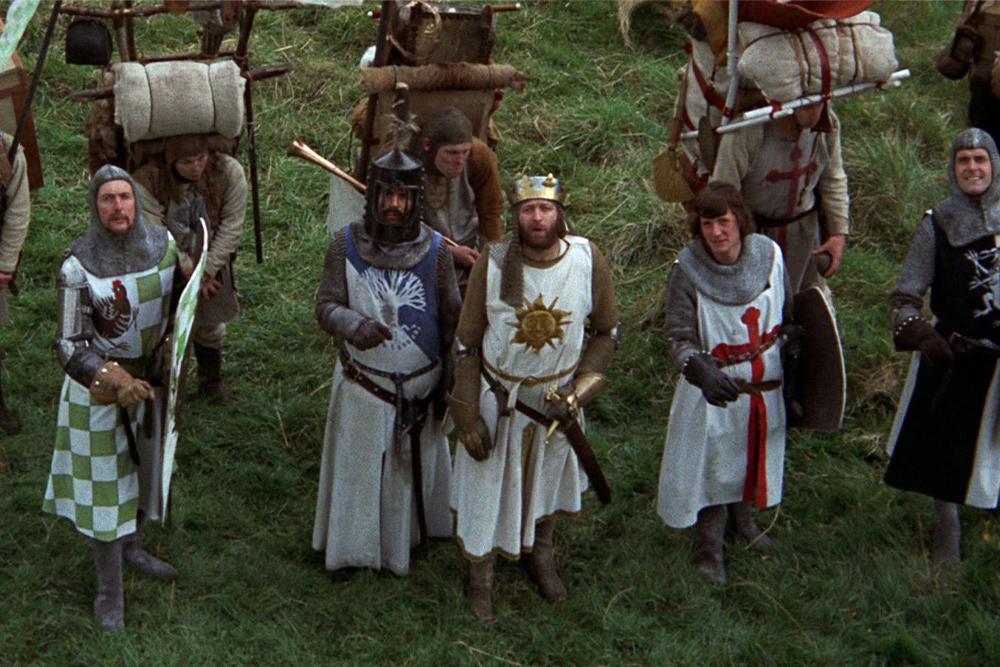
The last type of intentional intertextuality that we’ll discuss are parodies. Even if they’re just for comedic effect, parodies like Scary Movie and Monty Python and the Holy Grail involve a deep knowledge of the genres they’re exploring. The way that they exaggerate and play with tropes we might know invites a great deal of conversation. It might point out to us that some of the things we take for granted — like the knight saving the princess — might be a bit outdated or silly when cast in a new light.
Your story weapon: Making it yours
So how can you make use of your newfound knowledge of intertextuality? For one, think about your favorite stories and which category they might fit into. That’s a good way to get a sense of the type of intertextuality you enjoy; it’s a great reason to spend time thinking about characters, ideas, and settings that you enjoy.
Secondly, let this lead you toward stories that you might like to be in conversation with. You can think about intertextuality as a way to converse with your favorite authors. Think about their works as letters to you. Your story is your letter back.
Finally, forget about the other stories. This might seem counterintuitive, but once you have an idea of the ideas you want to discuss, your story has to be your own. It’s easy to feel like you’re in the shadow of great writers; the least you can do is take their books off your desk while you write.
The conversation has spanned centuries; it’s time to add your voice. That is the enduring power of intertextuality: every new story becomes both a response to the past and an invitation for future writers to continue the dialogue.
FREE DOWNLOAD—OUTLINE YOUR STORY! Are you struggling with your outline and looking for support? My FREE GUIDE will lead you through the process of marrying the wildness of your imagination to the rigor of story structure to unlock your story within.