




“It takes 10,000 hours to truly master anything. Time spent leads to experience; experience leads to proficiency; and the more proficient you are the more valuable you’ll be.”
– Malcolm Gladwell
The journey of a thousand miles starts with a single step, or so they say. When we’re thinking about dedicating our time and energy to a craft, we put it in similar terms. The modern equivalent is the “10,000 hour rule.”
Coined by Malcom Gladwell in his book Outliers, the 10,000 hour rule suggests that mastery of a craft requires that average number of hours to rise from decent, to good, to great. I’ll explore that idea in this article, and at the end I’ll offer you a Story Weapon to encourage you in your own writing.
Principles of mastery like the 10,000 Hour Rule have long been considered by civilization to afford the mind a goal to strive toward. Approach the mountain in your own way by understanding where it originated, qualifying your own relationship to writing, and re-contextualizing what it means to you to be a master.
Understanding the “rule”
Where does the 10,000 hour number come from? It’s based on a 1990s study by psychologist K. Anders Ericsson. At Berlin’s renowned Academy of Music, Ericsson and other faculty members divided students into groups based on their perceived ability.
- The first group was made up of those considered “the best of the best.” These students had potential to be world-class soloists.
- The second group was made up of students who could be professional musicians, but didn’t stand out in the same way.
- The third and final group were students who were deemed unlikely to find a career as professional musicians.
They posed the question: How much had each student practiced from the start of their education?
All the students had started very young, all the way back in their kindergärten classes. The differences in practice didn’t show up until a few years later. Once the students were about eight years old, some children just started practicing more.
The gap continued to widen steadily over their adolescence until, by the age of twenty, the hours had stacked up. The students in group one (the star players) had hit roughly 10,000 hours of practice. It’s an average number that other researchers have come upon as well when studying this “rule of thumb” across other disciplines such as chess and professional sports.

The students in group two had around 8,000 hours of practice, and the third group consisted of people with about 4,000 hours of practice.
So what can we get from this? For one, in Gladwell’s words:
The striking thing about Ericsson’s study is that he and his colleagues couldn’t find any “naturals,” musicians who floated effortlessly to the top while practicing a fraction of the time their peers did. Nor could they find any “grinds,” people who worked harder than everyone else, yet just didn’t have what it takes to break the top ranks.
Though the idea of practicing 10,000 hours is intimidating, we can find some comfort in the thought that continued practice seems to pay off for everyone. The idea of a rare and undisciplined genius doesn’t seem to match the facts. Even the Mozarts of the world had countless hours of practice before they reached the level of mastery we’re talking about.
Why time matters
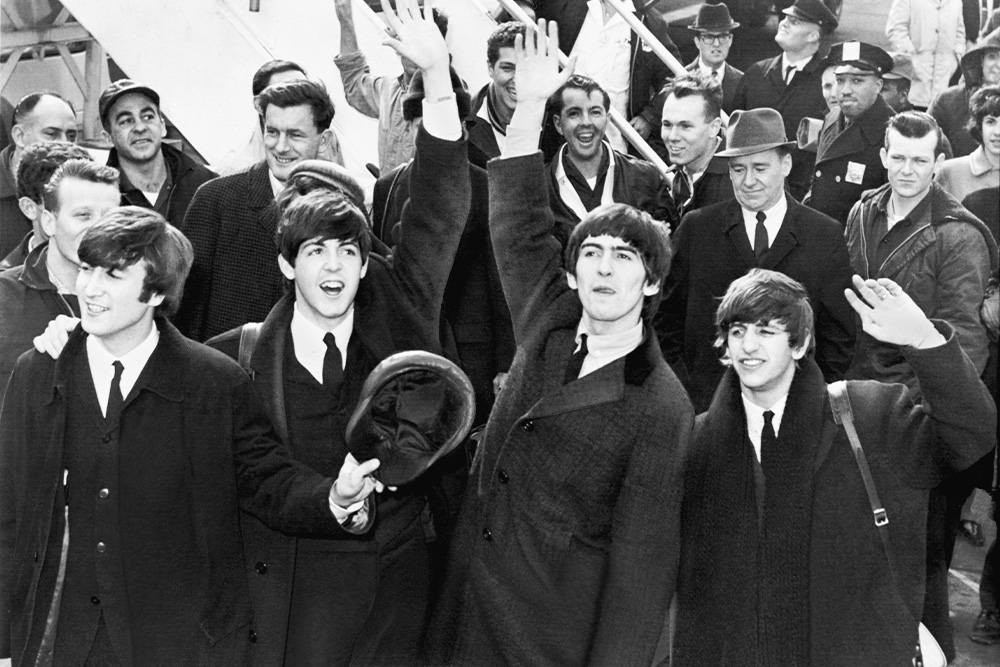
Let’s take a look at another case study on The Beatles. For two years in their early career, they played in Hamburg at strip clubs for absurd stretches of time. They would spend six to seven hours on stage at a time for hundreds of nights in the year, playing over traffic noises and the lascivious attention of the crowds directed elsewhere. Over the course of those two years, they performed 1,200 times. As Beatles historian Philip Norman puts it:
They were no good onstage when they went there and they were very good when they came back. They learned not only stamina. They had to learn an enormous amount of numbers — cover versions of everything you can think of, not just rock and roll, a bit of jazz too. They weren’t disciplined onstage at all before that. But when they came back, they sounded like no one else. It was the making of them.
The 10,000 rule is a way to describe the amount of time it takes to not only learn all the technical aspects of a craft, but also to make it second nature.
Imagine playing that 5th hour in a row on stage. You’re already on autopilot and, out of sheer boredom and the fact that no one’s really listening to you, you have to start coming up with some new things with your pal George Harrison. That experience is incredibly valuable. When no one’s watching and you’ve been at it long enough for your subconscious mind to start playing in the form, something deeply interesting happens.
Your story weapon: Seek not the mountaintop
You might think, That’s all well and good, but I’m not one of The Beatles. We haven’t all dedicated our lives to a craft and some of us have had full careers before coming to writing.
Surely the doors aren’t closed to people who can’t give 10,000 hours to the pen? Don’t worry. You’re still more than welcome in the world of writing and there’s some nuance here. Most people have other responsibilities and commitments that keep them from practicing a craft for hours upon hours in the day. You needn’t throw that all away just to write the story burning in your heart.
The key is to enjoy the process and stay out of the result. To say that Hemingway or Dostoevsky never wrote anything of value until they were 10,000 hours deep is absurd. The desire to write is connected to our desire to evolve. Keeping your personal journey at the heart of the endeavor is what keeps it fresh and interesting. At the end of the day or a life, the book isn’t what matters. What matters is how you changed in writing it. If you’ve put your heart on the page and bravely ventured into the world of story, you’ve succeeded. Someone else’s measure of the work is irrelevant.
Don’t discount the hours you’ve amassed either. Reading books you love and exploring why you love them is part of the work. Spending time with a book club counts as hours served. Your scribblings, your half-baked poems, the story ideas you tried out when you were younger — all of these count!

Don’t be too enchanted or disheartened by the “10,000 hour rule.” It serves to remind us that diligence and discipline are key ingredients in making a great writer, but it’s not just a numbers game. Instead of worrying if you’ve got enough writing under your belt, focus on the joy of this craft and the rest will take care of itself.
Consistency, curiosity, and sustained effort shape not only your technical ability, but your development as a storyteller. Whether you are just beginning or returning to the page with renewed intent, a structured and supportive environment can help you build meaningful momentum. Join one of my next workshops: The 90-Day Novel, The 90-Day Memoir, Story Day.