


Do I really need a book outline?
There’s often a concern among writers that creating an outline will risk the work becoming mechanical and predictable. Some writers believe that an outline will limit their creativity and silence their muse.
But structuring your book with an outline isn’t meant to form a cage around your story. Rather, it’s a way for you to trace the emotional movement of your characters. And when you begin to approach structure in this way, you may notice that your work becomes more dynamic and compelling.
In this article I will explore various approaches to outlining your book, and then I will offer you a Story Weapon to help you get started.
Where do I start a book outline? I map an emotional roadmap that aligns your plot with your protagonist’s internal transformation, but I don’t always use the same tool in my approach process. Tools of craft offer different beta but the follow-through is upheld by the same maxims. Measuring out a story’s boundaries—from a character’s initial desire to their ultimate change—creates a sturdy “emotional skeleton” that prevents your story from losing momentum.
What an outline does
A book outline is a framework that clarifies your story’s direction instead of restricting it.
You can think of your book outline as a roadmap. It’s a way to organize your story as your characters move in and through the plot before you start writing a rough draft.
The blank page is intimidating. It offers you infinite possibilities all at once.
Working with an outline doesn’t eliminate that uncertainty, but it helps to give it form. You can get a sense for the basic shape of your story.
It also helps to:
- navigate the murky middle, where many stories lose momentum
- stay anchored to your character’s journey as the story progresses and expands
- ensure that your plot (what happens) is always serving your character (who it happens to)
Outlining isn’t about control or restriction. It’s about alignment. At its core, an outline tracks your protagonist’s experiences — moving from one understanding of the world to another. The outline shows you the emotional skeleton to support your story and moves each scene with purpose toward your protagonist’s transformation.

Don’t just ask, “What happens next?” Begin with the question, “What is my character experiencing and how is it changing them?” The plot begins to take shape when you start there.
The foundation of any strong book outline
Before you decide on your method of outlining, it’s helpful to understand the key principles that help shape every effective story.
- Desire – Your protagonist wants something. Their desire is what drives the narrative forward.
- False Belief – That desire is shaped by belief, and often that belief can be incomplete or limiting. This is a reflection of how your character sees themselves and understands the world.
- Transformation – The protagonist’s belief is challenged over the course of the story, and by the end, it gets reframed.
The three movements of story
Every structure is built on the simple rhythm of change.
Act One: Setup
Here, we are introduced to the protagonist, their desire, and the belief that fuels it. Something then disrupts their world and challenges their beliefs, forcing them to act.
Act Two: Confrontation
Here, the character’s journey faces resistance, difficulty, temptation, and doubt. Things that seemed straightforward become increasingly complicated.
Act Three: Resolution
The protagonist finally reaches a point where their old way of thinking doesn’t work anymore. They are forced to choose between what they want and what they need.
5 proven book outline methods (and how to use them)
These are frameworks that help reveal the structure of the story. Each method offers a different way of understanding the same underlying transformation.
1. Three-Act Structure
The three-act structure creates a practical framework directly from the three movements listed above. Following this structure, your story will be divided into setup, confrontation, and resolution- giving you a clear sense of progression.
At the core of the Three-Act Structure is the idea of a dilemma. Your protagonist must navigate the tension between two competing truths. This tension is what gives your story its emotional weight.
Best for: Writers who want a flexible framework for their story.
2. The Hero’s Journey
The Hero’s Journey is a narrative structure that follows a cycle of departure, confrontation, and return. Your protagonist leaves their familiar world, faces trials, and comes back home transformed.
The journey begins with a dilemma, an irresolvable tension at the heart of who your protagonist is. This is what sets the story in motion and keeps it alive. The protagonist wants something, but getting it will cost them something else they aren’t ready to give up.
One of the most revealing moments is the “refusal of the call” before the inciting incident. It’s only natural that the difficulty and challenges that change brings might cause your protagonist to hesitate. The greater the reluctance, the more we understand what’s truly at stake for them.
From there, the hero moves through false hope, suffering, and eventually surrender as they let go of what they previously desired and die to their old self. It’s only when the protagonist stops and accepts the reality of their situation that true transformation becomes possible.
The return home completes the cycle, but the protagonist who returns is not the same person who left. What they’ve gained isn’t necessarily what they set out to find — it’s something deeper, earned through everything they were willing to face.
Best for: Stories with epic or large-scale character arcs.
3. The Story Circle
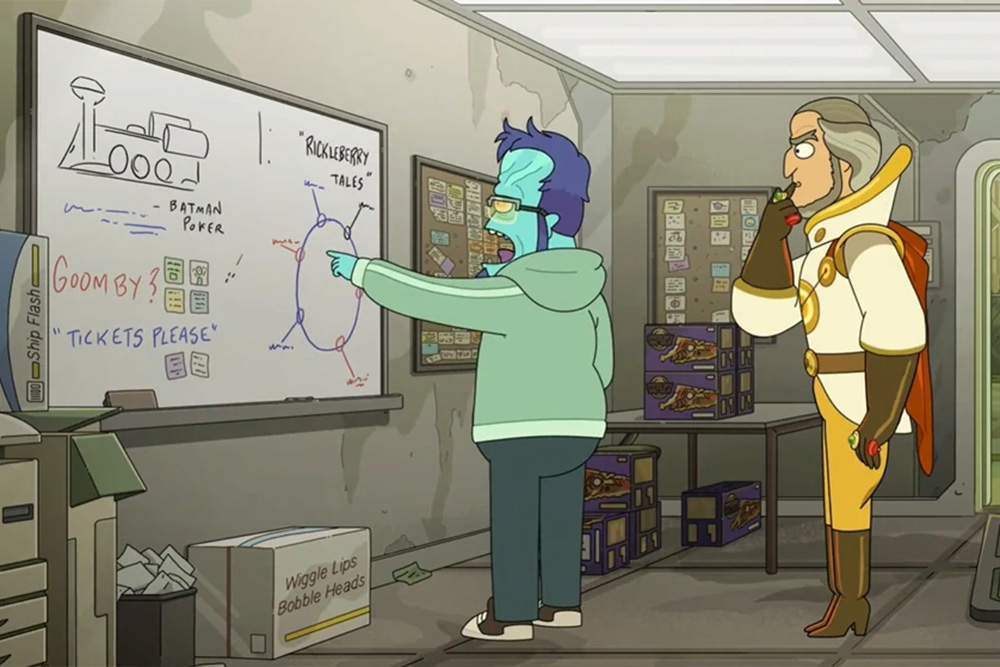
This method builds on the Hero’s Journey and distills transformation into a loop of eight stages: comfort, desire, crossing a threshold, adaptation, finding what you sought, paying a price, returning home, and arriving back home changed
Here, once again you focus on the questions: “What does the character want?” and “What do they actually need?”
What makes this structure model a flexible tool is that it works at multiple scales. Secondary characters, relationships, and your character’s inner struggles can follow their own smaller circles within the larger story. This helps to enrich the world, deepen relationships, and create echoes between the main plot and its supporting threads.
It can also serve as a diagnostic tool: if your middle feels repetitive, or your ending unearned, the circle can help reveal exactly which stage is underdeveloped.
Best for: Character-driven narratives and streamlined outlining.
4. The Snowflake Method
Expansion is the key to the Snowflake Method. It starts with one sentence, then gradually, layer by layer, develops it into a full structure.
As you expand your one-sentence summary into paragraphs and eventually into full character biographies and scene lists, your characters will begin to show you aspects of the story you hadn’t initially considered. With this outline technique you grow your story gradually and organically.
Best for: Writers who love outlining and want to take a step-by-step path from their initial idea.
5. Freytag’s Pyramid
Freytag’s Pyramid maps the dramatic arc: exposition, rising action, climax, falling action, and resolution. Think of it as a pressure cooker. As the story moves forward, the tension increases and places greater strain on your protagonist’s internal dilemma.
The exposition gives context for the difficult choices your character needs to make in their present. What propels the story through each stage that follows isn’t plot mechanics — it’s your character’s decisions. Between each of the five points lies what some analyses call an “irreversible decision”: a character’s choice that carries the story irrevocably forward.
The rising action builds as those decisions compound, each one narrowing the path back to safety, until opposing forces collide at the climax. This is the turning point where the story’s tension fully culminates and the direction of the plot reverses.
The falling action is where the story moves toward its conclusion — typically a much smaller portion of the narrative in modern storytelling. The resolution then delivers what the whole structure has been building toward: catharsis.
The pyramid is perhaps most useful as a way of recognizing that a story is a natural unfolding of events from the inciting incident. There’s a chain of cause and effect in which the characters propel the plot forward.
Best for: Writers focused on pacing and dramatic escalation.

How to choose an outlining method
Remember, there isn’t one single correct method, and there are more templates out there than just these five. Focus on what works for you, your process, and your story.
You can match the method to your process:
- Prefer flexibility? Try the Three-Act Structure or Story Circle
- Prefer detail? Use the Snowflake Method or Hero’s Journey
To your story:
- Character-driven story? Three-Act Structure or Story Circle
- Plot-driven story? Three-Act Structure
- Transformation-heavy story? Three-Act Structure or Hero’s Journey
Or you can try combining methods. Maybe you want to start with a broader structure, refine your character arc, then expand into detail. These methods are not a rigid set of rules to follow. Think of them as lenses to help you see your story more clearly.
Your story weapon: From the general to the specific
If you’re feeling stuck, don’t push yourself to outline everything. Start with three key moments:
- The decision that pushes the journey forward
- The moment when everything becomes more difficult than expected
- The choice that defines who your character becomes
When these are in place, the rest of the story has something to grow from.
A book outline is your creative partner. It gives your story enough shape and structure to stand without taking away its ability to breathe. When you learn to work with structure with this kind of understanding, you are no longer choosing between freedom and form. You’re using both. With the clarity you gain from your book outline, you allow the wildness of your imagination to transform your story.
FREE STORY STRUCTURE GUIDE! Are you struggling with your outline and looking for support? My FREE Story Structure Guide will lead you through the process of marrying the wildness of your imagination to the rigor of structure to unlock your story within.