
Writing a story can sometimes seem overwhelming. Think of your favorite books. You can tell when a writer has put a great deal of thought and effort into their work, with fully-drawn characters, a compelling story, and a cathartic ending. This did not happen without careful planning. Most writers begin with a core outline.
One way you can outline a story, step by step, is called the Snowflake Method. With this technique, writers start with a single sentence, then expand it into a paragraph. From that point, you gradually add more paragraphs and pages featuring detailed character biographies, world-building, and scenes to progress the story. It is a useful tool that is just as relevant for advanced storytellers as it is for beginner novelists.
In this article, I’ll go over the 10 steps of the Snowflake Method, look at some pros and cons to using this model, and I’ll give you a Story Weapon to help you find the best outline format for your story.
The Snowflake Method is a step-by-step outlining technique that starts with a single-sentence story idea and gradually expands into a full, detailed blueprint of plot, characters, and scenes. It’s especially useful for writers tackling complex or long-form projects, as long as they stay flexible and avoid over-planning.
Origin of the Snowflake Method
The Snowflake Method was created in 2002 by Randy Ingermanson, a novelist and physicist. Drawing on his experience in physics, he based this outline template on the fractal Koch snowflake, which starts with a simple triangle shape at first, and builds in complexity step by step.

This outline format works best for writers who love to plan, struggle with plot structure, or are working on complex, long-form fiction.
10 outlining steps
The Snowflake Method consists of 10 steps that can help authors slowly develop their stories.
1. One-sentence summary
This is the hook that draws people in and provides the crux of the tale. Here are some examples using blurbs from books on the New York Times bestseller list:
The Correspondent by Virginia Evans – Letters from someone she used to know push Sybil Van Antwerp toward revisiting her past and finding a way to forgive.
Refugee by Alan Gratz – Three children in three different conflicts look for safe haven.
The Housemaid by Freida McFadden – Troubles surface when a woman looking to make a fresh start takes a job in the home of the Winchesters.
Note: your one-sentence summary and many of the following steps will probably change a lot as you go with this method. Be open to revision as you discover more and more about your story.

2. Expand to a one-paragraph summary
Once you have written the first sentence, expand it to a single paragraph that describes the start, middle, and end of the story. Briefly touch on major plot elements and challenges that the protagonist will face. Ingermanson suggests including at least “three disasters plus an ending.”
3. Develop character summaries
Just like you elaborated on the story elements, now you do the same for your characters. In this step, you would need to create a summary sheet of each major character that includes their names, background, motivation, conflict, what they learn (if anything), and their storyline all in neat paragraphs.
Character suggests plot, so this stage is crucial. Let your characters show you new aspects to the story that you hadn’t considered before.
4. Expand the summary paragraph into multiple paragraphs
Now you probably have a fair idea about your story and where it’s going. Take a little time to expand each sentence of the summary paragraph from step 2 into its own paragraph. The final paragraph here will cover the ending.
5. One-page description of the characters
Now, expand the character summaries from step 3 into one-page descriptions of each major character in your story, and a half page for lesser but still important characters. Tell the story from their point of view. This could take some time, but it can also be really fun to dive deeper into your characters here.
6. Four-page synopsis
By now, you should have a more solid understanding of your plot and the characters who move it forward. Write a four-page synopsis of the whole plot and start connecting it all together.
7. Create character charts
Since you already created a one-page description of the characters, now’s the time to create a full-fledged character chart that details everything about them: physical description, backstory, goals, motivations, and more. It is important to detail how the character will change over the course of the story and the main factors driving their growth or resistance to change.

8. List all the scenes
Building on the four-page synopsis, make a list of all the scenes in the story. This step can be done with a spreadsheet. Write one line for each scene, detailing the point of view of the character, plot significance, or any other important factors.
9. Describe all the scenes
This can be merged with the previous step, but here the scene descriptions are overhauled and expanded upon. Turn brief scene details into multi-paragraph descriptions, complete with dialogue and points of conflict.
10. Start the first draft
Building from what you’ve worked on previously, you will be able to write your story with little to no plot holes.
On writing the first sentence
One of the most famous stories that began with a single sentence is The Hobbit by J.R.R. Tolkien. The first line he wrote on an exam paper in the 1930s was simple yet intriguing: “In a hole in the ground there lived a hobbit.” It was a spontaneous sentence, but it gave Tolkien an idea.
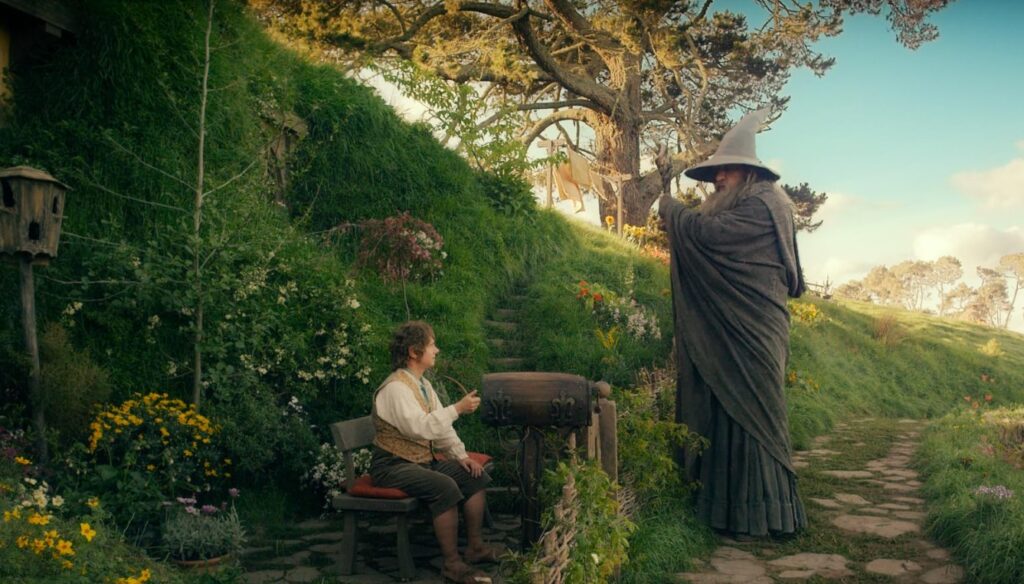
From that one line, the tale grew, spanning the length and breadth of Middle Earth with a myriad of fantasy races and compelling conflicts.
While Tolkien did not use the Snowflake Method, this example illustrates how a whole world of storytelling can emerge from just a single sentence.
The beginning sentence you write doesn’t have to be the actual first line of the book, like it was for Tolkien. It can simply be a summary of your current story idea. Ingermanson started his own novel Transgression with a sentence like this: “A rogue physicist travels back in time to kill the apostle Paul.”
Pros & Cons of the Snowflake Method
Here are some of the pros:
- It helps reduce plot holes. By detailing your story with a high-level summary to specific scenes, you can identify any potential structural issues before writing the rough draft.
- This method pushes for developing strong characters to move the plot forward.
- Because the plotting is already done, the actual writing process can be much faster.
- You’re less likely to get writer’s block. If you’re stuck in one area, you can go work on building out another section and come back to it later.
- It works well to keep large-scale stories organized, especially for complex multi-plot stories, or long-series novels.
But there are also some cons:
- It can be very time consuming. This process might take weeks or months to complete, delaying the actual writing process for your rough draft. It requires lots of initial effort with multiple revisions, which can lead to losing interest in the story for some writers.
- The potential for “analysis paralysis” is something you need to watch out for. Over-planning can make it difficult to actually start writing.
- Some writers prefer to create on the fly (“pantsers”), and might struggle to find room for spontaneity with this method.
- It’s impractical for short stories. This amount of detail would be overkill for shorter, less complex narratives.
Is the Snowflake Method right for you?

If you struggle with writer’s block or feel daunted by the scope of a large project it could be a good fit. Because the Snowflake Method emphasizes brainstorming and gradual expansion, it can help you generate ideas without the pressure of producing polished pages right away. Breaking the process into steps can be less intimidating — especially for beginning writers.
It’s also a good choice for writers who value working through the story structure and finding cohesion. The Snowflake Method encourages you to develop characters, plot points, and the logic of your story before starting the rough draft.
Knowing when to stop summarizing and get writing can be difficult, however. I’ve seen far too many writers stuck in the idea of their story with pages of character descriptions who don’t know how to switch gears into actually writing the story that’s in their head.
In my own 90-day workshops, we spend the first four weeks building the world of the story, growing a deeper connection to the characters and the dilemma that drives them. Then in the fifth week, it’s time to let it rip and write!
Your story weapon: Stay flexible
If you’re considering using the Snowflake Method, remember that it’s a guide, not a rulebook. Pick the steps that help you the most and adapt the rest. Don’t hesitate to improvise. If something changes while you’re planning your story, you can go back and revise at any time.
Leave some space for surprises. Don’t spend forever creating the perfect outline. Make sure that you are hitting the broad strokes to get your characters’ motivations right and find the dilemma of your story that will help emphasize your themes. Too much micromanaging is only going to waste time. Don’t let the Snowball Method become an avalanche.
Are you getting lost in analysis paralysis?
My FREE Story Structure Guide will lead you through the process of marrying the wildness of your imagination to the rigor of structure to unlock your story within.