It may sound dry, but at the heart of every story is an argument. The theme (or dramatic question) is played out through your characters, and the protagonists can’t do it by themselves. All arguments require opposing forces and, in storytelling, these forces manifest as antagonists.
In this article, I will explore what purpose antagonists serve, go over different types of antagonists found in film and literature, and give you a Story Weapon to write compelling antagonists in your own story.
Antagonists are the opposing forces that give a story its tension and thematic depth, testing the protagonist through conflict. A strong antagonist embodies the story’s central argument, pushing the protagonist toward transformation and revealing meaning through pressure and dilemma.

What is an antagonist?
“An antagonist is any character that stands in the way of the ruthlessly onrushing protagonist.”
– Lajos Egri, The Art of Dramatic Writing
I love this definition from Lajos Egri. What he is telling us is that antagonists are not necessarily villains or even “bad guys.” In fact, we must resist the urge to think of our story as having good guys or bad guys. Antagonists are not evil overlords twirling their mustaches, but rather the manifestation of conflict and dilemma in your story. Antagonists will test the protagonist’s choices and force the theme into motion.
Without a meaningful opposing force, a story has no tension, only events. Antagonists are nuanced and should be developed with as much depth as any other character.
Common types of antagonists
There is no predetermined template for the antagonist in your story. Antagonists take many forms. However, throughout time, there are a few consistent forms antagonists have taken in book and film.
While they are not limited to the examples below, you can use them as inspiration to build off.
Villains
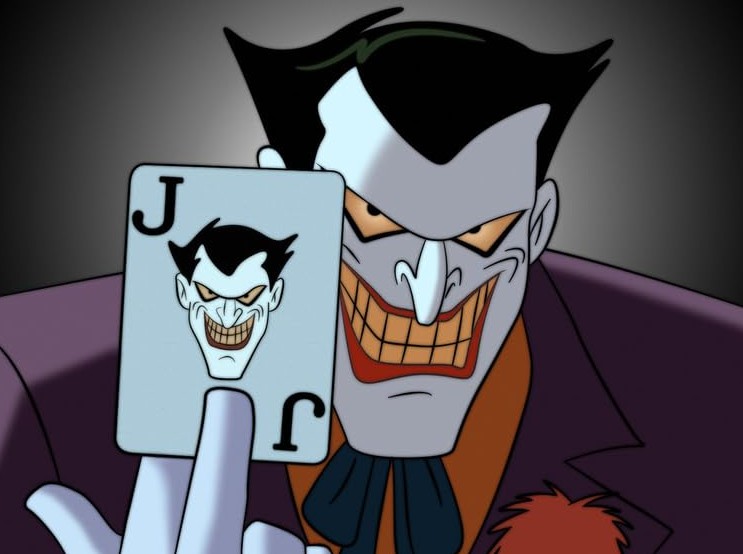
This is the traditional form of antagonist and the type most people think of first. Think of the Joker in Batman or really most bad guys in a superhero comic. They are working for an evil purpose, such as greed, jealousy, revenge, or a lust for power. Clear intentions such as these make villains easy for audiences to understand and emotionally engage with, often serving as a stark contrast to the protagonist’s values and actions.
Anti-Villains
Here you’ll find antagonists whose goals are often noble or understandable, but their methods are morally questionable, extreme, or harmful. Unlike classic villains, they may genuinely believe they are doing the right thing, acting out of a desire to protect others, restore order, or prevent a greater evil. This moral complexity makes anti-villains compelling because they blur the line between hero and villain, forcing audiences to question whether the antagonist is truly wrong or simply opposed by circumstance and perspective.
Severus Snape in the Harry Potter series is cruel and unfair toward his students at times, even emotionally or verbally abusive, but he was ultimately motivated by loyalty and an unrequited love.
Natural Forces / Environment
Not all antagonists are human. This could be a force of nature like the environment of different worlds and space anomalies in Interstellar or time itself in The Curious Case of Benjamin Button.
Storms, oceans, deserts, mountains, disease, or extreme climates become obstacles that test a character’s endurance, adaptability, and their will to survive. Unlike human villains, natural antagonists have no intent or malice — these forces simply exist, and the danger comes from their unpredictability and overwhelming strength.
In the novel, Life of Pi, both the tiger and the ocean act as forces of nature that stand in the way of Pi’s journey to land and discovery of the meaning of life.
Supernatural forces
These antagonists are entities that exist beyond the natural laws of the human world. They often draw on mythology, religion, fantasy, or cosmic horror. Supernatural antagonists might show up as ghosts, demons, gods, curses, monsters, etc., and their power typically exceeds ordinary human ability.
Because they operate outside normal rules, supernatural antagonists create a sense of awe, fear, and helplessness, forcing protagonists to rely on their wits or faith, to sacrifice something, or to find forbidden knowledge rather than rely on strength alone. Their mere presence often challenges the characters’ understanding of the known world.
Supernatural antagonists often embody abstract concepts such as death, guilt, temptation, chaos, or fate, turning the conflict into more than a physical struggle. A haunting spirit might represent unresolved trauma, or a demon may symbolize moral corruption. An ancient god showing up can reflect humanity’s insignificance in the universe. This allows supernatural antagonists to function on both a narrative and thematic level, driving the plot while also deepening the story’s emotional and philosophical impact.
Internal antagonist
Sometimes the thing standing in our protagonist’s way is themselves. Whether it’s rooted in overconfidence or their flaws and insecurities, the inner battle they are facing is ultimately what is keeping them from their main goal.
For example, the titular character in Jane Austen’s novel Emma is so confident in her own ability to control the lives of others that she ends up standing in her own way from finding true connection. The conflict, and therefore her true antagonist, is found within herself.
In The King’s Speech, it’s fear and a lack of confidence in himself that antagonizes Prince Albert as he reluctantly takes the path to become King George IV.

Societal/Group Antagonist
Not all antagonists work alone. Many stories include a group standing in the way of the protagonist’s goal. In a war movie, on a simple level, it could be a whole country. In a dystopian novel, like 1984, it can be a whole system like the “Thought Police” that are keeping them from living individually. Whether they have distinct faces or are seen as more of a collective offender, a group antagonist can be used to stifle the protagonist’s journey.
This kind of antagonist can appear in the form of stereotypes, social prejudice, discrimination, or a class struggle. They challenge social harmony, and create an “us vs them” conflict. This is deeply rooted in the protagonist’s society, and often feels inescapable, forcing characters to struggle against what’s considered “normal” in the everyday lives of those around them, such as the Republic of Gilead in The Handmaid’s Tale.
Your story weapon: What role should antagonists play?
Story is alchemy. It is only through pressure or conflict that your protagonist can be transformed. Therefore, a worthy antagonist is essential in order for your protagonist to arrive at their transformed state. But remember, “antagonist” is not a synonym for “bad guy.” Often antagonist characters are much more complex, going beyond even the general forms listed above.
The antagonist is the embodiment of the story’s conflict. They are where our audience feels tension and the rise in dilemma. They disrupt our protagonists in a way that can even make the audience question their own preconceived beliefs.
In the act of writing, we often become our own antagonist, standing in the way of the story that wants to be revealed. We have an idea of how we want our story to play out or how we believe our dilemma can be solved.
In reality a dilemma cannot simply be figured out. It must be revealed through understanding why our characters do what they do. To create a three-dimensional antagonist, we must loosen our grip on our idea of the character in order for the truth of the character to emerge.
✒️ Writing Exercise
Here’s a powerful exercise to help you connect to your antagonists.
Write for five minutes, as yourself, beginning with:
“One thing I feel strongly about is…”
Great! Now notice a connection between what you feel strongly about and the story you are currently writing. Interesting right? This is because what we feel strongly about will inevitably find its way into our work.
OK. Now frame what you wrote as a single arguable statement, such as: “I feel strongly that everyone should be treated equally.”
And now, notice an opposing argument to this statement, such as, “Not everyone deserves to be treated equally, such as murderers or child abusers.”
Do you see how this exercise leads you to the potential argument at the core of your story? Do you see how your characters are simply a manifestation of this dramatic argument? By exploring the opposing argument, you will be led to the antagonistic forces in your story, and these forces will begin to crystallize as living breathing characters in your story.
As you begin to explore more deeply the truth of your antagonists, you will begin to discover that your protagonist and antagonist actually want the same thing at their core. And ironically, it is this uniformity of desire that creates the conflict in your story.
If you want to push your antagonists beyond obstacles and into fully realized forces of transformation, join one of my next workshops: The 90-Day Novel, The 90-Day Memoir, Story Day