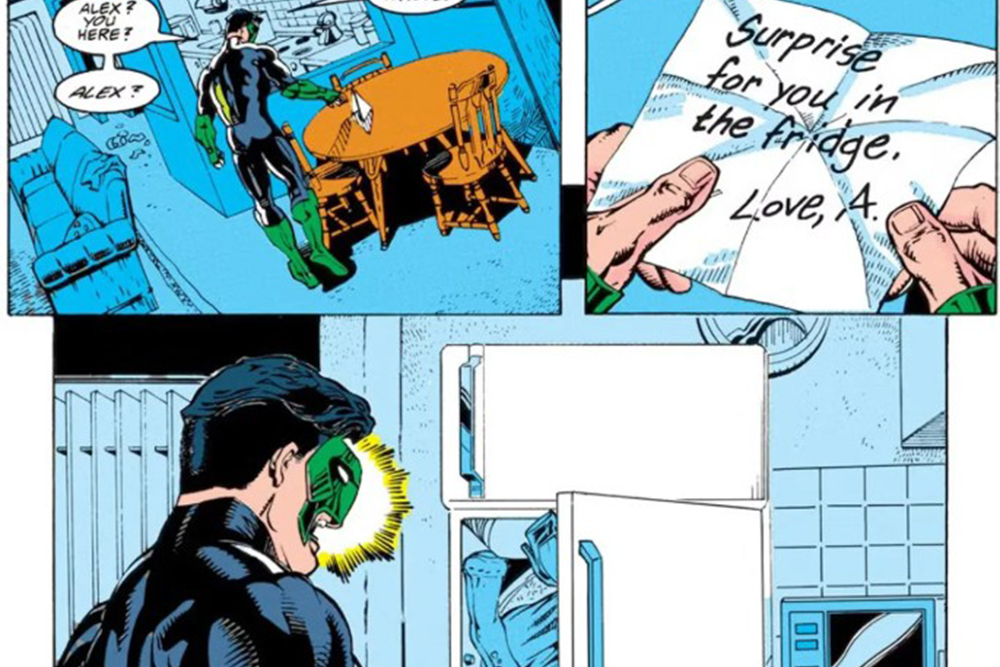

The “fridging” trope was named after a specific incident in a Green Lantern comic (vol. 3 #54). The titular hero comes home only to find his new girlfriend murdered and brutally shoved into the refrigerator. This abrupt, gruesome scene is what inspired Gail Simone, a DC Comics writer, to first coin the term fridging.
In this article, I will explain what fridging is with some examples, why this method is controversial, and I’ll offer you a Story Weapon to help avoid pulling your readers out of your story with meaningless suffering.
Fridging is a storytelling trope in which a minor character—most often a woman—is killed or traumatized solely to motivate a protagonist, reducing them to a plot device rather than a fully realized person. The trope is controversial because it cheapens the emotional stakes for shock value and reinforces harmful patterns of objectification.
Definition of fridging
In 1999, Simone put together a list of 100 female characters in comics who had suffered death or some other form of extreme trauma in ways that seemed to only serve as plot points for male protagonists.
Fridging occurs when a minor character is killed, harmed, or otherwise traumatized to create an inciting incident or backstory impetus to push the protagonist forward. As Simone noted, this doomed character ended up being female more often than not. Stripped of agency, interiority, or any real narrative importance beyond the pain their suffering causes the protagonist, the “fridged” character is reduced to a mere plot device.
While the definition has broadened over time to include loved ones of any gender who are harmed exclusively to motivate another character, the trope overwhelmingly affects women. They are the ones most frequently sidelined, silenced, or erased in order to fuel a male character’s emotional journey.
This trope isn’t limited to comic books. Here are some examples:
Gladiator (2000)
Emperor Marcus Aurelius intended to appoint Maximus as “Lord Protector” of Rome, bypassing his own son’s succession. Commodus kills his father, then imprisons Maximus, and crucifies his wife and son. When Maximus escapes prison and discovers this tragedy, he’s motivated to seek revenge.

The wife and child are not characters in their own right. We know virtually nothing about them beyond their relationship to Maximus. Their deaths exist solely to harden his resolve and justify his violent quest for revenge. They are narrative fuel, not participants in the story.
Death Wish (1974)
The beginning of the movie shows a group of muggers beat and assault the wife and daughter of the protagonist, Paul. The wife dies at the hospital, the daughter winds up in a mental institution, and Paul goes on a vigilante killing spree.
Supernatural (2005-2020)
Mary Winchester is suddenly and violently killed by an unknown supernatural force that pins her to the ceiling and burns her alive over her baby son’s crib. This event sets the entire plot of this series in motion. In this case, not one, but three male characters (her husband and two sons) are set on a path of vengeance.
As an adult, Sam Winchester grows tired of hunting and wants to lead a normal life. Jessica Moore is his girlfriend in the pilot episode, but not for long.
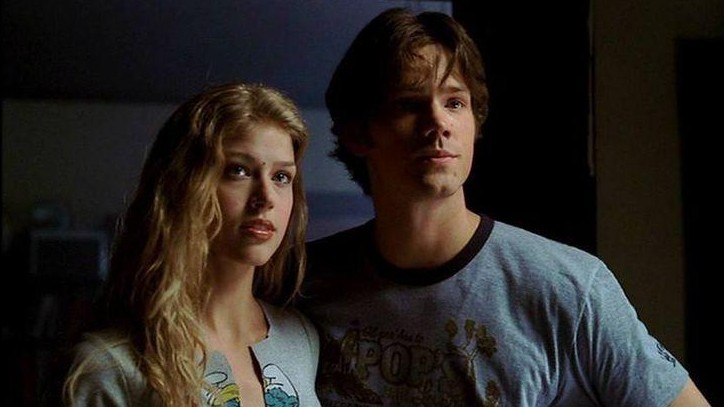
Sam was only a baby when his mother was murdered. Clearly, he can’t remember that, so the writers do it again!
Jessica is also abruptly and violently killed in the exact same way by the same supernatural force that killed his mother. Now that Sam has motivation, the story can commence.
While the mother gets more character development in later episodes of this series through flashbacks and other shenanigans, Jessica’s short-lived character exists only to push Sam back into the hunting life. She doesn’t have any agency or development beyond her role as the murdered girlfriend.
The controversy of fridging
There are two main problems with the fridging trope.
Firstly, it cheapens the story for your reader.
When a character is harmed or killed purely to give someone else angst or trauma, the victim is reduced to a backstory shortcut. This can signal laziness in the writer. Instead of building up tension organically, this little trick relies on bursts of shock to skip ahead.
Once the brief shock wears off, however, your audience can sense it. A death that lacks any weight or consequence beyond “now the hero is angry,” undermines the deeper emotional investment that could have been there with more character development.
Secondly, there’s a more insidious issue with fridging: objectification. When it only seems to affect a certain type of character, it sends the message that that person is somehow expendable.
The fact that these characters are usually women, sex workers, or people of color speaks to the covert and not-so-covert sexism and misogyny lurking in our society.
Fridging doesn’t just flatten characters, it echoes and reinforces sexist and racial biases by objectifying its victims.
I’m not saying that these characters should never face death or trauma. Tragedy and loss are a real part of our lives, and need to be reflected in stories. Just be careful in how you approach their death.
The problem is when those traumatic moments are wielded without care.
If you snuff out a minor character just to pour fuel on your protagonist’s story arc, it’s not as meaningful.
“What about murder mysteries? Are those guilty of fridging?”
Of course, most murder mysteries start with someone dying. Is the morgue fridge giving characters the same treatment?
The victims in this case are not falling on the back burner of vengeance. They become the central puzzle that drives the story. Their death sets an investigation in motion and works to expose secrets from their past lives and the people they lived and worked with.
Murder mysteries focus on that death and subsequent murders that tend to follow.

Fridging doesn’t apply in the same way when:
- A character’s death or trauma means more than a brief emotional leverage point for the protagonist.
- The story doesn’t sideline them.
- The tragedy that befell them connects to your theme.
- The victim had some sense of agency.
Explore who the victim was, how they lived, or how their death continues to affect people, for better or worse. Take for example stories from Agatha Christie’s novels, Columbo, Knives Out, The Maltese Falcon, and more. These stories revolve around death without treating it as disposable emotional fuel.
Your story weapon: Go beyond shock value
Rather than introducing a character close to your protagonist only to throw them away, consider giving these characters time to develop in order to bring deeper meaning to their loss.
As storytellers, we have a responsibility to treat our characters and our readers with respect. Don’t discard a character just to manufacture motivation. If a death or trauma is part of the story, give it meaning. Give the character a layer of depth, some agency, a presence that lingers beyond their absence.
I like to tell my students that “when you find the love, you will find the drama.” If you’re going to take something — or someone — away from your protagonist, make sure it really matters.
Your job is not just to advance the narrative, but to build your story in meaning as it progresses in order to sustain your audience’s emotional connection.
Learn how to develop characters whose presence or absence carries genuine weight in my next 90-Day Novel workshop. This workshop is designed for writers who want to sharpen their craft, engage critically with storytelling conventions, and write stories that resonate with integrity and intention.