


Every screenplay is built around a single invisible force that holds everything together. You may not notice it on first viewing, but you feel it when it’s working, and you feel its absence when it’s not. This force is the storyline, the mystery marriage of plot to theme. Storyline is the throughline that gives meaning to each scene, each choice, and every moment on the page.
If you’ve been following me for a while, you know I often talk about story structure as a paradigm for transformation. If story structure is the DNA of your screenplay, then the storyline is the body that grows from it. It’s not enough to be entranced by the prose or the cinematic language. Without a strong storyline, the whole will never become greater than the sum of its parts.
In this article, I’ll get to the core of crafting your storyline with some tips to remember, examples from a classic film, and I’ll give you a Story Weapon to make sure your storyline lands with the impact you desire.
Tips for crafting a storyline
Let’s start with some essential tips for your storyline:
- Make scenes purposeful: The purpose of story is to reveal a transformation. Transformation involves the resolution to your protagonist’s dilemma. A powerful storyline dramatizes the dilemma in every scene.
- Maintain dramatic energy: Screenwriting is all about economy. Get into the scene as late as possible and out as early as possible. We are interested in the essential turning point of each scene that advances the narrative. We don’t need to see every literal step of a character’s journey.
- Order matters: While it’s good to remember the purpose of your individual scenes, how you sequence them is crucial to how the story is delivered to the reader.
Your audience won’t have an aerial view of your story from beginning to end. They can only experience it one moment at a time. For that reason, it’s all the more important to make sure your storyline is both efficient and dramatic.
Writers often struggle with making a character feel worth following. It’s through the storyline, through what the character does and how they change, that you can build that sense of connection with the audience. So, when I talk about making scenes dramatic, purposeful, or correctly ordered, I’m really talking about how to create the most compelling narrative by marrying the wildness of your imagination to the rigor of story structure.
To show what I mean, let’s take a look at a classic film with a clear-cut storyline.
Storyline example: Rocky (1976)
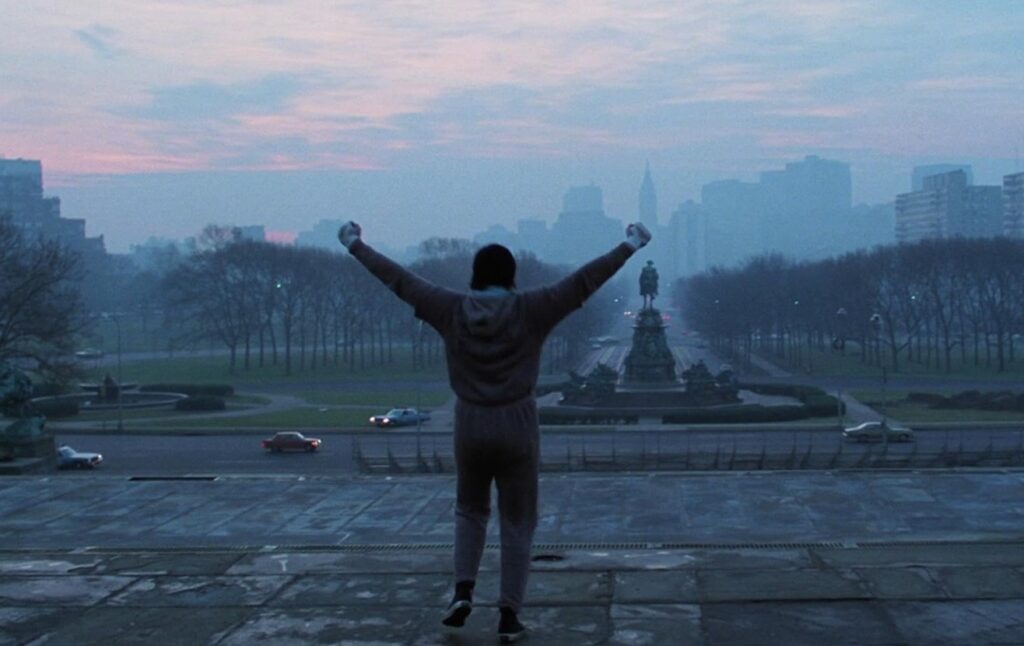
The opening scene of Rocky pits the titular character toe-to-toe with Spider Rico. It’s a grueling fight with both men going back and forth, delivering cheap shots. The end of the fight comes with no fanfare. In fact, the next fighter is already in the ring before Rocky can leave. There’s no one clapping for him, no one waiting for him. As Rocky asks for a smoke, a random lady in attendance calls him a bum. With this beginning, we can see how Rocky has nothing. No respect from his opponent, no respect from his gym, and not even a shred of respect from the people who watch him bleed.
The end of the film sees a complete flip from the opening scenario. After putting up a legendary fight against Apollo Creed, Rocky is surrounded by a horde of reporters as fans in the arena break into ear shattering cheers. However, Rocky now finds himself completely uninterested in all the attention he’s showered with. After accomplishing everything he ever wanted, the one thing he call out to the woman he loves, Adrian.
If you ask someone what Rocky is about, they might say it’s a classic boxing movie that jumpstarted Sylvester Stallone’s film career. And, they’d only be about half right. While the storyline of Rocky Balboa may begin and end inside a boxing ring, it’s the moments connecting these points that truly embody the film’s meaning.
The story is about “self worth.”
While “boxing” is the backdrop, it is not what the movie is about. Self-worth is the theme that makes the story universally relatable. It is the protagonist’s primal drive that we can track from the beginning to the end.
Below is an extremely simplified outline of the storyline of Rocky Balboa. Take a moment to see how these beats connect:
- Rocky is a down on his luck boxer with nothing going well for him. He just wants to know when he can have his next fight.
- He works for the mafia as an enforcer, but is conflicted about his job as he doesn’t want to hurt anyone.
- He pursues Adrian day by day, but fears he isn’t worthy of her love.
- Rocky gets the chance to fight for the championship against Apollo. A chance to no longer be a bum. This is his dream come true, but he initially declines the offer, fearing he is not up to the challenge.
- He trains hard, only to realize that Apollo is the undefeated champion. There is no way he can win. And then . . . he reframes his relationship to self-worth and realizes that all he has to do is his best. “If I can go the distance…if that bell rings and I’m still standing, then I will know for the first time in my life that I’m not just another bum from the neighborhood.”
- He fights Apollo and goes the distance. He finally has self-worth.
- He embraces Adrian, with a new relationship to self-worth.
Now, what you’ll notice is how each of these beats builds on the one before it. Rocky starts as someone with nothing. He has no respect, no love, no future. It’s only through his grit and persistence with Adrian and the opportunity to fight Apollo that he finds self-worth.
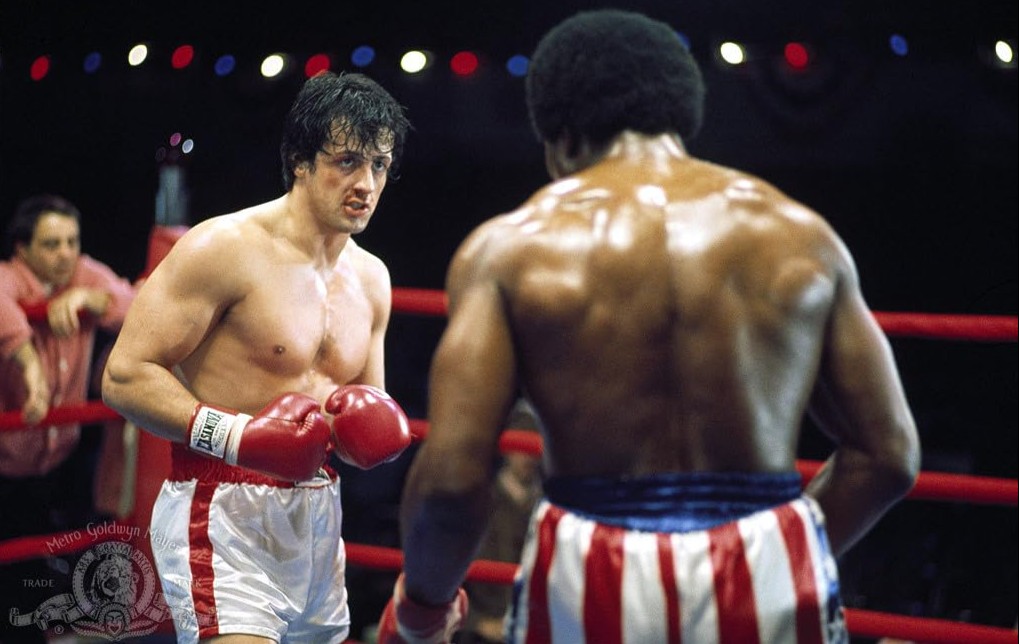
If you’re keenly familiar with the film, you’ll even come to realize that many of the omitted scenes in this outline may be some of the strongest. Mick’s sudden visit to Rocky, begging to be his manager, as well as scenes with Paulie being a generally abusive brother to Adrian. You could say those moments are all part of Mick and Paulie’s story arcs, but they’re equally essential steps on the staircase of Rocky’s transformation as he confronts his own inner demons on his journey to self-worth.
Storyline vs. Plot
Writers often confuse storyline with plot. Storyline is the elegant and somewhat mysterious marriage of plot and theme. When you develop your storyline, you’re not just identifying what happens in your story, you’re chronicling your protagonist’s journey to transformation. Every beat in your storyline should be in service to that transformation in some way.
In Rocky, the date with Adrian empowers Rocky to be more direct in his confrontation with Mick in the very next scene, allowing him to begin to step into his true power.
When your storyline lacks this type of cohesion, it’s because your structure is not anchored to your protagonist’s primal desire. It can’t building in meaning as it progresses.
Common mistakes when creating a storyline
- A meandering middle point: Writers famously get great ideas about the start and end of their stories, and even if you do have an idea about the middle, there’s a lot of space to be filled in there.
- Relying on coincidence: Coincidence and luck often play a part in dramatic stories, but you shouldn’t lean on them too much. Don’t overly rely on chance at the expense of maintaining believability in the world of your story.
- Forgetting your character’s wants: Every beat in your storyline should be connected to your characters attempts to get what they want. And here’s a helpful hint. Notice that every character in your story is seeking the same unconscious primal desire. Do you see how every character in Rocky is seeking self-worth? Ironically, it is this uniformity of desire that creates the conflict in the story. Every character’s desire for self-worth, puts them in conflict with the other.
- Underestimating the small moments: While it is indeed important to make every beat purposeful and tied to the story’s DNA in some way. That doesn’t mean every scene has to be some sort of explosive spectacle. Sometimes characters shine the brightest in quiet moments. Think about the scene with Rocky talking to Adrian about just wanting to go the distance against Apollo. As a character, his transformation is already acknowledged by himself.

Your story weapon: Storyline is a process
The process of creating a compelling storyline is about going from the general to the specific, while remaining connected to that ineffable impulse that got you excited in the first place.
At the end of the day, your storyline is what holds your entire screenplay together. It’s what gets your reader to keep turning the pages. It’s the reason your character’s choices matter. And it’s the reason your ending lands and etches itself in the minds of your audience. A clear, intentional storyline ensures that every scene is happening for a reason, all in service of your character’s transformation.
With that in mind, take a moment to sketch a basic outline of your character’s storyline, then look at the space between the essential scenes. Ask yourself what moments could live there, and what purpose they serve. Do they deepen the dilemma your protagonist faces? Spawn new branches to your story? Breathe life into supporting characters? Reveal something unexpected about your protagonist? Hold the idea of your story loosely, follow the changes your characters face in the storyline, and allow yourself to be surprised by where it might lead.
FREE STORY STRUCTURE GUIDE! Are you struggling with your outline and looking for support?
My FREE Story Structure Guide will lead you through the process of marrying the wildness of your imagination to the rigor of structure to unlock your story within.