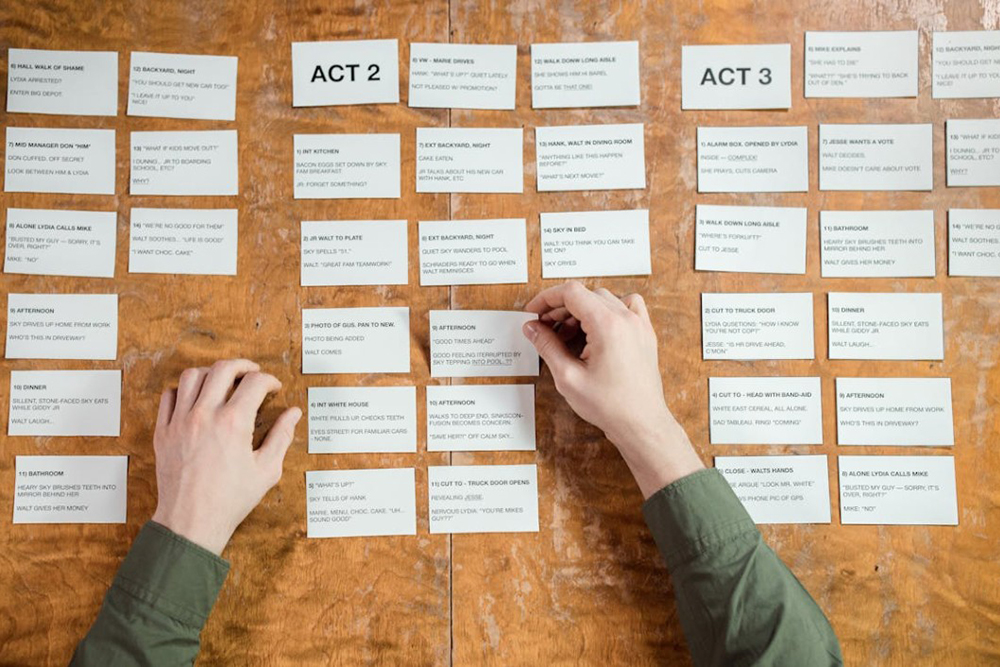


In his book, Poetics, Aristotle laid the foundation for story structure by stating that all stories must have a beginning, middle, and an end. The concept was further developed in 1979 by Syd Field in his book, Screenplay: The Foundations of Screenwriting. He called the three stages: setup, confrontation, and resolution.
Virtually every story you read or see on the screen has these three components. In this article, I’ll explore each of the three acts, show what makes them work, and then I’ll offer you a Story Weapon (as well as my free Story Structure Guide) to master the three-act structure yourself.
The three-act structure divides a story into setup, confrontation, and resolution, guiding the audience from an inciting incident through escalating conflict to a decisive, cathartic climax. It works because it mirrors how we ourselves experience change through disruptions, struggles, and transformation while providing a flexible framework for your story’s pacing, tension, and theme.
Act I: Setup
The first act is all about establishing the world of your story, introducing your main characters, and dramatizing your protagonist’s dilemma. Here, you set the tone and show us what normal life or the status quo looks like before something out of the ordinary happens in the inciting incident.
The inciting incident kickstarts your story by disrupting the normal life of your protagonist through what is typically some external event. It usually takes place about a third of the way through your first act. For example, this is the moment where Romeo sees Juliet through the window. The inciting incident is sometimes called the “Why is this day unlike any other?” moment.
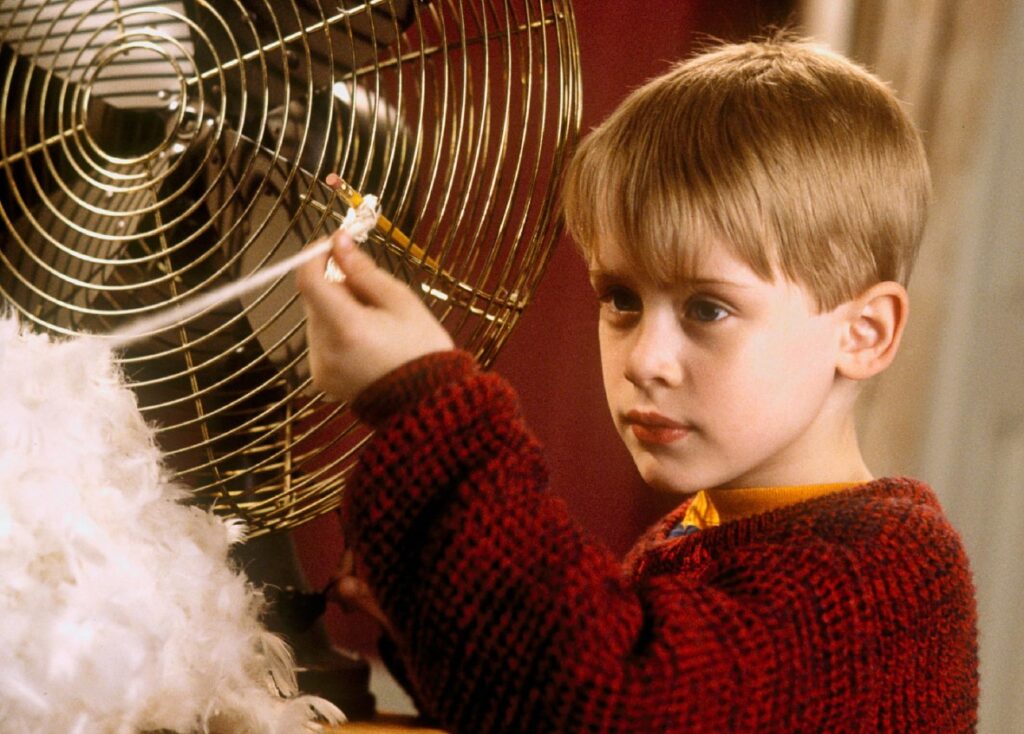
At the end of Act One your protagonist makes a decision that sets them on their journey. This could be where Kevin McAllister decides to “not be afraid anymore” and protect his house in Home Alone, or it could be the moment when Lady Bird ditches her best friend to hang out with the cool kids.
In order to keep the story from being merely episodic, there must be a cause-and-effect chain of events leading from one thing to another for the three-act structure template to work. Focus your story elements with a “unity of action,” driving toward the end.
“The structural unity of the parts is such that, if any one of them is displaced or removed, the whole will be disjointed and disturbed. For a thing whose presence or absence makes no visible difference is not an organic part of the whole.”
– Aristotle
Example: Act I in The Great Gatsby
Through the eyes of Nick Carraway, we’re introduced to the social realm of 1920s Long Island, as well as his relationships with his cousin Daisy and her husband, Tom Buchanan. The inciting incident comes when Nick meets Jay Gatsby and he gets drawn into Gatsby’s relentless pursuit of Daisy. Nick’s decision to help arrange for the two to meet sets the cause-and-effect chain in motion that drives the story’s central conflict and ultimate tragedy.
Act II: Confrontation
This is usually the longest part of the three-act structure. Here, your protagonist runs into obstacles and escalating challenges on the path to their goal. These are not just events that move the plot along. Keep every scene or chapter connected to your theme. This is where you’ll show most of your characters’ development and how relationships change or strengthen while you intensify the central conflict.
A pivotal point in this act is the midpoint twist or revelation, which can drastically change the direction of the story. Your protagonist might believe they’ve succeeded at getting what they want, only to discover it’s not enough. The actual prize is still beyond their reach.
Toward the end of the second act, there’s a moment when your protagonist hits rock bottom, the “dark night of the soul.” There’s no way they can continue until they find a new way to face their dilemma.
Example: Act II in Northanger Abbey
Catherine Morland visits Northanger Abbey and her imagination runs wild. The gothic fantasies she’s been obsessed with make her see dark secrets and sinister plots. General Tilney’s coldness only seems to confirm her suspicions. While searching for evidence, Catherine is confronted by Henry Tilney. She confesses she believed his father to be a murderer. He reprimands her, and Catherine takes it to heart how her beloved fictions are much different from reality.
Act III: Resolution
This act is much shorter, taking up about 25% of the story or even less, but it’s one of the most crucial parts as it leads the protagonist to the climax and resolution.
Everything in the first and second act has been moving your protagonist inexorably towards this final conflict. They must take a stand against the antagonist with their altered worldview. The key to remember with the climax is that it is a difficult choice for your protagonist, but only until the choice is made — and then it becomes self-evident. It is the moment your reader has been waiting for as this is where their dilemma is resolved. It is important to remember that this moment must be both completely surprising while also being utterly inevitable for your reader.
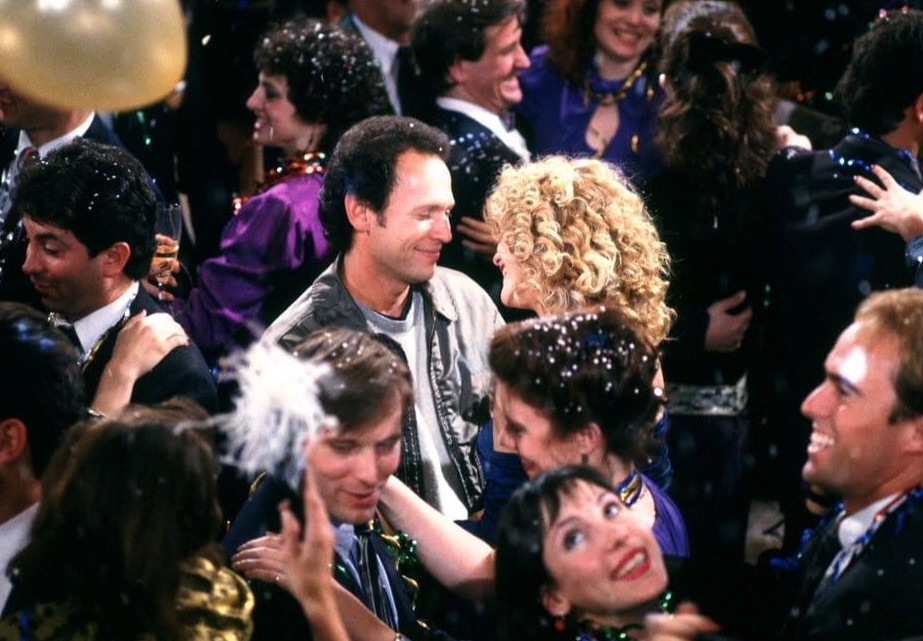
Consider the climax of When Harry Met Sally for example. The relationship between Harry and Sally seems irretrievably over. Harry walks the streets alone on New Year’s Eve, and then, suddenly, he breaks into a run and arrives at the party Sally is attending and proclaims his love. As soon as he makes this choice, which he has been avoiding throughout the entire movie, we experience satisfaction at the moment’s inevitability. In other words, the movie could not have ended any other way.
As the tension winds down, the resolution shows how things have changed for your protagonist and how they relate to others around them. Tie up any loose ends here as well in order to bring a greater sense of satisfaction for your readers.
Example: Act III in Star Wars: A New Hope
Rebel fighters desperately try to destroy the Death Star, and are getting picked off one by one. Luke lets go of his reliance on technology, instead opening himself to the mystical guidance of the Force. He hits the target with one shot, destroying the entire space station. Princess Leia awards the heroes with medals, and the rebels celebrate their victory.
Why the Three-Act Structure Works
The three-act structure is universally relatable. It mirrors our own experience as humans. We get startled out of our comfort zones, we encounter difficulties, we act to achieve our goals, and we either lose something or we transform as our understanding grows.
As a storytelling template, the three acts effectively balance pacing and tension. The structure is familiar, it’s been used for thousands of years, but when it’s done well we still want to keep reading to see what happens next.
By setting up the story in the first act and escalating conflicts in the second, it naturally builds toward a satisfying resolution that delivers a cathartic payoff. It’s a versatile format as well, and works across all genres — from fantasy, mystery, thrillers, and memoirs, to horror, drama, suspense and love stories.
Common Mistakes to Avoid
- A weak or delayed inciting incident can kill the pacing of your story. The protagonist needs something compelling to push them into action.
- Similarly, while the second act is the longest, you don’t want to get stuck there. You need to keep things moving. If there is no escalation or sense of direction, your readers might put the book down. Make sure every scene is contributing to character development, conflict escalation, or your theme.
- Abrupt or unearned victories can leave a bad taste in your audience’s mouth. The resolution needs to make sense, and have ample buildup from what came before.
- Don’t treat the three-act structure as a rigid formula, but a flexible guide. It’s a framework to help you organize your story and find a good momentum.
Your story weapon: Trusting your subconscious
Remember that developing a story is all about going from the general to the specific. You may begin with a sense of a character or a particular situation, and you might begin to ask yourself “What happens next?” Remember that your story’s structure is connected to your protagonist’s primal drive; and while this might seem counter-intuitive, when you try to ‘figure out’ your story, you tend to get stuck.
The key is to marry the wildness of your imagination to the rigor of story structure, by trusting your subconscious to do the heavy lifting. (See my free story structure guide below.)
The truth is that you can’t figure your way out to a satisfying ending. Remember Einstein’s quote, “You can’t solve a problem at the same level of consciousness that created the problem.”
When you recognize that every story begins with what appears to be a dramatic problem for your protagonist, you begin to see that your attempts to solve this problem ironically only leads them to escalating problems without a solution. But when you understand that your protagonist is actually beset with a dilemma (and not a problem), your story becomes anchored to your theme, and begins to move in exciting directions that you had not previously imagined.
FREE STORY STRUCTURE GUIDE! Are you struggling with your outline and/or seeking to deepen your relationship to structure? My FREE Story Structure Guide will help you through the process of marrying the wildness of your imagination to the rigor of structure to unlock your story within.