Even the most peaceful stories contain conflict. An idyllic life, as any retiree will tell you, is full of its share of drama — an unexpected visitor, a leaky faucet, navigating children and grandchildren whose expectations are incongruent with their plan for the day.
In literature, conflict serves as the impetus for transformation. It tests the mettle of our protagonists and gives them a reason to change, for better or worse. In this article, I will explore five of the most popular types of conflict in literature, what makes each one special, and how you can make it your own. Lastly, I will give you a Story Weapon to help discover your protagonist’s dilemma, which is driving the conflict in your own story.
These 5 types of conflict in literature serve as the essential catalyst for character transformation by forcing protagonists to confront their deepest fears and external obstacles. Whether facing themselves, another person, nature, society, or technology, the struggle ultimately reveals the story’s soul through the resolution of a core dilemma.
Character vs Self
We’re all our own worst enemies. Some stories center around internal conflict, where the protagonist is locked in a pitched battle with themselves. These may include stories about mental health, where the obstacles to happiness are the character’s own demons, habits, and biology. The way that your protagonist responds and changes in reaction to these obstacles give them a way forward. Victory is always possible, even against the ephemeral antagonist of self.
One example of Character vs Self is (spoiler alert) the conflict in Fight Club. This story explores themes of loneliness and masculinity through the relationship of an unnamed narrator and the powerful specter of Tyler Durden. Tyler is everything the protagonist is not: confident, brave, attractive, and sexually potent. It’s only at the end of the story that we learn these are two sides of the same person. It reframes the whole story and shows us how the narrator actually has every quality he feared he lacked.
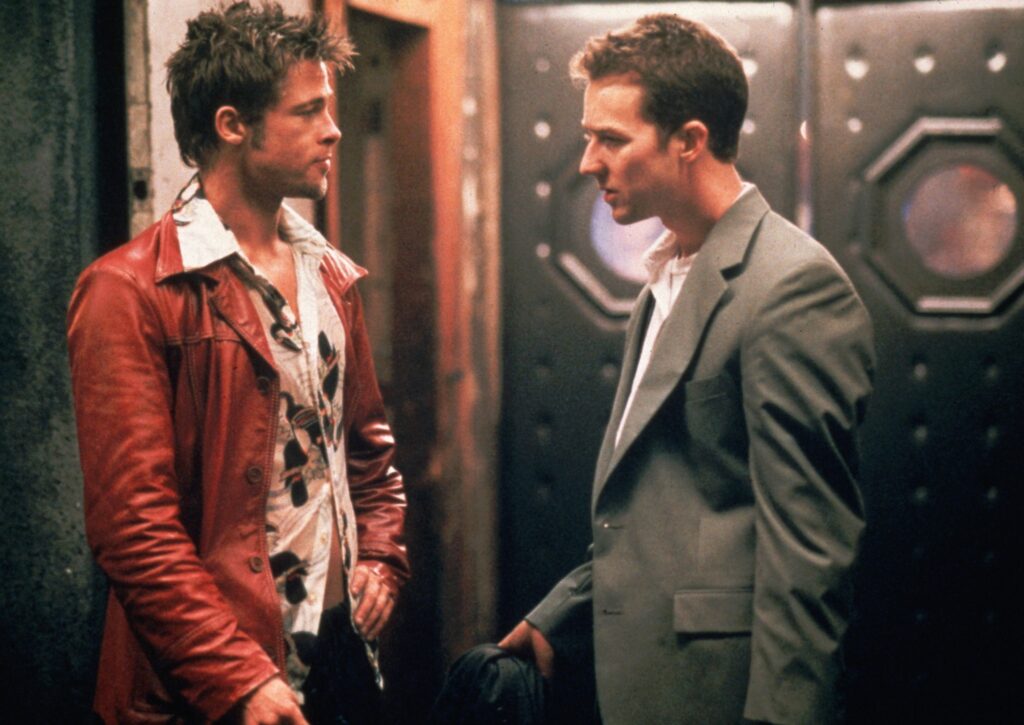
If you’re approaching this sort of conflict in your story, ask what’s keeping your protagonist from growing or reaching what they desire. All stories involve some sort of internal transformation, but Character vs Self stories are characterized by a particularly antagonistic relationship. It’s not just that the character has to move forward, they have to conquer or defeat something.
- What is that force and how does the protagonist try to win?
- Why do their first attempts fail?
- Do they really succeed in the end?
Character vs Character
Many stories come with a more clear antagonist. Sometimes there’s a clear opponent to defeat. We find this often in sports stories, detective novels, and even comic books.
One of the best parts of this sort of conflict is that you get to write about two main characters. You have your protagonist and an equally complex, equally interesting, almost equally sympathetic antagonist. There’s some great fun in choosing their similarities and differences.
A great example of Character vs Character conflict is the relationship between Sherlock Holmes and Professor Moriarty. Moriarty is a mirror image of Sherlock. He’s a mastermind that’s chosen to orchestrate crimes rather than applying his genius to solve them. The relationship between them is rich. There’s a way that genius enjoys genius, especially when it’s a rare sort of intellect. They’re destined to clash and we get to read about it.
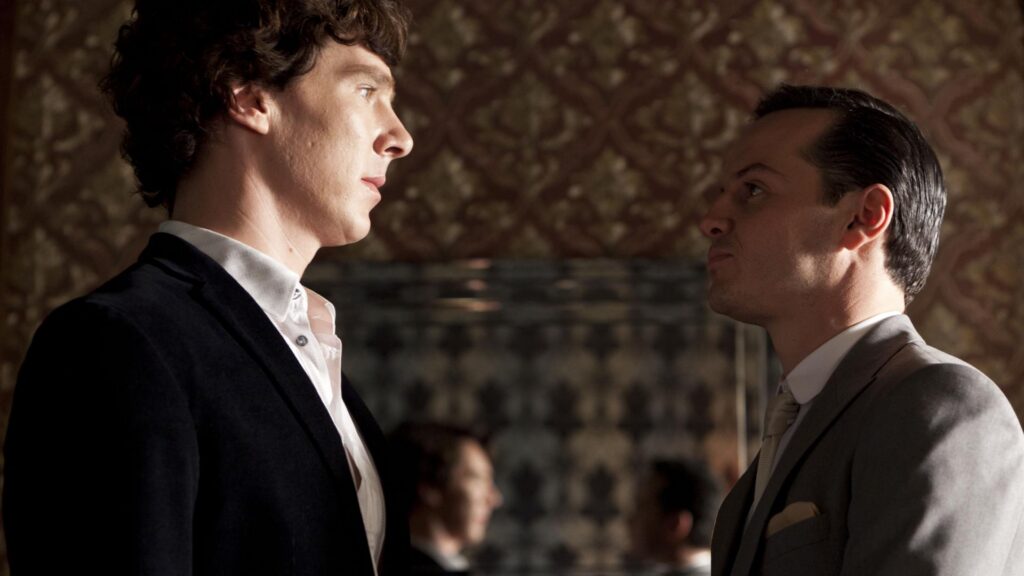
If you’re working on a story with Character vs Character conflict, ask yourself how the protagonist and antagonist relate to one another.
- Why is one a “hero” and why is the other working against them?
- Are they on equal moral footing?
- What is it about the technique, belief, or luck of the protagonist that makes them triumph in the end?
- What makes these two similar and where do they differ?
In the best rivalries, these two people learn from each other and grow as a result. It makes the climactic battle all the more sweet.
“Conflict is drama, and how people deal with conflict shows you the kind of people they are.”
– Stephen Moyer
Character vs Nature
In some cases, survival is the name of the game. These are stories where a person is battling nature itself.
Naturally, you’ll find this sort of conflict in books about the wilderness and exploration. It’s the type of conflict Louis and Clark probably faced, as did all the pioneers and explorers before we mapped the world. They learn a sort of language and rhythm in their conversation with nature, which neither hates them or saves them.
One of the famous examples of Character vs Nature is the classic Moby Dick. Captain Ahab has a particular bone to pick with a white whale, and the narrator is brought along the journey to hunt this creature. To do so, they risk life and limb on the high seas. They choke on the briny air and sharpen their harpoons. The story explores themes of madness and obsession while focusing on a primal grudge between a man and a whale.
If you’re working on a Character vs Nature conflict, ask yourself how this antagonist or antagonistic force differs from a human antagonist.
- Do they care about the protagonist, or is it a one-sided battle?
- If it’s about a particular beast, what sparks the conflict?
- Why does it force the protagonist to transform?
It’s also a wonderful opportunity to engage with your own relationship with nature. Learn her language and translate it into the written word for us.
Character vs Society
A type of conflict more familiar to those of us living amongst the masses, Character vs Society offers a lot of interesting opportunities. We all feel pressure to conform to societal norms; this pressure is more painful for some than others. Whether that’s a heteronormative expectation, a neurotypical standard, or a patriarchal force, we perform quiet acts of rebellion when we choose to be our full selves. These stories explore identity and culture as the protagonist journeys (probably metaphorically) toward self-love.
A classic example of Character vs Society conflict lies in the pages of Harper Lee’s To Kill a Mockingbird. Through the eyes of a naive Scout Finch, we see the horrors of racial prejudice.
Her father Atticus defends Tom Robinson, a black man, in a court of law. Despite the signs that point to his innocence, he’s found guilty and we see young Scout’s heart break as she reckons with a society that supports a sort of wickedness that’s new to her. Through the bravery of her father and Tom Robinson, she learns about character and standing for what you believe in. It’s a classic for a reason.
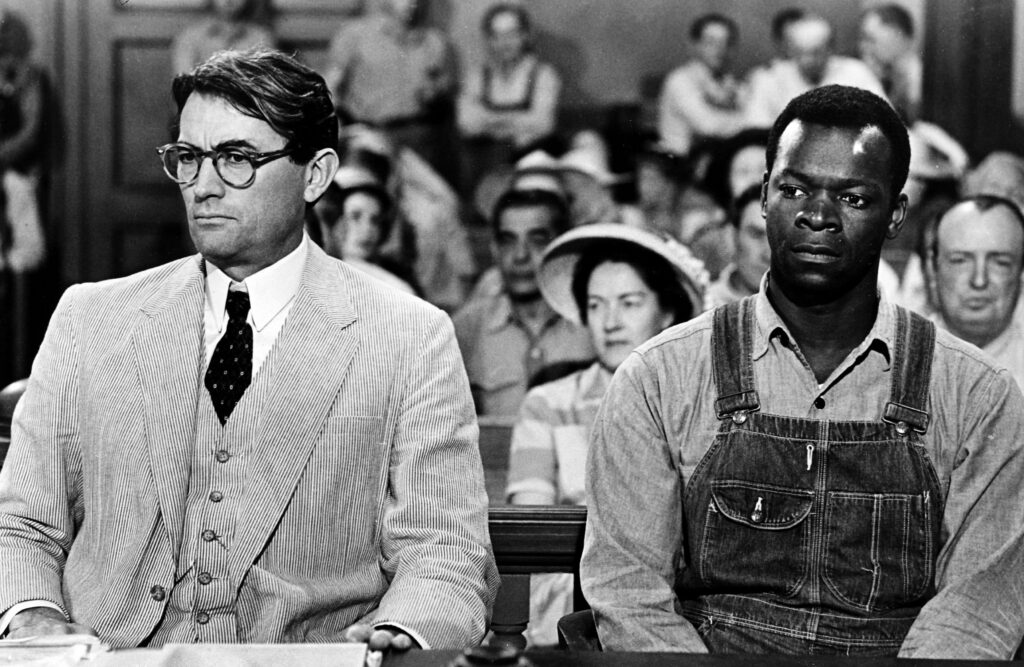
If you’re working on a story with a Character vs Society conflict, ask yourself what brought you to the topic.
- What parts of society make you feel like an outcast?
- How are those expectations enforced and how have you challenged them?
Working on a story like this is a great way to grow. As we examine where we’ve been cast out of society, we notice where our privilege might let us into rooms where others aren’t welcome. It invites the question: when are we the “character” in Character vs Society and when do we represent society?
Character vs Technology
A hallmark of science fiction, stories with Character vs Technology conflicts explore our relationship with the works of our own design. It’s a particularly pertinent type of conflict these days as we all reckon with the introduction of artificial intelligence to the everyday world. The fear of technology replacing us or working against us is well-explored territory and there’s still plenty left to write. There are all sorts of existential questions in this sort of conflict too, like the ethics of humans creating life or replicating it.
The most popular example of Character vs Technology is probably The Matrix, written and directed by the Wachowski sisters. The story follows Neo, played by Keanu Reeves, a seemingly ordinary person who learns that what he thought was reality is actually an incredibly advanced simulation. He joins the resistance to free humanity from the force that created the Matrix, and does a bunch of cool Kung Fu along the way. The story touches on themes we’ve all felt in our own lives; the omnipresence of technology, the lure of addictive media, and the feeling of unreality in reality.
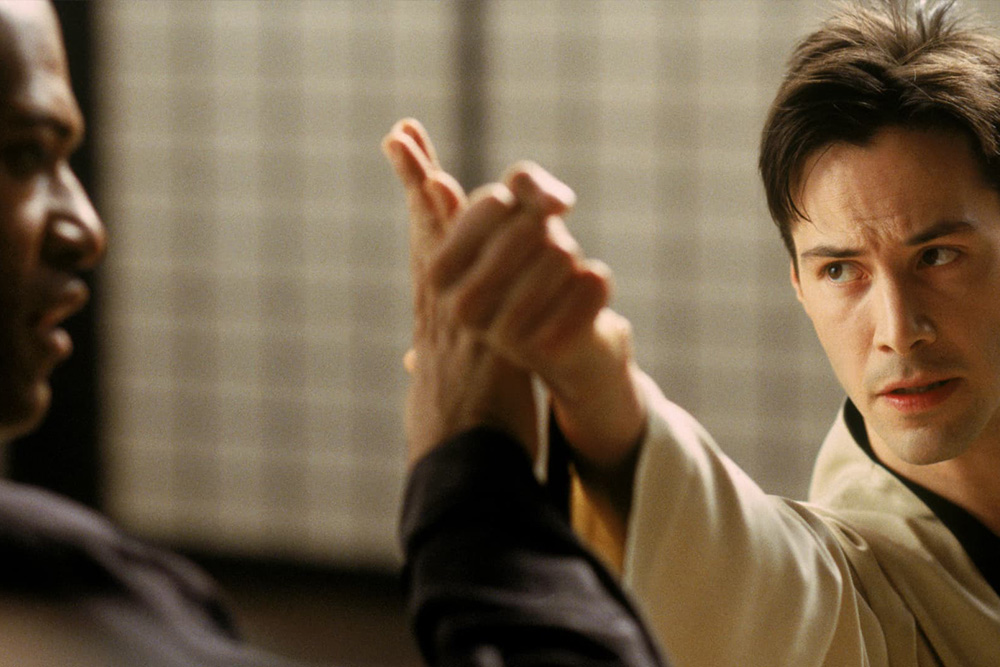
If you’re considering exploring a Character vs Technology conflict, you’ve got a great opportunity to dream of robots.
- What sort of antagonist is this technology?
- Is it a physical automaton, a piece of malevolent code, or a world of Frankenstein monsters?
- How far divorced is this technology from our current state of development?
- What makes the conflict between man and machine inevitable?
You might even try asking AI what it thinks of your story idea. See if it recognizes the irony in that.
Your story weapon: Find your conflict’s dilemma
Here’s something worth sitting with: the type of conflict in your story matters far less than what it reveals about your character’s deepest fear.
The conflict is never really about the whale, the antagonist, the society, or the machine. It is about what your protagonist believes they will lose — or finally have to face — if they engage with it fully. Captain Ahab isn’t undone by a whale. He’s undone by his hubris and inability to accept a world that doesn’t bend to his will. Neo isn’t liberated by technology. He’s liberated by his willingness to stop sleepwalking through a life that was never really his.
Every conflict, at its core, is a pressure system. It exists to push your protagonist toward the one confrontation they have been avoiding: with another person, with the world, or with themselves. The external conflict is the story’s engine. The internal transformation is its soul.
So before you decide which type of conflict your story needs, ask this: What does my protagonist most need to face? What do they believe about themselves or the world that the story is going to test, crack open, and ultimately reframe?
Start there. The conflict that best forces that reckoning is the one your story is asking for.
FREE DOWNLOAD—DILEMMA EBOOK! Do you want to find the dilemma at the heart of your story? My FREE GUIDE will lead you through the process of getting your protagonist to change the world.