
“Remember always that you not only have the right to be an individual, you have an obligation to be one.”
– Eleanor Roosevelt
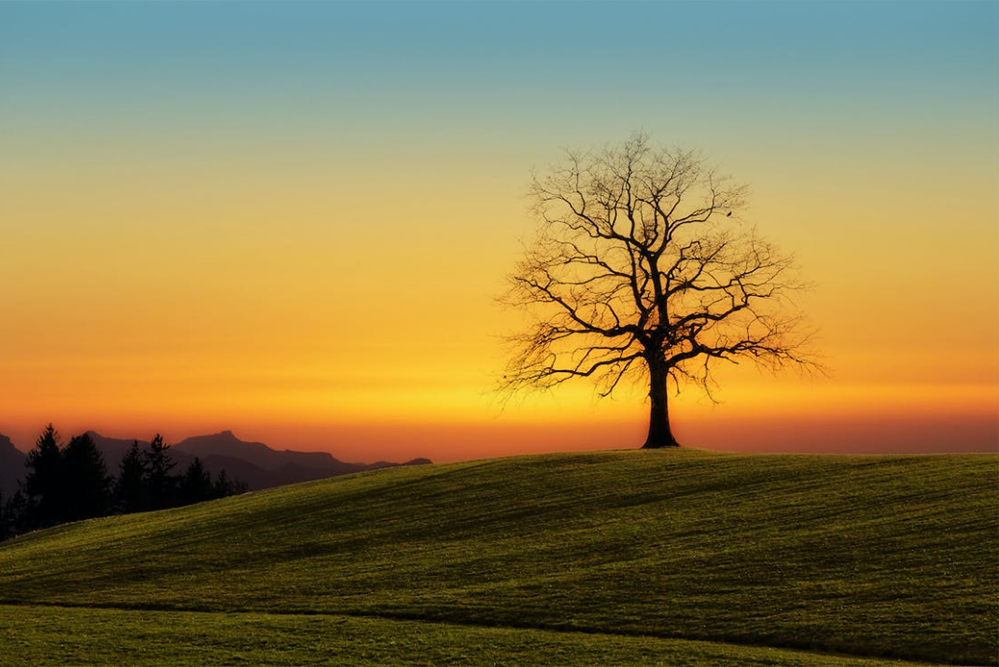
People are always talking about how they need to be better, to improve themselves, to change, but I don’t think that is correct. Think of yourself as a tree. Does a tree need to change? Does a pine tree need to turn into an oak tree to be acceptable? Of course not. Trees are perfect as they are. Trees, like people, don’t actually change but they grow.
Every tree is unique, shaped by the elements; the thick cantilevered trunk of the weeping willow bent out over the rushing river, its roots gripping tightly to the banks, tells the story of seasons weathered and obstacles endured. Every tree was born perfect and rather alike, but due to age and circumstance, each becomes its own unique self. They are suffused, as Dylan Thomas would say, by “the force that through the green fuse drives the flower.” There are no ugly trees.
Building a story is often a counter-intuitive process.
Our job, as writers, is not to try to improve or manipulate the circumstances of our characters in order to control the narrative, but often to shed our defenses, our masks, our pretenses, in order to allow the story to become what it was meant to be.
Notice in your story where your characters’ struggles inevitably move you in the direction of confronting some unpleasant aspect of yourself, something that you may have been hoping to avoid. Your job as a storyteller is not to finesse or deny this moment, but to be willing to shed a delusion, a fear, a limiting belief that you may have about yourself or the world. Notice the quiet dread or even anguish this elicits — it might feel like you’re crawling out of your skin.
Notice in nature how trees shed their leaves, how animals shed their fur. Well, emotionally and psychologically, we are doing this as well. Creating a story is an evolutionary process, which is less about adding, and more about letting go.
Your goal as an artist is not to become more acceptable to others.
Your goal is to go deeper into who you truly are — to be authentic. But this isn’t safe. There will be antagonism, especially in the beginning. The universe will test you to make sure you are sincere. No one gives you permission to take up space, to shout your truth. You must claim it for yourself.
But you have allies, a support system. You have people who believe in you, even when you don’t believe in yourself. You can depend on these people, and you are someone others can depend upon as well. Your strength lies in your vulnerability.
Things have been said. Things have been done. You have internalized them, in spite of your attempts to do otherwise. Perhaps you have even done things that you are ashamed of, things that you regret. This doesn’t make you bad or unworthy. It makes you human.
Sometimes we hold onto guilt with the belief that it makes us a better person. We may even believe that if we forgive ourselves for the mistakes of our pasts and truly let it go, we are somehow betraying the ones we had harmed.
If you don’t let go, or at least examine the burden of self-recrimination, you are limiting the potential of your story to affect others. Without self-forgiveness, there will be no transformation. If we could have done it any other way, we likely would have, and just like the tree that has weathered the elements, our survival strategies mark and shape our being. Amidst all of the challenges and setbacks, what you have to express is true and beautiful and valid.
After all, there are no ugly trees.
Learn more about marrying the wildness of your imagination to the rigor of structure in The 90-Day Novel, The 90-Day Memoir, or The 90-Day Screenplay workshops.