
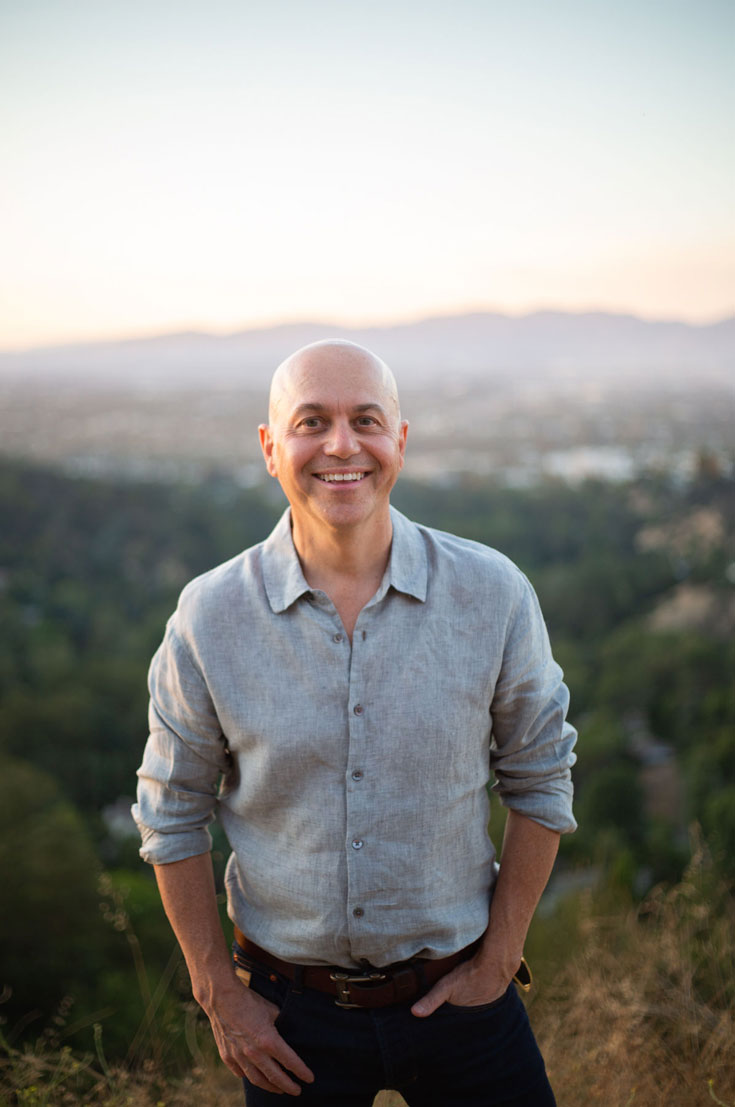



I grew up in a very bright, academic family, but at times I felt alone. My family members were very logical, reasonable people. I was not. I was more interested in the nature of things and the unseen than I was in hard evidence or statistics. Statistics weren’t trustworthy, because in my mind they failed to show the whole picture and, in isolating data, one could draw all sorts of factual conclusions that could actually lead you away from the truth you were seeking. Sometimes we are not even conscious of the assumptions that we make.
For a long time I assumed that I was nuts. As I became a writer, the greatest challenge for me was to trust the experience that I was writing about. If my family didn’t know what I was talking about, then how could I trust that I would be able to transmit these ideas through the story to complete strangers?
Learning to trust ourselves is a process. Storytelling is an art, not a science. We can’t approach our story as if it were a math problem. If our characters are puzzling us, applying hard logic rarely helps. We must go deeper and inquire into the seemingly counter-intuitive impulses that continually arise. I always tell writers that our idea of the story is never the whole story. It’s not that our idea is incorrect, but that it is incomplete.
Writing is a process of being willing to follow patterns and lines of thought, even as they often lead to dead ends. By letting go of the expectation that every session must bear fruit, we relax and we don’t burn out so easily.
When we feel discouraged, impatient, or simply unwilling to pick up our red pen, we just need to remember that the rewrite is about consistently inquiring into what we are attempting to express, and developing a deeper, and more specific relationship to our story.
Our story is about something beyond plot. Our subconscious has made all sorts of connections in the first draft that speak directly to the nature of the dilemma at the heart of our story. In the rewrite, we can make these connections conscious, to create something more than a sensory experience for our reader. We are the only person who can truly know what our story is about. Sort of terrifying, isn’t it? Because even we aren’t quite sure what it’s about, at least not entirely.
Our creative work is a byproduct of our own growth. The confusion and discomfort we may experience is part of the work, and necessary for us to understand our story in a more specific way. We’re creating a document that says, “Here is what I know to be true.” Why would we subcontract this task out to someone less qualified?
If we’re willing to sit with the confusion and occasional panic, and show up to do our daily work, we will be rewarded with insight. When we don’t trust ourselves, we seek a second opinion. This can be dangerous, especially if we do it too early in our process. Too often, our friend’s “notes” are based on how they would tell the story. I’ve seen many works-in-progress lose steam, sputter, and die due to this lack of self-trust.

As artists, logic will kill you. There is nothing logical about human behavior. Why would someone drink their self to death? What could drive someone to leave a seemingly happy marriage to run off with a criminal? Why would a child beg to be reunited with her abusive mother? These actions defy logic, yet they are the seeds from which stories arise. What we seek to express is valid. The rewrite is a process of distilling our ideas to their nature so that they are universally relatable.
Learn more about marrying the wildness of your imagination to the rigor of structure in The 90-Day Novel, The 90-Day Memoir, or The 90-Day Screenplay workshops.