


Have you ever stared at a blank page and wondered whether your story needed more inspiration or a clearer outline? If you’re not sure which writing book is right for you, you’re not alone. There are plenty of writing books on the market nowadays. Each book addresses various challenges such as structure, plot, creating characters, establishing motivation, overcoming writer’s block, and more.
In this article, I’ll recommend seven of the best books on writing and explain what each one teaches you. Lastly, I’ll give you a Story Weapon to help you get started on your journey.
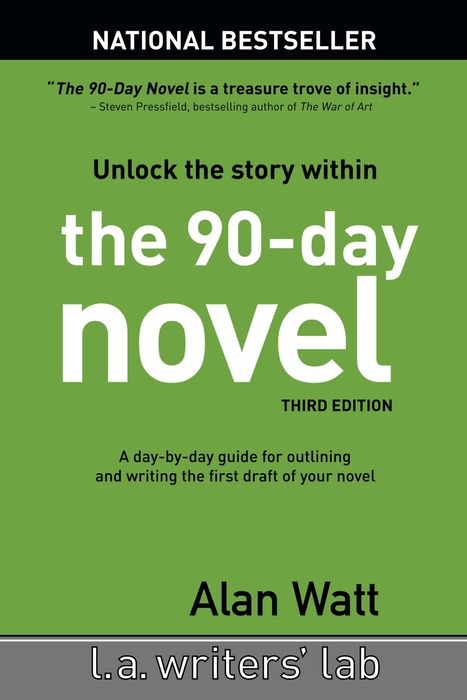
1. The 90-Day Novel by Alan Watt
Every professional writer knows that the key to being a prolific writer is getting the first draft down quickly. Give yourself enough time to get the story onto the page, but not too much time that you start to overthink it. The first draft needs to be wild and messy, without concerning yourself with the grammar, punctuation or syntax. Tell the story, and in the rewrite you can concern yourself with the quality of the prose.
Okay, you’ve probably figured out that I wrote this book. The adage “Write what you want to read” is true. The 90-Day Novel grew out of my workshops, where I taught this class for a number of years and created daily letters for my students that married craft to process. What I did was I had my students share their process in a daily forum, their ups and downs, their struggles and triumphs, and I discovered that there is a uniformity of experience through the process of writing your first draft within a contained time frame.
For example, on Day 1, I guide you through the process of discovering your protagonist’s dilemma, which helps connect you to the inner engine that drives your narrative. Writers often leave the first class elated, having had a breakthrough. Day 2, almost without exception, writers awaken awash in self-doubt, wondering what the hell they’re doing and what they’ve signed up for. This is normal! This is part of the process. And so, the Day 2 letter walks you through your self-doubt and helps to notice where this experience lives for your protagonist in the story.
You’ll begin to discover that you are not really the author, but the channel for the story that wants to be told through you. In this way, you realize that you are actually uniquely qualified to tell your story because of your doubt, and not in spite of it.
The paradox of getting your first draft down quickly is that something miraculous happens: You discover that what was impossible to achieve in ten years becomes possible in ninety days because you’re accessing a different part of your brain.
Your right brain is the seat of your genius. Genius is not a noun, it’s a verb, something we can all access. But the problem is that a lot of writers confuse their first draft with the polished version, and toggle back and forth between their left and right brains, and never quite get to the end.

The writing process is broken down into a concise, day-by-day guide designed to help you complete the first draft of your novel. With the 90-Day Novel method, you’ll find the freedom to draft without the burden of producing a polished story. You’re panning for gold here. Refining the prose and shoring up the structure will all come in the rewrite stage. Giving yourself permission to write poorly does not lead to poor writing, it leads to a brilliant messy first draft that will surprise you with the places it takes you.
Best for:
- Writers who struggle to finish
- Writers who have an idea but don’t know where it’s going
- Writers who struggle with structure (this is everyone)
- Writers who tend to overthink their drafts
What it teaches:
Instead of trying to edit each page as you go, The 90-Day Novel urges writers to discover the story as it unfolds. Each exercise helps the writer understand their characters’ inner workings, including their motivations, their dynamic role in the storyline, and how they directly influence the plot.
Practical takeaway:
Focus on discovering and developing your story instead of trying to make the first draft perfect.
Why read it?
The drafting process makes The 90-Day Novel effective for writers at any level who want to take a story from initial idea to a full draft without getting bogged down by perfectionism. This method is used by thousands of writers, from first-time authors to New York bestselling novelists, to complete their first drafts.
2. On Writing by Stephen King
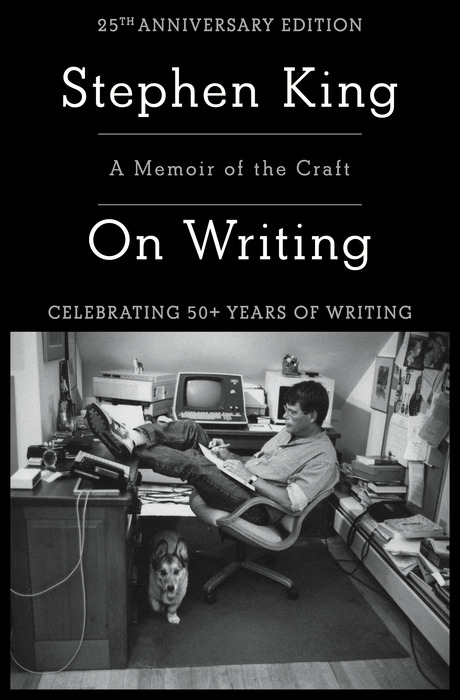
Stephen King’s book On Writing is part memoir and part writing advice.
This book has stayed popular for a reason. King doesn’t offer mysterious advice on how to become a great writer. He breaks it all down into habits, discipline, reading, revision, and persistence. This is especially helpful for those who struggle with the emotional side of writing.
Do you wait for inspiration before you write?
Do you compare everything you write to the books you read by published authors?
Do you edit a single paragraph multiple times instead of continuing with your draft?
This book will help you learn that writing is more than memorizing and applying rules. On Writing is about building consistency in your writing practice and developing disciplined habits to become a better writer. This makes it a valuable resource for writers who struggle to write consistently.
Best for:
- Unmotivated writers
- Writers who only write when inspired
- Writers who fuss over their prose
- Writers who need to develop a writing schedule
Practical takeaway:
Don’t wait for inspiration to begin writing. Begin writing to create a consistent habit.
Why read it?
If you’re struggling with discipline or trying to balance self-doubt with doubt about the craft, then On Writing is meant for you.
3. Bird by Bird by Anne Lamott
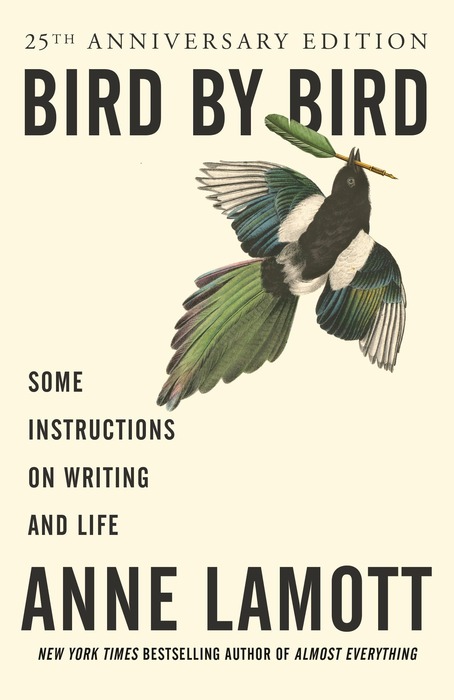
Sometimes writing blocks are actually anxiety issues in disguise. You have a large task before you, and you can’t move. Bird by Bird can help you with that.
Anne Lamott shows that writing is full of humor, honesty, and a deep understanding of the resistances that accompany the creative process. Lamott shows writing in all its messiness, difficulty, and unpredictability — a process full of false starts, detours, U-turns, and rewrites. Writing something as big as a book is really a series of smaller pieces. That’s great advice for all writers.
Bird by Bird addresses the negative emotions writers experience during the writing process. Lamott advises writers to approach large projects by breaking them into smaller, manageable steps.
Best for:
- Overwhelmed writers
- Writers struggling with anxiety
- Writers who procrastinate
- Writers who need help building the habit of imperfect writing
Practical takeaway:
Small victories build confidence and help you commit to your writing practice. Instead of daydreaming about the finished product, ask yourself: What are you capable of writing today?
Why read it?
Bird by Bird offers helpful guidance for tackling the paralyzing feeling caused by large writing projects, providing concrete ways to break down those projects into smaller components.
4. Save the Cat! Writes a Novel by Jessica Brody
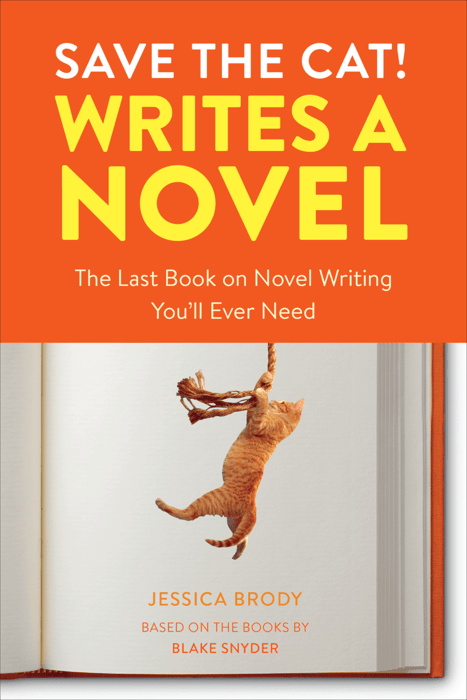
Save the Cat! Writes a Novel will be especially helpful if you struggle with plot. Jessica Brody adapted the Save the Cat! screenplay method, and created a series of story beats for novelists. This method is ideal for developing plot and character arcs without relying on a rigid beat sheet. This is helpful for prolific writers who have hundreds of scenes in mind, and possibly written, but aren’t sure whether they lead anywhere.
This book asks questions like:
- Where does the protagonist’s ordinary world end?
- What makes their life easier?
- What happens to their old way of seeing the world?
A little structure can give your imagination somewhere to go. Brody’s method in this book helps you envision plot and character arcs without forcing the story into an inflexible form.
Best for:
- Writers who struggle with plot
- Writers with scenes that lack organization and cohesion
- Writers who need to organize their story
- Writers who appreciate structure but still want freedom
Practical takeaway:
Compare your story’s existing scenes to the major story beats to identify where your plot direction is lacking.
Why read it?
If you’re overflowing with ideas and scenes but struggle to create a solid structure, give Save the Cat! Writes a Novel a try.
5. The Anatomy of Story by John Truby
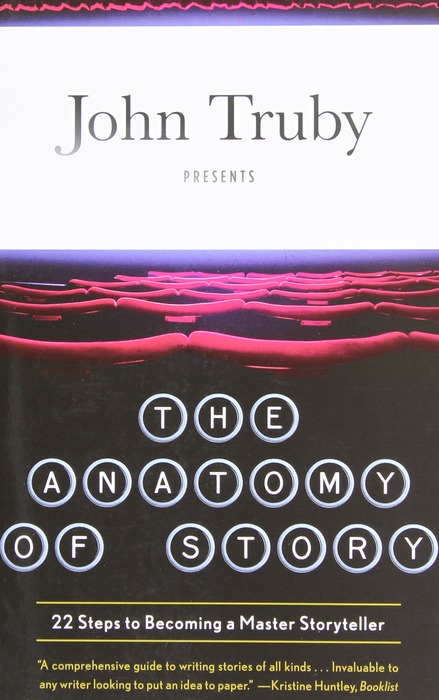
The Anatomy of Story is an excellent choice if you want to go deeper into the interplay between plot, theme, conflict, and character. John Truby examines the relationship between the protagonist’s internal journey and external journey. This book takes a similar approach to The 90-Day Novel in some ways, but is more analytical and structural than intuitive. It focuses more on the mechanical design and architecture of a story, rooted more closely in screenwriting techniques.
Let’s say you have a character who needs to retrieve a lost object.
- Why does retrieving the object matter to this specific person?
- What belief will be contradicted?
- What do they fear losing?
- What must they recognize about themselves to be able to change?
The answers to these questions and more help turn a sequence of events into a narrative.
Best for:
- Writers whose stories unfold through a series of incidents
- Writers looking to develop character and plot through action and dialogue
- Writers exploring the relationship between interest and conflict
- Writers integrating the inner and outer journeys of their protagonist
Practical application:
Before developing a large portion of your story, determine what your protagonist wants, what they fear, what they believe to be true, and what they need to realize about themselves.
Why read it?
The Anatomy of Story is useful if you have a plot full of events but need stronger character motivation, conflict, and a deeper overall meaning.
6. Story Genius by Lisa Cron
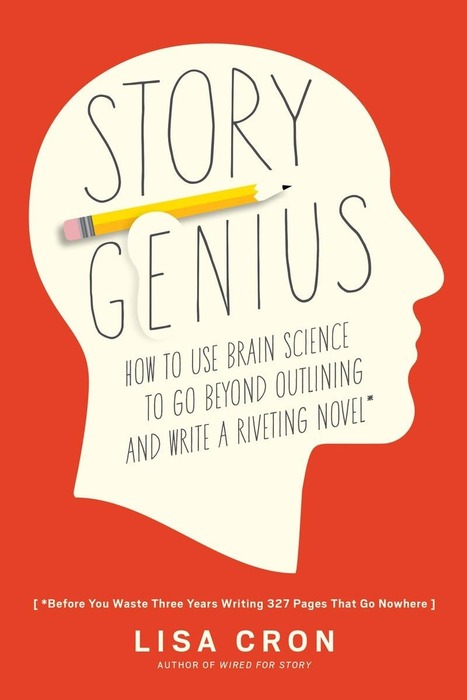
Another book that can help you understand the relationship between character psychology and plot is Story Genius by Lisa Cron. The idea is that readers connect with what’s happening inside a character, not just with what the character does.
Consider this example that shows why inner workings matter more than actions alone:
Maria walks into the interview.
Or:
Maria walks into the interview, convinced that one wrong answer will prove her father was right about her.
The action is the same in both, but the emotional context is different. This kind of context helps you build scenes around what your protagonist believes, fears, wants, and misunderstands.
Best for:
- Writers who struggle with motivation
- Writers who want to connect their psychology to their plot
- Writers who need motivating plot points
- Writers whose scenes feel emotionally flat
Practical takeaway:
Before you write a scene, consider what your protagonist thinks, fears, wants, and misunderstands. This will help motivate you to write your plot.
When should you use it?
Story Genius will help you conduct in-depth character studies on your protagonist, build strong narratives, and create connections between the protagonist’s internal and external journey conflicts.
7. Self-Editing for Fiction Writers by Renni Browne and Dave King
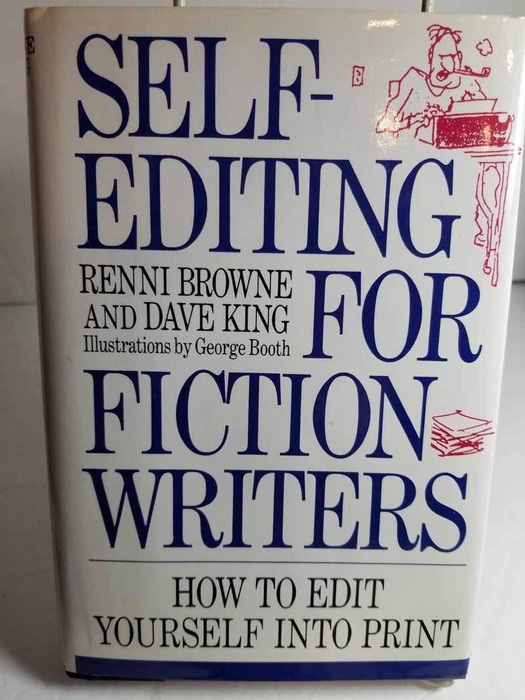
Eventually, the time will come when you have to read back over the draft you’ve written. That’s when Self-Editing for Fiction Writers can be useful.
The first draft and the first edit of a story need to be done separately. If you try to do both at the same time, you’ll likely spend hours editing a paragraph that ultimately gets deleted. A self-editing book can help you step back and look at overall aspects of the story such as dialogue, description, point of view, pacing, and extraneous details.
You’re looking for more than spelling errors here. You’re determining whether a scene serves its purpose. Does it move the plot along? Does it portray the character in more detail? Does the scene build conflict? Does it prompt you to read on?
Best For:
- Writers who have a first draft
- Writers looking to improve their scenes
- Writers seeking help with dialogue and pacing
- Writers needing support with larger revisions
Practical Takeaway:
Revisit each scene in your draft and ask yourself whether it adds something essential to the plot, characters, or conflict, and, perhaps most importantly, whether it gives the reader a compelling reason to keep reading.
Why read it?
Self-Editing for Fiction Writers is ideal when you have a complete draft and need to determine which parts of the writing should be strengthened, cut, or revised.
How to use writing guides without feeling overwhelmed
One of the problems with writing advice books is that authors often suggest contradictory methods. One says to plan your writing by outlining, and the next says to write without planning. One says to write every day, and another says to write in spurts.
Writing books are simply tools available to you. Keep things clear for yourself by following these five steps:
Step 1: Identify your struggle point
First, identify what you are having the greatest issues with. Do you have difficulty starting, staying motivated, creating characters, organizing your plot, or revising your draft?
Step 2: Pick a book
Once you’ve figured out what your problem is, choose a book that focuses on solving that problem. You don’t have to read all of the writing books out there.
Step 3: Read the chapters that pertain to your problem
If you’re feeling overwhelmed, stick to the chapters that address the specific issue you’re facing. You don’t have to try every method a book has to offer.
Step 4: Apply that method to your manuscript
Choose a technique from the writing book and apply it to your manuscript. Write a new scene. Revise a character. Rearrange your plot. Edit your draft as needed if the time is right.
Step 5: Re-read and revise
Assess what’s changed. Did it help your scene? Your character development? Your theme? If so, keep using that method. If it’s not clicking, try another one.
Every rule of writing comes from someone solving a problem. Your goal, then, is to figure out what problem you need to solve and use the guide best designed for that purpose.

Common mistakes writers make with writing books
1. Reading instead of writing
This is one of the easiest mistakes to make. You can buy into countless books, courses, and craft guides, but never take the time to actually put those tools to use.
After studying six months of writing instruction, you’ve never written a single word.
Open your manuscript. Close your instruction books.
Try this: For every 30 minutes you spend studying writing technique, try to apply at least one idea in your manuscript for another 30 minutes.
2. Too much methodology
You don’t need five outlining methods to draft a novel. One method will suffice. See what works best for you.
3. Treating advice as orders
Most writing tips are based on someone else’s experience. It’s up to you to decide whether it fits your personal writing process.
4. Using structure to avoid inspiration
Outlines help you map a path forward. Your outline should guide you, not restrict you from discovering something new. It’s okay to be surprised by your characters.
5. Editing before writing
If you haven’t written Chapter Twenty but you’re already going back to edit Chapter One, STOP. Write the story down first to see where it goes. You can revise it later.
Your story weapon: The book-to-page exercise in 5 steps
This is a fun, simple way to put what you’ve learned from writing books to use.
Step 1: One idea
Think back to an idea you’ve read in your writing book of choice. You can check back over it if you need to, then close the book.
Step 2: Connect it to your protagonist
Identify a belief, fear, desire, or expectation of your protagonist’s that this idea can support or contradict.
Step 3: Create a scene that tests the idea
Imagine your protagonist in a situation where they must make a choice.
Step 4: Write without editing
Set your timer for 15 minutes and write. This is not the time to pause and think about edits.
Step 5: Ask what you discovered
When your timer goes off, ask yourself, “Did I learn something about my characters?” If the answer is yes, that means you looked beyond simply reading a book about writing. You have taken the lessons and applied them to your story.
Final thoughts
The best books on writing won’t write your story for you. They help you understand the different elements of writing and story structure, but those ideas still need to be translated into your own words on the page. So don’t worry about finding the one perfect writing book.
Find the book that helps you understand the question you’re currently trying to figure out, and start writing.
Writing books can provide valuable guidance, but the real work begins when you apply those lessons to your own characters, scenes, structure, and revision process. To deepen your understanding of storytelling craft and put those ideas into practice, join one of my next workshops: The 90-Day Novel, The 90-Day Memoir, Story Day.