Before a story begins, you can include an epigraph to signal your protagonist’s dilemma, the tone, and even foreshadow the ending with some carefully chosen lines. Would one of the following quotes fit your story?
- “Monsters are real, and the ghosts are, too.” — Stephen King
- “Courage, dear heart.” — C.S. Lewis
- “What you seek is seeking you.” — Rumi
This is the power of an epigraph — pointing toward the themes and emotional terrain ahead. Whether drawn from history, literature, or a character within the story itself, an epigraph can frame the work that follows, offering a subtle invitation into the world you’re about to create. In this article, I will explore what an epigraph is, show how it can be useful with some examples, and I’ll give you a Story Weapon to see if an epigraph would work for your story.
An epigraph is a short quotation placed at the start of a book, chapter, or film to hint at the tale’s themes, tone, or underlying argument. It acts as a guiding compass to the story, offering readers a glimpse of the world they’re about to enter.
What is an epigraph?
As the words in your story form a tapestry, the epigraph can be the first thread.
An epigraph is a quotation at the beginning of a story or at the top of a chapter. It’s most commonly seen in books, but some films also begin with an epigraph either shown in text on screen or read aloud by one of the characters.
“One of the things I try to do is try to make repetitions, rhymes, and mirrorings across the subject matter of my own books so that the chapter titles and the epigraphs and pictures all kind of form a tapestry.”
– Marina Warner
The purpose of an epigraph
Epigraphs give a clue to your overall themes.
An epigraph is often used as a means of summarizing a story thematically. In the same way that Shakespeare often began his plays with the chorus emerging to tell us what we were about to witness, an epigraph can work as a contemporary version of the chorus, by distilling the events that are to follow.
The art of synthesizing something grand into a few words is captured beautifully by George Anastaplo in his book The Artist as Thinker. Here are the opening lines of the book:
It has been reported of the 1939 Munich conference between Neville Chamberlain and Adolf Hitler that ‘when the time [came] to sign the final Agreements, it [was] found that the ink pot into which Herr Hitler dipped his pen was empty.’
We are not surprised when a poet notices such details . . . But what are we to make of the fact that a sober historian transmitting this report about Munich can call the ink-pot detail ‘ominous’? Does not such an assessment, drawing on what is known to have happened after Munich, assume that the great is mirrored in the trivial, that even the fall of a sparrow is not without significance?
Do not men fasten upon such details as a poetic way of making sense of the wholeness of things?
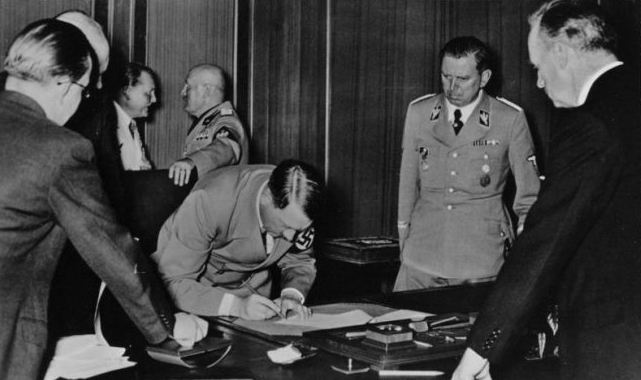
This is the beauty of a great epigraph. Knowing what we know about history, the fact that Hitler’s ink pot was empty when signing the act of appeasement says it all. By noticing these details and being able to capture it in the form of language, the writer is putting forth an argument about the world.
Whether you choose to make an argument consciously or not, there are aesthetic principles and values your book will impart on the reader. By bringing up the words of another author before the book commences, you’re calling on them to testify on your behalf.
The epigraph introduces the style and tone of your story.
While you can always write your story first and find a fitting epigraph afterwards, you might consider choosing an epigraph as a sort of placeholder to keep you connected to what you want to express. Find a line that captures the essence of your story, and can be a resource if you’re starting to feel disconnected to what you started in the first place.
You may find, as the draft continues, that the epigraph you’ve chosen no longer makes sense or you’ve outgrown it.
Robert Caro, author of The Power Broker and the Lyndon B. Johnson biographies, often stuck notes to his wall as part of his outlining process. Among those notes would be quotes that captured the spirit of the piece, sometimes from historical figures, or simply from interviewees relevant to the book.
Examples of epigraphs
Let’s take a look at some epigraphs and consider what they say about the work:
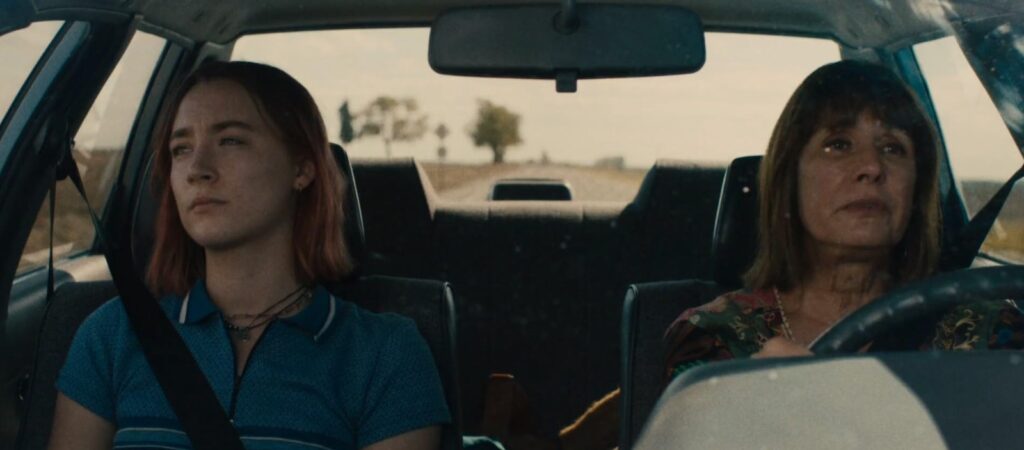
Lady Bird written and directed by Greta Gerwig
The movie opens with this line from Joan Didion: “Anybody who talks about California hedonism has never spent a Christmas in Sacramento.” Already, you can taste the dryness of a California winter. For a story about a young woman trying to escape her drab home life, it’s always Christmas in Sacramento.
Fargo written and directed by the Coen Brothers
“This is a true story. The events depicted in this film took place in Minnesota in 1987. At the request of the survivors, the names have been changed. Out of respect for the dead, the rest has been told exactly as it occurred.” The mystique is well established here. We know that there are survivors of some event and that there are some dead. The tone of the movie is hinted at by that last line.
Dune by Frank Herbert
The chapters open with relevant quotes from fictional “history” books. They are written in retrospect about Paul Atreides and the events of the story, hinting at the glory to come. For a book that explores the idea of messiah figures and the way history is manipulated, it’s a great way to expand the world of the book.
Here’s one example, attributed to a book written by the later wife of the main character: “‘There is no escape — we pay for the violence of our ancestors.’ – from ‘The Collected Sayings of Muad’Dib’ by the Princess Irulan”
The Gift by Vladimir Nabokov
“‘An oak is a tree. A rose is a flower. A deer is an animal. A sparrow is a bird. Russia is our father-land. Death is inevitable.’ – P. Smirnovsky, A Textbook of Russian Grammar.” This is a Russian novel, written in Russian by a Russian writer about another writer in Russia. Smirnovsky’s quote is Nabakov’s way of introducing us to the wit and weariness of the Russian people.
The Godfather by Mario Puzo
The film opens with this line from Honoré de Balzac: “Behind every great fortune there is a crime.” This quote summarizes the story we are about to witness. It’s not just a story about the joys of criminal life. Instead, it reminds us that all concentrations of wealth begin with a rule being broken. The crimes may vary, but after enough time they are forgotten, while the fortune remains.

Your story weapon: Is an epigraph right for my story?
The important thing to remember is that an epigraph can sometimes be useful, but it is not essential. So, begin by asking yourself if an epigraph is there to add to your story, or if you are including it because you’re unsure whether or not the story will be clear without it.
It may sound counterintuitive, but when you feel comfortable knowing that your story can stand on its own, you may discover an epigraph that supports what you have already written.
One thing to be aware of, however, is that some works will fall under copyright restrictions. You’ll need to check if the quote you want to use is in the public domain, or if you need to ask for approval from whoever owns the copyright to that material.
An epigraph may align beautifully with your story, but be sure to save yourself a costly headache and follow the proper protocols.
There are a myriad of ways you can clue readers in on the themes of your story. Find out more in one of my workshops: The 90-Day Novel, The 90-Day Memoir, Story Day