Our idea of the story is never the whole story. The act of writing a novel, memoir, or screenplay is a way of developing a coherent narrative for something that began as a simple idea or image. We are piecing together a series of emotional experiences that lead to a transformation. The plot, the “stuff that happens,” grows out of these experiences. It’s sort of like climbing a mountain and then looking back and wondering, “How did I get here?” We write to retrace our steps as a document or emotional map for others to follow.
Think about any well-told story, from Casablanca to Lady Bird. Underneath the plot lies an emotional arc for the protagonist. Whether it is the journey from fear to love, or from ignorance to wisdom, what we create as artists is often a byproduct of our own individual growth. At the heart of our creation is a search for meaning.
It is important as we write the first draft that we continue to hold the story loosely. This means that we are always open to new and more specific ways of expressing our stories. For example, I might be certain that a particular scene must occur in order to move my story forward. Yet, as I begin to write it, I discover that it’s different than how I imagined it. It is important that I don’t force it, but rather, that I become curious about the essence of what I want to express.
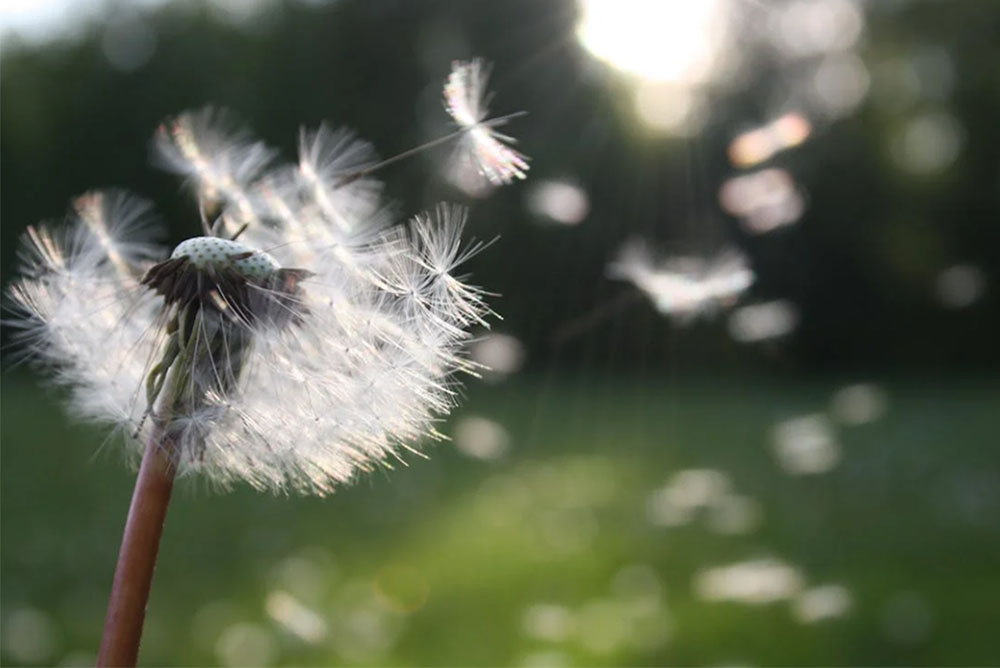
By holding my ideas loosely, the truth can emerge.
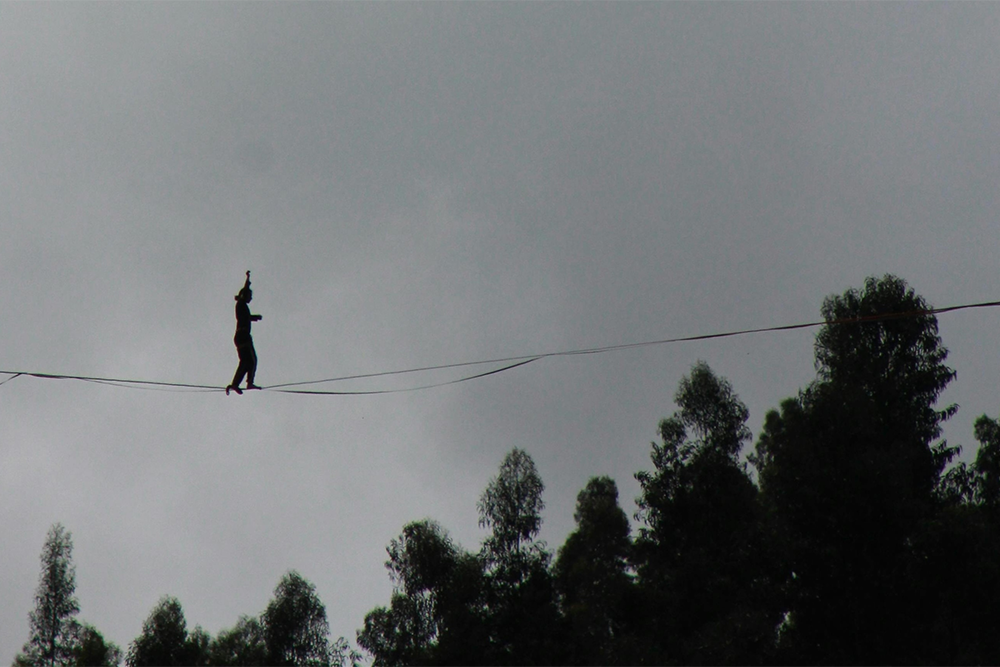
Watching a story reveal itself to me on the page is always amazing. I revel at the infinite number of ways the story could go. It feels like walking a tight rope and all I have to do is make one wrong choice and my story could collapse. It seems so precarious, impossible even.
When we approach our first draft from an analytical perspective, it is impossible. Yet, haven’t we all had the experience of losing a piece of writing and having to rewrite it? Then later, we find the original, only to discover how much of it we had actually retained? It is alarming. The story was not residing in our brain. It sprang from a much deeper place. We were not required to remember it, as we may have fretted. Our stories are stored somewhere in our DNA. They live fully and completely within us. When we relax and hold it loosely, it is revealed to us.
It’s not too late to join the 30-Day Outline workshop! Registration will stay open until this Sunday, April 7th, at midnight. Deepen your relationship to story by mastering the process of marrying the wildness of your imagination to the rigor of structure.