


Learning how to write a fight scene isn’t really about choreography. It’s about tension and what’s truly at stake for your characters in that moment.
A lot of writers think that the hardest part is figuring out exactly how a punch lands, or how a knife fight works. But no matter how accurate the moves might be, your fight scenes are doomed to fail if your reader doesn’t sense that anything is at risk. The goal is to keep your reader’s heart pounding with fear about what might happen next.
In this article I’ll cover a step-by-step approach on how to write a fight scene, give an example, and look at some common mistakes. Lastly, I’ll provide you with a Story Weapon to check if your fight scene is a series of stage directions or if it’s impacting your story.
Step One: Know what’s actually at stake
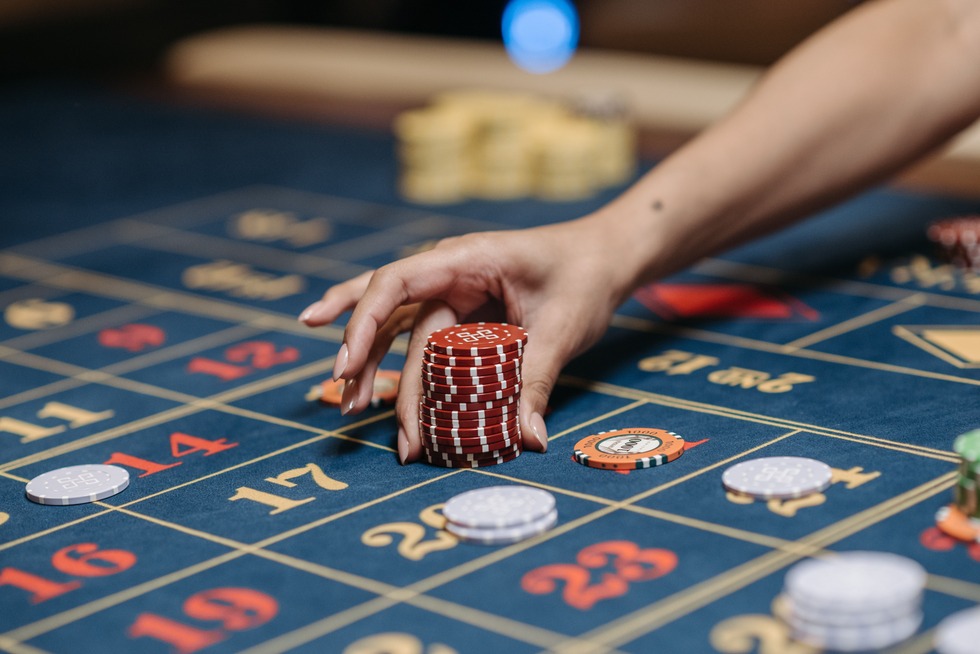
Before you write a single punch, consider what happens if your character loses. They’ll probably be beat up, or possibly gravely wounded depending on how serious the fight gets. But what matters beyond this scene? This is groundwork that should be established before your characters come to blows.
If you’re just writing a fight scene for fun to play around with creating some action sequences, it will feel flat to your readers.
Example:
For Patty, it’s not just about her own safety. Jack has discovered her sister’s address. If Patty loses this battle, her sister’s location won’t be a secret anymore.
When it comes to the fight scene, the reader knows the real stakes lying under every blow.

Step Two: Ground the reader before the chaos starts

Provide the reader with a clear sense of the physical space before things start to move fast. Where are they? A busy marketplace, or a dingy basement? What’s underfoot? What might someone trip on, grab, or get slammed into?
It doesn’t have to be a lengthy description. A few well-crafted details here can do more than an entire paragraph of setup. All the reader needs is enough to form a crude map in their head. When the fight kicks off, there’s no time to stop and explain how there’s suddenly an ancient gilded mirror that was passed down from generation to generation now lying in fragments on the floor.
Example:
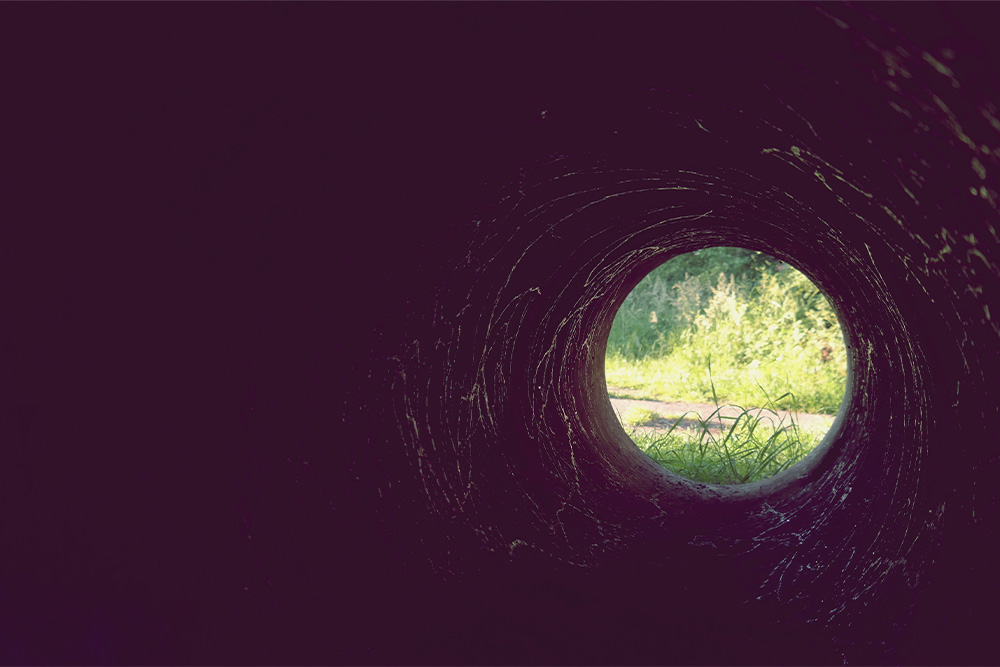
Her phone is dead. Patty tries to think of the quickest way to get out and warn her sister. The back stairwell is narrow with metal steps. Would it make too much noise before she could make it to the door at the bottom?
This picture helps the reader get a sense of the space before Patty even begins to move.
Step Three: Use short sentences to create speed
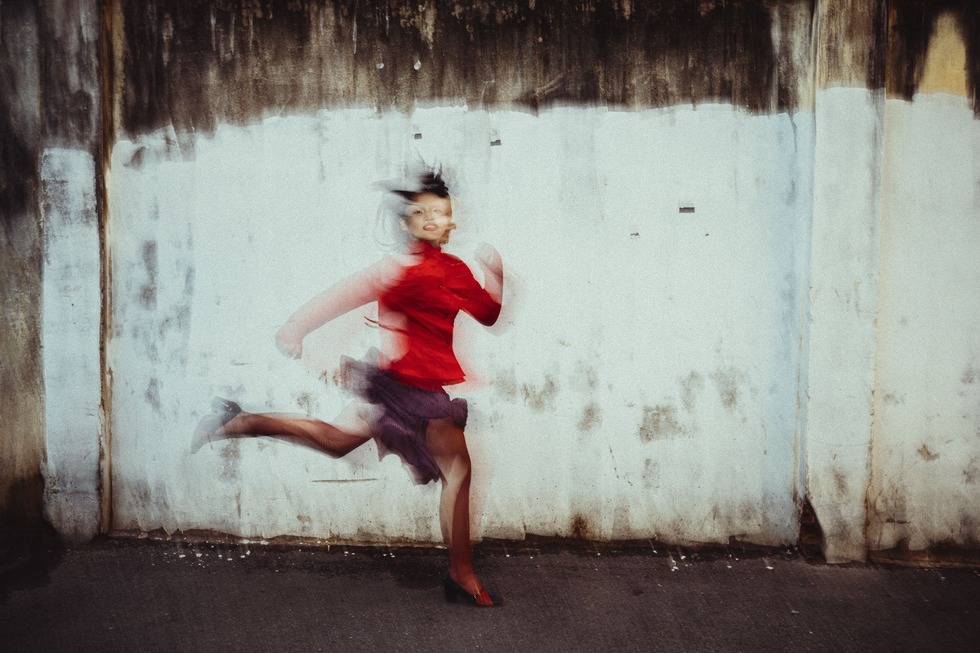
Long, flowing sentences slow a reader down to give breathing space. For fight scenes you’ll want the opposite. Use short quick sentences. Fragments. Let the rhythm of your prose mirror the tempo of the fight itself. This is one of the fastest ways to change how a scene feels.
If your characters are moving in drawn out languishing lines, the fight will feel almost lazy. Chop those same moves into short bursts. The pace snaps into place.
Jack lunges. Patty twists away, but her knee bangs into the wall. Pain flashes down her leg. She doesn’t have time to feel it yet.
Your reader’s eyes will flash down the page along with the quick momentum of the scene. You’re not adding any special literary tricks here. You’re just cutting the fat.
Step Four: Let the body pay a price
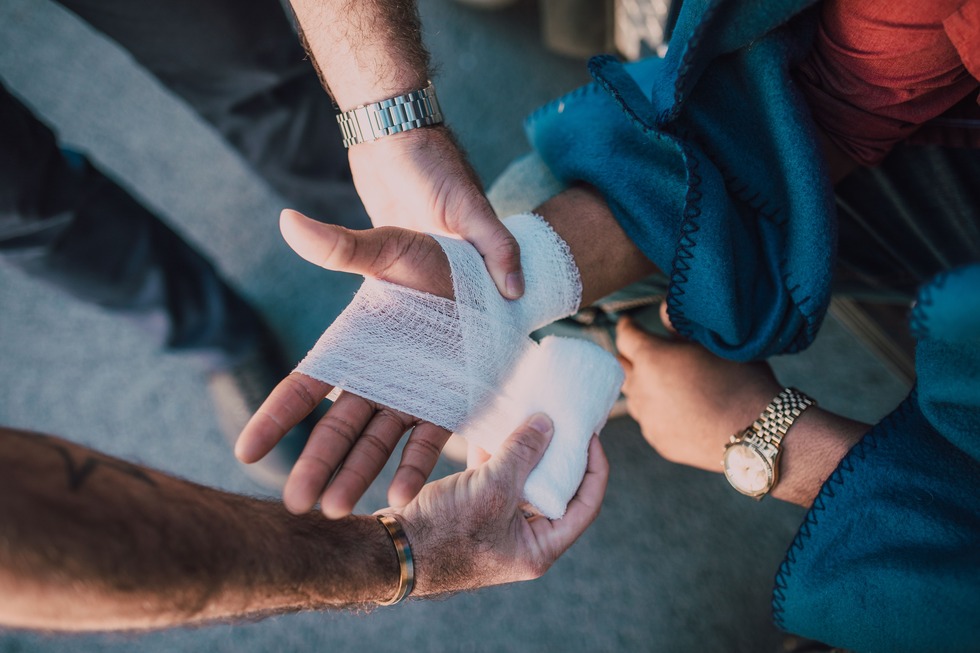
A fight with no real physical cost feels weightless. If they’re not Superman, your characters should get tired. Let them get hurt in ways that carry into the next scenes, and don’t just vanish miraculously.
This is also where a lot of fight scenes quietly lose credibility. A character takes a hit, shakes it off, and keeps fighting at full strength in another clash only a few pages later. Readers will notice, even if they can’t always say why the scene felt off. Real bodies slow down. Your character might start to favor an injured side, or start making worse decisions the longer a fight drags on.
Patty’s knee buckles beneath her. She just manages to catch herself on the railing. Desperate, she limps down the stairs, hoping to get away before he can catch up again.
That’s not a random detail. It’s a cost that changes what she can do for the next part of the story. Readers trust a scene more when pain has consequences instead of just acting as decoration.
Step Five: Break the rhythm with a turn
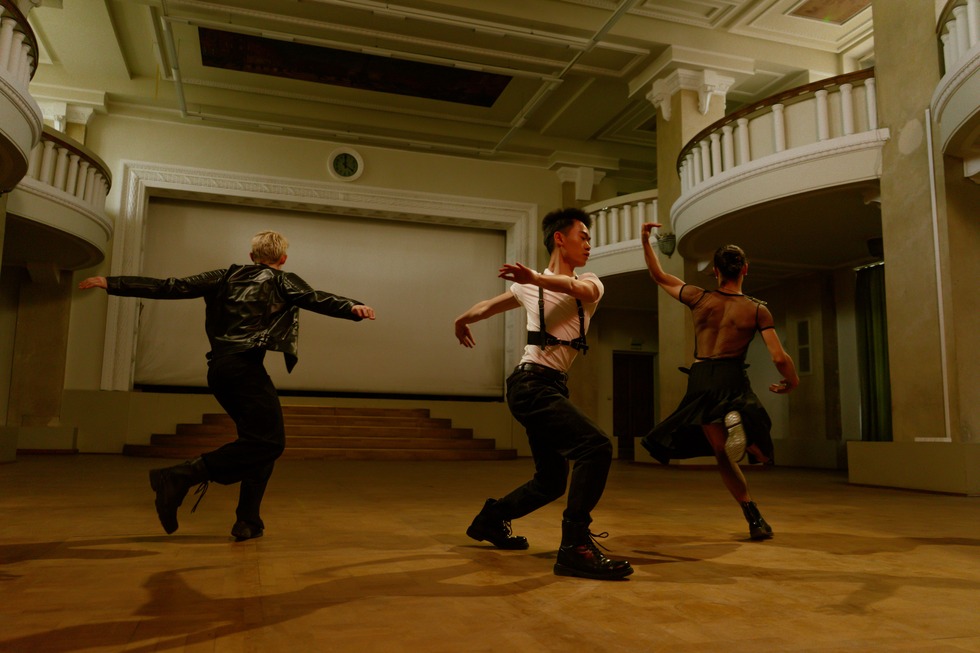
A weapon drops. New information is revealed. The power dynamic reverses, at least temporarily. You can use this pivot to drive up the tension.
If one character dominates from start to finish without any change in momentum, the scene becomes too static. Your character might realize their current strategy isn’t working, and try something else.
The turn doesn’t need to be dramatic in nature. It just needs to alter what the character is trying to do. A fight where they’re simply trading blows tends to flatten out. A fight where the objective changes partway through gives it movement and more of a shape.
Jack would be on top of her at any moment. Patty notices a fire hydrant in the hallway leading off the stairwell ahead. She leaps toward it.
Step Six: End on a consequence
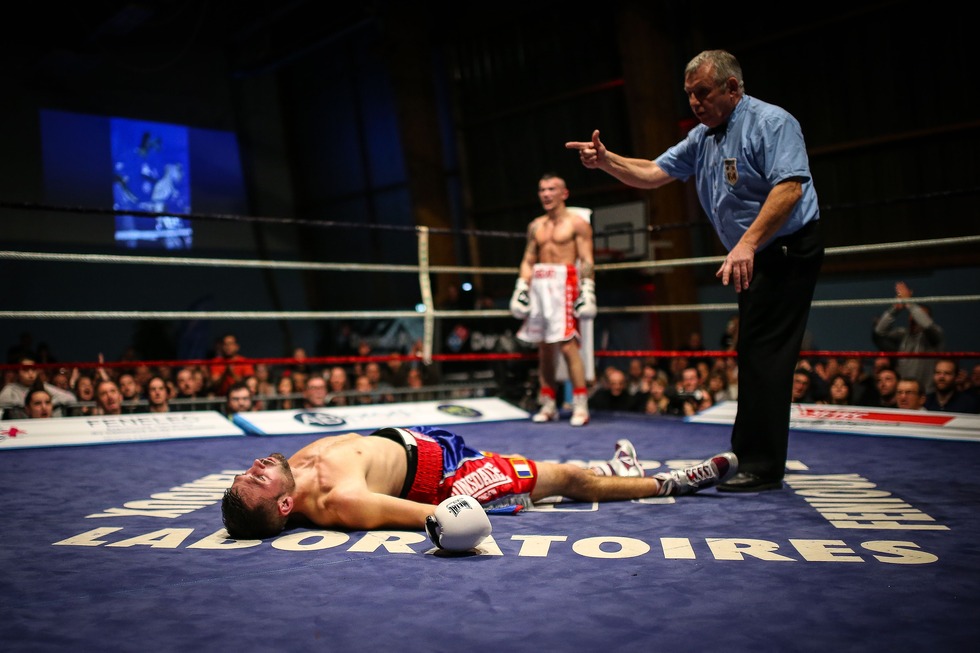
Don’t just stop the fight when it’s over physically. Show what it costs. A shaking hand. A decision that can’t be undone. The reader needs a beat to take in what’s happened.
The emotional payoff is often in the aftermath.
Patty finally makes it through the door. Her knee is useless, her hands are quivering, and she knows Jack will get up again soon. She only gained a little time.
The next scene has to carry that cost forward.
Fight Scene Breakdown: Jaime and Brienne’s swordfight
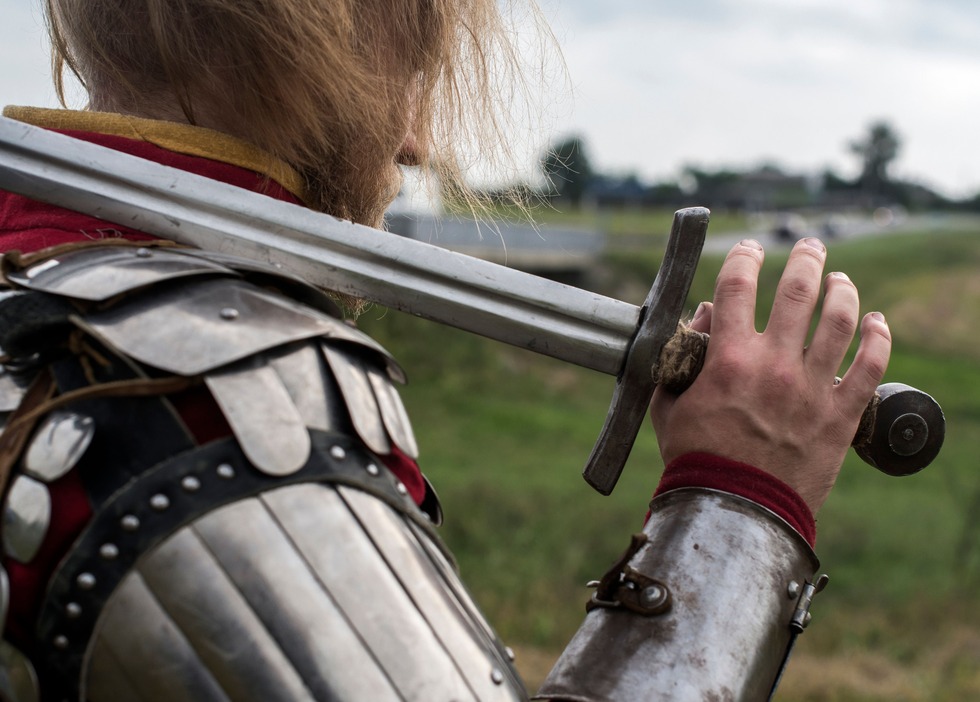
You can see this technique in action in A Storm of Swords by George R.R. Martin. Jamie Lannister and Brienne of Tarth are handed swords and told to fight for the amusement of their captors.
Stakes. Throughout the whole journey, Jaime has been taunting Brienne, challenging her and baiting her to break her. She has dedicated herself to disproving her image as the punchline. Whoever loses this fight loses more than the bout. They lose the argument about who they really are.
Space. Martin chooses a stream crossing as the setting for the fight: cold water, uneven ground, and spectators watching from the bank. Before the first swing, the reader can clearly envision the scene.
Sentence rhythm. With the pace of the battle increasing, Martin’s sentences become shorter and tighter, reflecting the fatigue and adrenaline.
Physical cost. By the end of the duel both fighters are exhausted. Weaker than he once was, after months in captivity, Jaime begins to feel the effects of his lack of conditioning. Brienne, bigger and stronger, starts to wear him out. Neither one is fighting at full strength the whole way through, which is part of what makes it feel real.
The turn. Toward the middle, the fight stops being a test of each other and becomes something closer to respect. Jaime begins to see Brienne differently. Who wins the sword fight matters less than that change in perspective.
Aftermath. The struggle does not come to an easy conclusion. Their captors step in and the moment is cut short, but the consequences play out for both characters throughout the rest of the book, shaping how Jaime sees Brienne moving forward.
It’s not the literal sword swinging that matters. The story is working hard under the swordplay and in what falls out after the fight.
Common mistakes writers make
Too much choreography, too little feeling. A blow-by-blow account of each punch is like a manual, not a scene. Eliminate repetitions that have no effect.
No sense of space. If your reader can’t visualize the area, each hit feels like it’s happening in a vacuum. Ground the fight in a physical location early on.
Characters that show no fatigue. Real fights are exhausting. If a character is supposed to be very skilled, but never feels any pain after fighting at full strength for five consecutive pages, something is wrong.
Forgetting the stakes. When there’s no real reason behind the fight, no fear involved, no goal, and no history between the characters, it’s just noise. Connect the scene to something the reader already cares about.
Letting the fight run too long. Even the best fight scene has a shelf life. After the reader has felt the stakes, the space, and the cost, dragging it out too far tends to dilute what you’ve already built rather than adding to it.
Your story weapon: 6 questions to check your fight scenes
Ask these six quick questions about a fight scene from your own manuscript.
- What does it mean if this character loses?
- Can the reader visualize the space?
- Are the sentences moving with purpose, or are they too long?
- Is there any actual cost to the characters’ bodies?
- Is there a turn somewhere in the middle?
- Does the scene end on a consequence, and not just on the last hit?
If you’re unable to answer one of those questions clearly, you’ll know what your weak point is.
You don’t need to know all about martial arts or fancy weapon names to learn how to write a fight scene. It’s about stakes, space, cost, and consequence, all of which are layered on top of one another to pull your reader into the action and drama of the scene.
Writing a compelling fight scene requires more than creating convincing action; it requires understanding how conflict reveals character, raises stakes, and changes the story. To deepen your understanding of these elements and strengthen your storytelling craft, learn more about storytelling craft in The 90-Day Novel, The 90-Day Memoir, Story Day.