
Hyperbole is how we speak when ordinary language isn’t big enough. Do you remember your first heartbreak? Even though you knew it wasn’t the end of the world, it felt like it.
One of the paradoxes of life is that the major events we experience, falling in love, losing someone close to us, raising a child, graduating from school, are deeply personal, yet utterly common. Despite the fact that we’re not the first or last to experience these things, they come into our awareness with a startling impact. To communicate these feelings, we often turn to hyperbole.
Hyperbole is a literary device that uses deliberate exaggeration to emphasize an idea or evoke a strong emotional response. In this article I’ll look at how you can use hyperbole, along with examples, and I’ll give you a Story Weapon to help dramatize your own characters’ experiences.
Hyperbole uses deliberate exaggeration to heighten emotion, create urgency, and dramatize experiences. When used intentionally, it transforms ordinary moments into vivid expressions of emotional truth.
Reasons to exaggerate
If you’re using hyperbole, it should be for a specific purpose. After all, if everything you say is exaggerated, nothing stands out.
Create urgency
One common reason writers and orators use hyperbole is to create a sense of urgency. This is why it’s so popular in political rhetoric and propaganda.
Elected officials and those running for office seek to stir their audience in order to win favor. While other leaders encite their audiences to protest, boycott, or donate to a cause. If these are your aims, hyperbole is your friend.

It’s not enough to encourage a prudent military defense budget; that doesn’t rouse the rabble. You must say there are looming threats of invasion, or that other nations laugh at our puny army. Hyperbole elicits emotion. It’s not enough to say that a certain social program would alleviate pain in the local community; you must say it’s a travesty and a crime to not vote in its favor.
Sway sympathies
Hyperbole is also helpful when you’re trying to convey the intensity of emotion felt by the speaker. Here’s a quote from Act 2, Scene 2 of Shakespeare’s Macbeth.
“Will all great Neptune’s ocean wash this blood clean from my hand? No, this my hand will rather the multitudinous seas incarnadine, making the green one red.”
Macbeth has just killed Duncan and Shakespeare seeks to convey his inner experience. To fully articulate Macbeth’s guilt and horror, Shakespeare employs hyperbole.
We know it’s an exaggeration to say that washing his hands in the sea would turn the sea red, but the extremity of the line offers a glimpse into Macbeth’s emotional state. It’s the same as a comedian saying that their joke killed, or they had the audience rolling on the floor with laughter.
Hyperbole helps express the vivid emotions we feel by amplifying the reality of the situation.
Examples of hyperbole
Hyperbole provides a opportunity to demonstrate your style. Every writer use the tool in a different way. Let’s look at a few examples.
Example #1
From the opening paragraph of Moby Dick, by Herman Melville:
Whenever I find myself growing grim about the mouth; whenever it is a damp, drizzly November in my soul; whenever I find myself involuntarily pausing before coffin warehouses, and bringing up the rear of every funeral I meet; and especially whenever my hypos get such an upper hand of me, that it requires a strong moral principle to prevent me from deliberately stepping into the street, and methodically knocking people’s hats off — then, I account it high time to get to sea as soon as I can.
These words give life to our inner experiences. Who among us hasn’t felt a damp, drizzly November in their soul?
Example #2
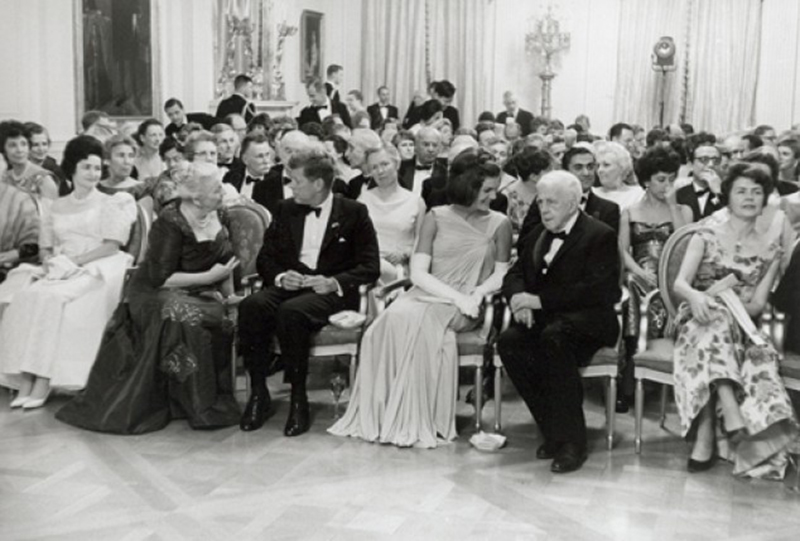
At a dinner at the White House in honor of the 1962 Nobel Prize winners, President Kennedy offered this note of praise:
I think this is the most extraordinary collection of talent, of human knowledge, that has ever been gathered together at the White House, with the possible exception of when Thomas Jefferson dined alone.
It’s not easy to compliment and humble a room in the same sentence, but this hyperbole does the trick.
Example #3
From Gabriel García Márquez memoir Living to Tell the Tale:
At that time Bogota was a remote, lugubrious city where an insomniac rain had been falling since the beginning of the 16th century.
He paints a picture of rainfall that never sleeps, falling for a few hundred years. That’s an author’s way to tell you it rained a lot.
Example #4
From Stephen Leacock’s Nonsense Novels:
Lord Ronald said nothing; he flung himself from the room, flung himself upon his horse and rode madly off in all directions.
Hopefully reading these examples excites you to try your hand at hyperbole.
Whether it’s creating dialogue for a particularly dramatic character, helping a fictional politician gain office in your story, or communicating just how good it feels to fall in love, hyperbole might be your new best friend.
Your story weapon: Dramatizing experience
When employing hyperbole, swing for the fences. It’s okay if your writing feels a little dramatic. The thrill of writing prose is that it can hit a higher emotional pitch than everyday life in order to feel true on the page.
✒️ Writing Exercise
Marry your exaggeration to an image. Hyperbole can work well when it grows naturally from a character’s inner emotional state to convey a dramatic experience.
Laughter = rolling on the floor
Feeling grim = damp, drizzly rain
Genius = Thomas Jefferson dining alone
With hyperbole in your writing toolkit, you gain access to a powerful way of communicating deep emotional truths. Used thoughtfully, it can make your scenes more vivid, your characters more relatable, and your storytelling more memorable.
Deepen your understanding of hyperbole and other essential literary techniques in one of my next workshops: The 90-Day Novel, The 90-Day Memoir, Story Day.