


Have you ever read a book and come across a word you’d never heard or seen before? At first, you might stop and think, “What does this mean?” Then you read the sentence again. You might understand the meaning from the way the character uses the word, or the story context makes it clear. Slowly, that strange word starts to feel familiar and becomes a natural part of the story.
Made-up words can sometimes communicate something that an existing word can’t. They can give a sense of realism to a fictional world by showing a piece of an existing culture foreign to our own. These words can also tell us something about a character, create humor, mystery, and a sense of connection. But there is a difference between creating a word because the story needs it and creating one just because you can.
So, how do you know if a made-up word is working well in your story? And how can you make sure your reader doesn’t need a dictionary on every page?
In this article, I will explore why writers create made-up words, how to introduce them without stopping the story cold, and how language itself can become one of the most revealing tools of character and world-building. Lastly, I’ll give you a Story Weapon on how to let context do the work of explanation so your invented words feel inevitable rather than imposed.
Why writers create made-up words
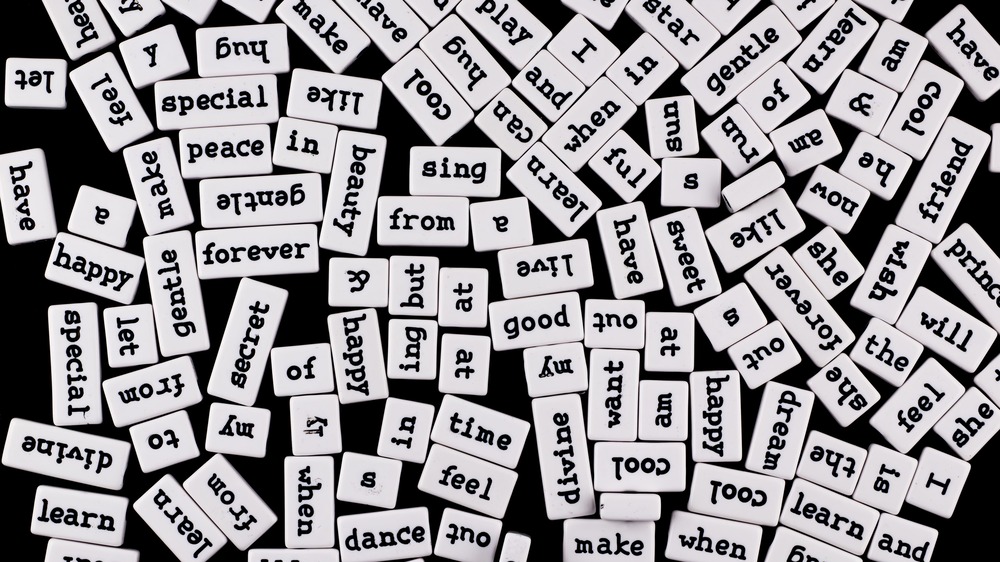
A made-up word, also known as a “neologism” or a coined word, is a term invented by someone that doesn’t exist in standard language as we previously knew it.
Language is always changing. When an existing word doesn’t quite capture a feeling or idea, people sometimes create a new one.
Sometimes a new word starts as a joke, or comes from a particular community where it has a unique meaning, and sometimes a made-up word is created to describe something new more quickly. In terms of writing, you’ll most commonly come across made-up words in fantasy and sci-fi stories as writers use them to create their own fictional worlds or describe new technologies.
A writer might also create a word to describe a personal experience that never had a name before. Have you ever had a feeling that you understood clearly but couldn’t name? You know what you want to say, but you just cannot find the right word for that feeling. That can be where a made-up word begins.

Let context reveal the meaning
You don’t always need to explain the meaning of made-up words right away. Sometimes, explaining one immediately only makes the word less interesting.

Imagine a character who walks into the kitchen. Her mother has left a bowl of morra on the table. The reader has no idea what morra is. And that’s okay.
The character picks up a spoon and says, “It’s still warm.” She takes a bite and says, “Bleh, too much cinnamon.” Now the reader can understand that morra is probably some kind of dish. You don’t need to stop the story and explain: “Morra is a traditional sweet dish made from oats, milk, cinnamon, and honey.” The reader can understand its general meaning from the context.
This is a simple way to introduce a made-up word, and let the reader understand its meaning naturally.
Examples from literature
In Anthony Burgess’s A Clockwork Orange, the narrator (Alex) speaks in a hybrid Russian/Cockney English slang called Nadsat. He uses words like “droog” for a friend, “horrorshow” for good, and “ultra violence” to describe a specific kind of pleasure he has in brutality. The invented language here drops you right into Alex’s perspective.
In The Left Hand of Darkness, Ursula K. LeGuin uses made-up words for concepts that don’t exist in English such as “shifgrethor” which has to do with honor, face, and integrity. She introduces this concept gradually throughout the story to allow her readers to get accustomed to the term and why it matters to her characters.
Roald Dahl’s The BFG gives us a character whose personal invented words like “snozzcumber” or “whizzpopping” or “frobscottle” tell us a lot about his backstory and personality. This giant lived in isolation and had to come up with words for things himself.
Give the word a history
A made-up word becomes more interesting when there’s a meaning or story behind it that’s directly connected to your story.
Maybe a family uses a special word for the silence that starts after an argument. Or some children might use a slang word that adults don’t understand.
Two lovers could have a private word for a place where they always meet. Now the word is not just a name for something. It also has a history behind it.
Imagine two characters who grew up together. When one says, “Let’s go to Bramovia,” the other immediately knows they mean the old tree fort in the woods they built together. They don’t need to explain it.
This private language also tells us something about their relationship. The word has become a part of their shared world. This is where invented language can become very powerful.
Let language reveal character
Language doesn’t just describe the world. It also tells us something about the person speaking. A teenager might use new slang as an act of independence, to feel different from their parents. A scientist will use more technical words because getting the exact meaning right is important to them. A child might misunderstand a normal word and create their own pronunciation or meaning for it.
When a character uses unusual language, it can help us understand how they see the world.
Don’t overload your reader
Eventually, the made-up language may begin to pose an obstacle to the reader. Imagine starting to read a novel and coming across a sentence like:
“The Valdrin crossed the shora before calling the Elnari, but the Elnari had already taken the keth from the varren.”
None of the words make sense. If the next paragraph brings even more words like this into play, your reader will be spending more time trying to decipher them than enjoying the story. They might just close the book.
There is nothing wrong with creating your own words. The problem lies in bringing in too many new words with one fell swoop.
Give the reader something familiar to anchor themselves in: a character, an emotion, an action, or a problem. Then the unfamiliar language has something solid to build on.
Sometimes the strangest words are the most human
Made-up words are not only useful in fantasy and science fiction stories. Even in normal life, families have their own words and expressions.
Friends have private jokes. Couples have nicknames for each other. Some communities might use words that other people outside their group may not understand quickly. These small changes in language can make a story feel more personal and real.
Maybe your main character has a special word for the particular smell of her grandmother’s house. Or maybe a father and daughter use a funny word when they feel nervous.
You don’t need to create a whole language. Sometimes, just one small word is enough.
Common mistakes writers make with made-up words
Don’t invent words just to show you can
One common problem with worldbuilding is that you can become so interested in your created world that you forget about telling the story. You may spend a lot of time creating whole languages, history, political systems, maps, family trees, and names. All of this work can be useful, but you don’t need to show everything to the reader. The same is true for made-up words.
You might have created fifty words, but your story only needs five of them. And that’s completely okay. Your job is not to show how much work you’ve done. Your job is to give the reader a story worth reading. Sometimes, the best worldbuilding is the part the reader barely notices.
Explaining the word the moment it appears
This comes from a reasonable instinct. You know what the word means, and it feels wrong to leave the reader in the dark. But explaining the word immediately kills the very quality that makes invented words interesting. Let your readers discover the meaning, and they’ll start to feel more immersed in the world of your story.
Inventing words for things that already have names
What is your invented word really adding to the story? If you’re using a made-up word to describe something that already has a commonly accepted term, then it can create more friction in the mind of your reader than providing atmosphere.
Having every character use the same invented word
Ask yourself: Who would use this word? A character’s vocabulary can tell us where they come from, who they spend time with, and what is important to them.
If all the characters in a story from different walks of life and various social statuses use the same made-up words in exactly the same way, the language can feel a little artificial. But if different characters use language in different ways, the world of the story becomes more interesting.
Making up words before you understand the story
One common mistake writers make is falling in love with a made-up word without thinking about why the story needs it.
A fantasy writer might make up new names for foods, ceremonies, cities, clothes, jobs, magical objects, and more. They might even design a whole language and fill pages explaining what every word means. They’re having fun with it! But when they start writing the novel, the story stalls out as they keep stopping to explain the new words.
You know your world very well, so every word feels important to you. But the reader needs to have enough time to understand the world and connect with it in a way that feels natural rather than disjointed.
Your made-up words will be more specific, more useful, and more alive if they grow from a real narrative need rather than from the pleasure of invention for its own sake.
Your story weapon: Let context do the hard work
A reader doesn’t need to understand the full meaning of a made-up word the first time they see it. They may get a small idea of what it means. The second time, the context can give them a little more information. By the third time, the meaning should be getting clear. This is not because you explained the definition directly, but because the story helped the reader understand it.
Think about how children learn new words. They usually don’t learn a word by memorizing its dictionary definition. They hear it, see how it’s used, hear it again, and slowly understand what it means. You can use the same gradual process when introducing an invented word.
Imagine your character uses a word for a specific kind of fear. The first time, the reader sees someone say the word and notices how the character reacts. Later, another character uses the word in a different situation. Slowly, the reader understands what the word really means. The meaning becomes clearer through the experience of the story.
When you create a made-up word, resist the urge to explain it. Give the reader enough to wonder about it, enough context to understand it, and enough story to make them want to see it again. Let the meaning emerge naturally.
✒️ Writing exercise
Choose a feeling, a relationship, an object, or a place in your story that resists ordinary description or could be made more meaningful with a personal name for it.
Now write three short scenarios, no more than a half-page each, in which that word might appear.
- In the first scene, a character might use the word naturally in dialogue, and the context gives the reader just enough information to get a sense of what it means.
- Next, a different character can use the word in a slightly different situation to give more context and add to what your reader understands about that word.
- For your third scenario, perhaps the word appears in an emotional or climactic scene that intrinsically matters to your protagonist’s dilemma.
Read back over what you’ve written, and ask whether the word has earned its place. Would your reader understand it clearly by the third scene without having to be told what it means? Does it feel like a natural part of the world of your story? If not, the word either needs more time in the story to develop its meaning or the story is asking for something else.
Your job isn’t to teach the reader a definition. Your job is to make the word feel like it belongs.
When that happens, the reader stops noticing that the words are new. The made-up words simply become part of the world you’ve created.
Creating memorable fictional language requires more than invention—it requires an understanding of character, context, world-building, and the reader’s experience. To develop greater control over these elements of storytelling, work with our in-house editors and learn how thoughtful revision can strengthen the language and craft of your story.