

Most of our everyday speech happens in dialogue — in conversations. You might talk to yourself from time to time, but odds are it’s usually brief. However, characters on stage, screen, and in novels are given a type of speech that carries immense power: the monologue.
A monologue is an extended speech delivered by a single character, often directly to the audience. Writing a monologue might feel daunting, but with the right approach it’s an opportunity to reveal character, deepen emotions, and let a moment truly resonate for your audience or reader. In this article, I’ll provide you with some insights and guidelines on how and when to use a monologue to bring a sense of gravity to your scene.
A monologue is a powerful storytelling tool that reveals character through action, not just reflection, whether it’s interior, dramatic, active, or narrative. The strongest monologues track a character’s shifting intentions and emotions, turning speech into a dynamic moment of change rather than a static pause.
Types of monologues
Before we start, it’s important to draw a distinction between the four primary types of monologue.
Interior monologue or Soliloquy
This is where the character delivers their innermost thoughts directly to the audience, with the belief, whether true or not, that they are alone. Therefore a soliloquy is always a monologue, however, a monologue is not always a soliloquy. This type of monologue is often unfiltered and seemingly stream-of-consciousness as they are working through a conundrum. Examples of interior monologues can be found in Gone Girl by Gillian Flynn, The Secret History by Donna Tartt, MacBeth by William Shakespeare, and James Joyce’s Ulysses.
Dramatic monologue
A dramatic monologue is typically a long speech that one character delivers to another character. Some of the greatest dramatic monologues can be found in Shakespeare’s work, including Hamlet’s “To be or not to be,” Mark Antony’s “Friends, Romans, countrymen” from Julius Caesar, and Jaques’ “All the world’s a stage” from As You Like It.
Active monologue
An active monologue is where a character delivers a long speech with the set intention of achieving a particular goal or outcome. Examples of active monologues are Martha in Who’s Afraid of Virginia Woolf by Edward Albee, Biff Loman in Death of a Salesman by Arthur Miller, and Viola in Twelfth Night by William Shakespeare.
Narrative monologue
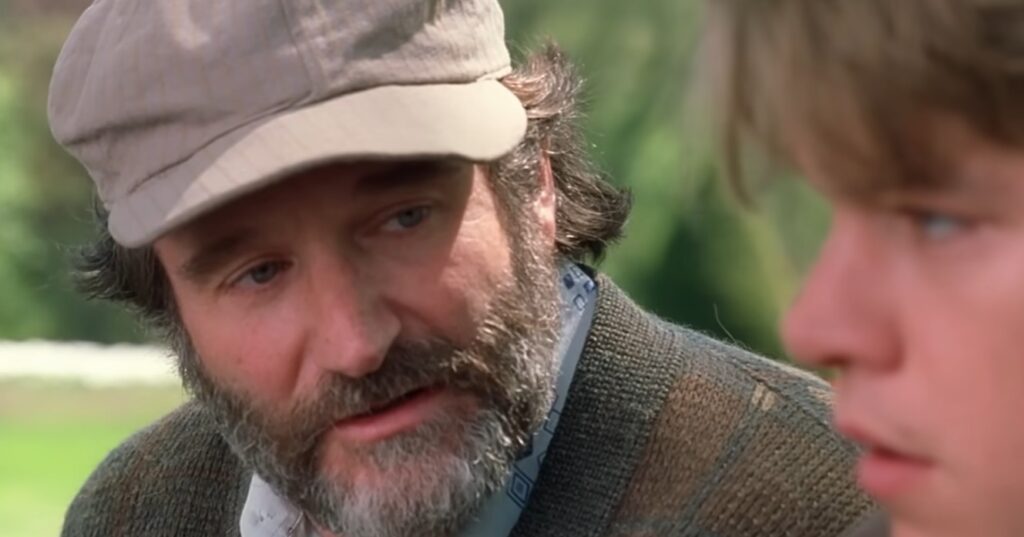
This is where a character tells a long story within the framework of a larger narrative – typically a novel or theater piece. A narrative monologue is often told in the past tense to reveal character and dramatize exposition, with the story typically leading to a climactic ending. Examples of narrative monologues can be found in Jerry’s “Jerry and the dog” speech from The Zoo Story by Edward Albee, Robin Williams in the film Good Will Hunting, and Atticus Finch’s closing arguments in To Kill a Mockingbird.
Making it active
At the heart of a great monologue is not language, but action. You might be tempted to stuff your monologues full of flowery words and extended metaphors, but it’s best to focus on your writing being potent instead of just lyrical.
When you understand the purpose of the scene you can make the speech play a melody rather than a single note. A weak monologue tends to express a single emotion, while a strong monologue has a sense of action; we’re watching a conflicted character struggle to make a choice.
“I didn’t realize you needed a response. When Hamlet is giving a monologue, he just goes on and on by himself.”
– Eloisa James
Let’s take an example from Shakespeare’s Much Ado About Nothing. In Act 2, Scene 3, the protagonist Benedick delivers an interior monologue after eavesdropping on a conversation between the Prince and Claudio. They discuss (hoping to trick Benedick into falling for Beatrice) a bit of fake news–that they heard from Hero that Beatrice loves him already. This monologue follows after they leave and the audience is left alone with Benedick.
At first, Benedick is reeling, and must take a moment to assure himself of the veracity of the news:
This can be no trick. The conference was sadly borne; they have the truth of this from Hero; they seem to pity the lady. It seems her affections have their full bent.
This is the first piece of action; it lays the premise for the rest of the monologue. Next, he reacts to the way they criticized him. They suggest that he would mock Beatrice if he knew and act like a child. This certainly galls Benedick:
Love me? Why, it must be requited! I hear how I am censured. They say I will bear myself proudly if I perceive the love come from her. They say, too, that she will rather die than give any sign of affection.
Now that he’s had an immediate reaction to what he’s heard, he can process the implications of it. He’s verified (to the best of his ability) that it was true and that his friends think he’s a bit of an ass. The next step is to consider something he never had before: the idea of marrying and loving Beatrice.
I did never think to marry. I must not seem proud. Happy are they that hear their detractions and can put them to mending.
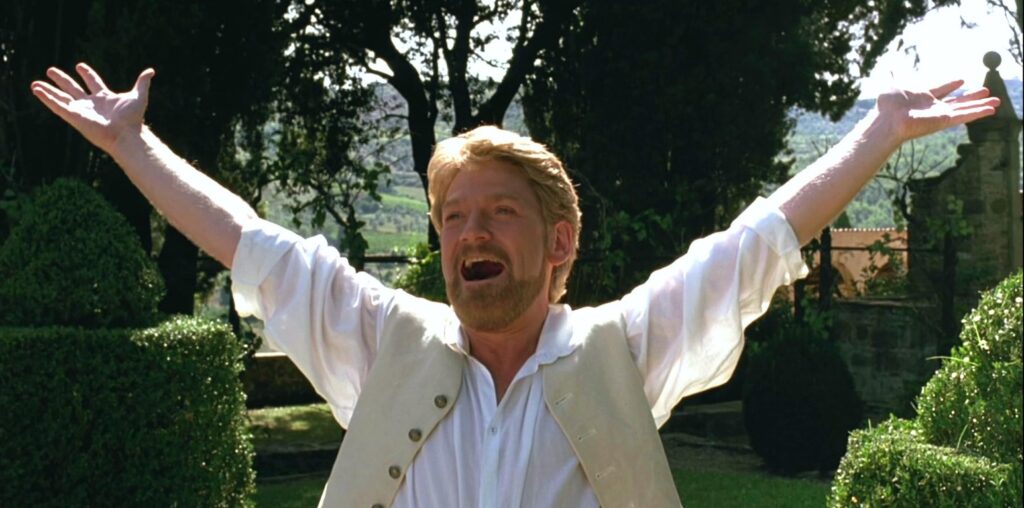
He’s decided to be better than the criticisms he heard and he reminds himself of his seemingly eternal tenure as a bachelor. He was never the marrying type. Will this information change that? He thinks about Beatrice and what he knows about her:
They say the lady is fair; ’tis a truth, I can bear them witness. And virtuous; ’tis so, I cannot reprove it. And wise, but for loving me; by my troth, it is no addition to her wit, nor no great argument of her folly, for I will be horribly in love with her!
Seems like she passes with flying colors! She’s beautiful, good, and smart; what else could a man want? The feeling in his heart gets the better of him at this point – we actually watch his world reorient itself. He has thought about Beatrice and found love for her in his heart. Now, he has to scramble to align this with perception of himself as someone who would never marry.
I may chance have some odd quirks and remnants of wit broken on me because I have railed so long against marriage, but doth not the appetite alter? A man loves the meat in his youth that he cannot endure in his age. Shall quips and sentences and these paper bullets of the brain awe a man from the career of his humor? No! The world must be peopled. When I said I would die a bachelor, I did not think I should live till I were married.
With a few charming arguments, Benedick convinces himself that it’s okay to change. There’s room for some misgivings still, but he doesn’t bind himself to his past views. He even points out that his rule to never marry was perhaps shortsighted; he’s lived long enough for that prideful viewpoint to have soured some. The soliloquy ends with Beatrice’s appearance:
Here comes Beatrice. By this day, she’s a fair lady. I do spy some marks of love in her.
Notice the series of actions that occur for Benedick in this monologue. We witness a man free himself from the chains of his youthful promise to himself. We experience wit and humor, as well as a genuine moment of change. Most importantly, it seems that the character doesn’t know the next sentence before he says it.
Your story weapon: Mapping the movement
One way to keep a monologue dynamic is to map out the emotional movements of the character.
In this exercise, imagine that there’s a physical space in which the character is moving when they speak. Each point in this space offers a different action verb, such as pleading, demanding, requesting, seducing, threatening, wishing, hoping, denying, etc.
You get to choose the “emotional place” where the character begins the monologue, then decide what action verb they reach for with each subsequent line. Mapping out the emotional beats is a great way to ensure that the monologue isn’t just a stream-of-consciousness purging, but rather an intentional sequence that builds in meaning as it progresses.
For example, let’s say a character is the last person at the grave after the funeral of their beloved. Understandably, they might begin the monologue in a place of grief, expressing to the audience the depth of their sorrow. However, the character only gets a few lines in before something shifts.

Because remember, they are struggling with a conundrum. While they’re experiencing terrible loss, perhaps this is a complicated grief — for example, let’s say their beloved was not faithful.
Now, we hear them speak about the exhaustion that comes with grief, or how undeserving their beloved is of their raw pain, and then comes the rage for this betrayal.
You can now instinctively sense there are places to go from here. The character might step toward “leaving the dead behind” before admitting to “the all-consuming guilt at their relief that their beloved is dead.”
Perhaps the monologue ends with some tenuous resolution that speaks to the fragile nature of love, how one can both love and hate a person, but now that they’re gone, they are left with the anguish of carrying this inner turmoil alone.
By marking out these physical spaces, you can sense when your character has been expressing the same emotion for too many lines. It keeps the pace of the monologue moving and, more importantly, mirrors how we actually process our feelings. We’re constantly changing and even the heaviest emotions have a range of darkness and light.
When you treat a monologue as action rather than reflection, it becomes a turning point instead of a pause.
By grounding each monologue in intention and consequence, you give your characters a voice that feels urgent, human, and necessary — and that urgency is what keeps your drafts fresh, compelling, and memorable.
Take your monologues from thoughtful speeches to moments that move a story in one of my next workshops: The 90-Day Novel, The 90-Day Memoir, Story Day