


There is no “correct” approach to point of view in literature. Your sole consideration is how you want your reader to experience your story.
Do you want your reader close to a character’s consciousness, or do you want some distance? Do you want the reader to know something the protagonist doesn’t? Or is your story more interesting when we can only observe what the characters say and do?
Point of view is more than just choosing which pronouns to use. It defines what the reader can know, what stays hidden, and where the reader stands in relation to the story.
One way to explore which point of view best supports your story is to experience the possibilities yourself. In this article, I’ll explore various perspectives you can use with examples of how each changes your reader’s experience. Lastly, I’ll give you a Story Weapon to help you consider which point of view best suits your story.
First person point of view

First person tells the story through “I” or “we.” The reader experiences everything through the narrator’s personal perceptions, memories, beliefs, and limitations.
How to use first person
This perspective weaves an immediate relationship between the narrator and reader. We’re invited into someone else’s consciousness, but that doesn’t always mean we’re being given the truth.
We’re being given their truth.
A narrator might misunderstand another character. They might even misunderstand themselves. Or they might tell us one thing while their actions tell us another.

First person gives you room to explore these contradictions while developing a distinctive voice.
Let’s take a look at some examples:
I hadn’t thought about this house in twenty years. Still, my feet carried me straight to the loose floorboard beneath the stairs.
I didn’t steal the letter. I found it in the kitchen drawer, and if Claire wanted it kept private, she wouldn’t have left it somewhere anyone could find it.
By the time I reached the station, the bus had left, my water bottle was empty, and the rain had soaked through my socks. It seemed like the universe had developed an interest in details.
Each narrator filters their world and situation differently. The events matter, but so does the particular voice and consciousness telling them.
Second person point of view

Second person places “you” directly inside the story. The language allows the reader to step into the protagonist’s position.
How to use second person
It’s a complex perspective that can create a sense of intimacy, immediacy, discomfort, or complicity. Compare “They open the door” with “You open the door.” The action is the same, but the reader’s relationship to it has completely changed.
This perspective becomes particularly interesting when the reader is allowed to inhabit an experience they might prefer to observe from a distance.
You hear the front door open before you can leave the room. There isn’t time to get out, so you slide into the closet and hold your breath.
You tell yourself you’ll return the money tomorrow. You’ve been saying that for two weeks.
You remember the house being bigger than this. The hallway went on forever. Now, you can stand at the front door and see practically everything at once.
“You” doesn’t always have to mean the literal reader. It can create the feeling of a character speaking to their younger self or someone absent. That ambiguity can become part of the experience.
Third person limited point of view

Third person limited uses “they,” “he,” “she,” or a character’s name while keeping the storytelling relatively within one character’s experience.
How to use third person limited
The reader has access to a character’s thoughts and perceptions, but the story is limited by what the character can reasonably know.
Cora watched the elevator numbers as she descended. Five. Four. Three. There was still time to change her mind.
Eric entered the classroom. His best friend stood beside her desk, holding a torn piece of paper.
“What happened?”
“Nothing.”
Eric looked at the note on the table.
The dog barked when Lena stepped onto the porch. Mr. Graham had always said that the pup liked everyone. Apparently, Lena was an exception.
The reader experiences the world through a specific character, which means that perception and truth might not always be the same thing.
Third person omniscient point of view
Third person omniscient lets the narrator know more than any single character and shifts among different perspectives, places, and information.
How to use third person omniscient
This point of view can be exhilarating because of the freedom omniscience affords. You might decide to enter another character’s thoughts or reveal something to the reader nobody inside a particular scene even knows.
The interesting question becomes: Why does the reader need to know this now?
Rowan believed Maya had forgotten their anniversary. Across the table, Maya fidgeted, wondering how long she could keep pretending. The bags were already packed upstairs.
The tenants slept through the storm. Even the man at 2B, whose bedroom faced the river, didn’t wake when the bridge disappeared underneath the rising water.
Everyone at the wedding noticed the empty chair. Andrew thought it was an oversight. His father assumed someone had canceled. Only the bride knew whose name had been scratched out from the seating chart.
Omniscience doesn’t mean jumping into every consciousness. Its power usually comes from deciding when a wider perspective can be used to transform what the reader understands.
Third person objective point of view
How to use third person objective
Third person objective keeps the narration outside of the characters’ inner thoughts. We learn only through what we can “see” — observable behavior, dialogue, physical details, interactions.
This point of view is like watching a movie that doesn’t have a voiceover.
A character opens a cupboard, closes it, opens another, then returns to the first. We don’t get to know how they’re feeling, but their behavior tells us something.
Third person objective asks you to communicate a character’s internal thoughts and feelings only through their external behavior.
Mara folded the letter twice.
“Are you going to answer it?” Elmer asked.
She placed it under her coffee cup.
“What letter?”
“How did the interview go?” Dean asked.
Sam opened the refrigerator and stared inside.
“Fine.”
The guests started singing. Robert smiled as the cake approached, then blew out the candles before the last line of the song. His mother stopped singing.
When you don’t have direct access to someone’s inner thoughts, what may seem like small gestures can still carry greater meaning. The reader gets to participate by interpreting what remains unsaid.
Fourth person point of view
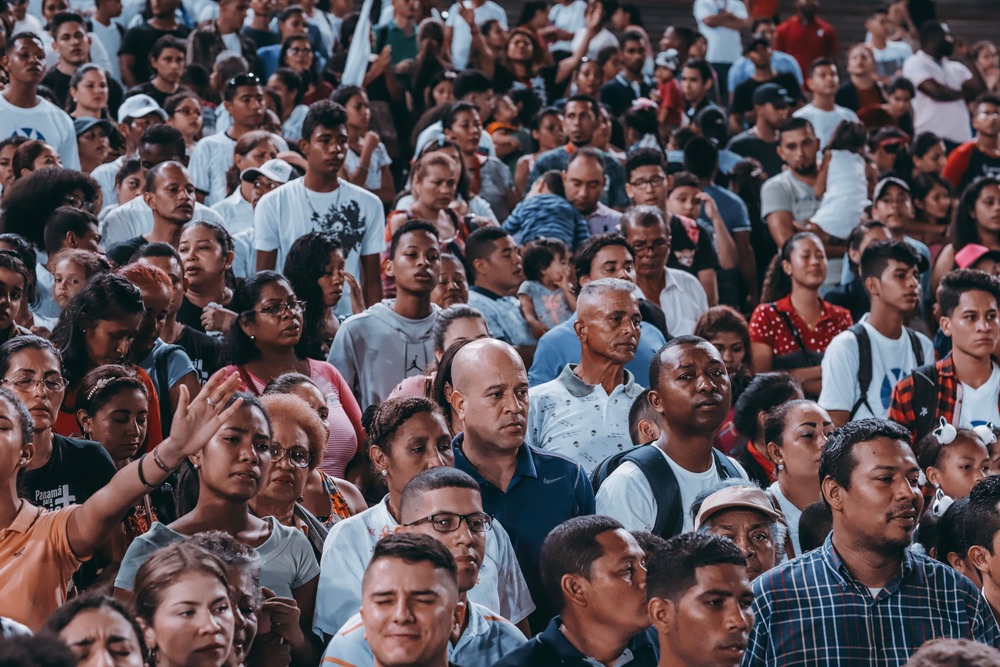
Fourth person uses collective language like “we,” “us,” and “our” to tell a story through the eyes of a group. The collective becomes the narrative consciousness.
How to use fourth person
Fourth person can be interesting when the story belongs to a community as much as it belongs to any one character.
A family might remember an event together. A village observes the arrival of a stranger. A group of friends look back on the summer when something changed between them.
The “we” creates a shared consciousness, allowing individual experiences to become part of something bigger.
A shared experience
We knew the house was empty, although none of us could remember seeing the family leave. During the afternoons after class, we rode our bicycles past the gate a little slower, waiting for something to move behind the living room curtain.
The group shares the experience. The mystery doesn’t belong to just one character, but to the collective.
A collective belief
We thought Clara would come back. For the first week, we left her chair untouched. By October, someone had moved it against the wall. None of us admitted to doing it.
The voice of the collective lets the group’s behavior reveal something its members may not want to acknowledge directly.
When dissent emerges
We all remember the night of the fire differently. Some of us remember the rain. Others swear the sky was clear. But we agree about Dana. She was standing on the sidewalk, watching when the first panicked screams pierced through the dark. Somehow, she already knew which room was burning.
It isn’t necessary for the entire “we” to experience the event the same way or to even reach the same conclusion on everything. These differences within the group can create tension, mystery, and make the reader question how reliable the collective narrator’s memory is.
Using multiple points of view
You don’t have to keep your story inside one character or group’s perspective for the entire manuscript.
Let me be clear, there should be clean breaks for the reader marking different chapters or sections that stick to one of these perspective styles at a time. I’m not saying you should jump around between narrative perspectives within one scene by having one paragraph in second person and another in third person omniscient. That would only confuse the reader and make them want to close the book.
But you might write the majority of your story in one point of view, and then in flashback scenes switch to first person. Perhaps you might include chapters in fourth person point of view to show the hive mind of a town or a cult group your protagonist is in danger of crossing paths with.
Multiple points of view let your reader experience the same world through different eyes. One character might see something as an act of betrayal, while another believes that it was an act of love.
When the perspective changes, notice what becomes possible because of the shift. What can the reader experience now that wasn’t possible before?
A change through the point of view in literature can reveal information, transform our understanding of a character or event, or even create irony. Sometimes, it changes what we perceive the story is all about.
Common point of view mistakes
Most problems you might encounter with point of view come about when your story unintentionally gives the reader information that the perspective you chose shouldn’t have been able to provide.
Entering another character’s mind unintentionally
Let’s try looking through third person limited:
Mara handed Joe the envelope. She wondered if he would open it. Joe stared at her, terrified that she had figured out the truth.
We’ve jumped from Mara’s consciousness into Joe’s here. If we want to stay with Mara, we can instead use Joe’s behavior to carry the meaning.
Joe stared at her. His fingers tightened around the envelope.
Now, the reader has the freedom to interpret his actions alongside Mara.
Explaining what the POV has already revealed
Consider this:
David’s breathing was ragged as he clenched the rejection letter into a ball in his fist and threw the paper hard across the room. He was angry about being rejected.
If the action was enough to communicate his emotion, you don’t need to state it outright. Allowing your readers some room to pick up on behavior clues makes the moment more powerful.
Confusing the POV with pronouns
Changing “I” to “they” doesn’t automatically change first person into third person. They both see and approach the world differently.
Access is key to point of view in literature. Who knows what? Who notices what? Whose understanding shapes a scene? What stays unavailable?
Treating conventions as laws
Understanding the different conventions for point of view can give you better control over your writing. Awareness opens up possibilities.
When you understand what the lens is doing, you can decide when to move it so the reader sees the world differently.

Your story weapon: Where does the reader stand?
Deciding which point of view to use in your story might seem like a technical decision at first. But there’s more to it.
Where do you want your reader to stand?
Do you want your reader standing close to the character? Feeling their fear? Or maybe you want your reader at a distance where they might notice something the character doesn’t see? If you allow the reader to jump between different minds or a group, they might understand something no single character can fully grasp. When your reader is barred from any inner thoughts, every gesture becomes a clue.
You don’t have to know the answer before beginning your first draft. You can write the scene, move the lens, explore, write the scene again.
✒️ Writing exercise
Take a short scene from your story and write it out from two or three points of view. You could even try all six that we’ve covered here: first person, second person, third person limited, third person omniscient, third person objective, and fourth person.
Keep the basic scene roughly the same. Then, read each version aloud.
- Where do you feel closest to the character?
- Which creates the most tension or mystery?
- Where does the conflict become more interesting?
- What becomes apparent to the reader in one version that disappears in another?
- And, which version makes you most eager to keep writing?
That excitement alone can tell you more about your story.
You might discover that the point of view you first imagined isn’t what your story actually needs. Let your story tell you how it wants to be told. You just have to be curious enough to listen.
Choosing the right point of view gives you greater control over what your readers know, feel, and discover as a story unfolds. To deepen your understanding of perspective, narrative structure, and other essential storytelling techniques, learn more about storytelling craft in The 90-Day Novel, The 90-Day Memoir, Story Day.