

Satire is defined by an intent to point out inherent flaws in people, power structures, and institutions, usually with humor to soften the blow. Great satire has the potential to change the way we view society. It gives voice to the voiceless by saying what we wouldn’t be able to articulate otherwise.
Satire is both a literary device and a way to describe a literary work that uses it. You can use satire and, if it’s the core of your piece, your work is a satire itself. You’ve probably seen plenty of political satire on Saturday Night Live and you may have read some in books such as Animal Farm, by George Orwell.
To better understand satire and how it can be of use to you, let’s unpack the term.
In this article, I will look at how satire works, its key components, and I’ll give you a Story Weapon with some tips on how to use satire to say the things that would otherwise be too dangerous, too uncomfortable, or too true to say any other way.
Satire is a sophisticated literary technique that uses humor, irony, and the absurd to “smuggle truth” into a critique of power and social institutions. By aiming wit upward at the mighty, the satirist lowers an inclusive audience’s defenses to expose inherent flaws and moral contradictions in society.
How does satire work?
Satire smuggles truth inside a joke. It lowers the audience’s defenses, and lets the critique strike more easily than if it had been stated plainly.
There’s a helpful dissection of satire in the works of Northrop Frye, a noted literary critic and literary theorist. In his essay Archetypal Criticism: Theory of Myths, he breaks down satire into a checklist: “Two things, then, are essential to satire; one is wit or humor founded on fantasy or a sense of the grotesque or absurd, the other is an object of attack.”

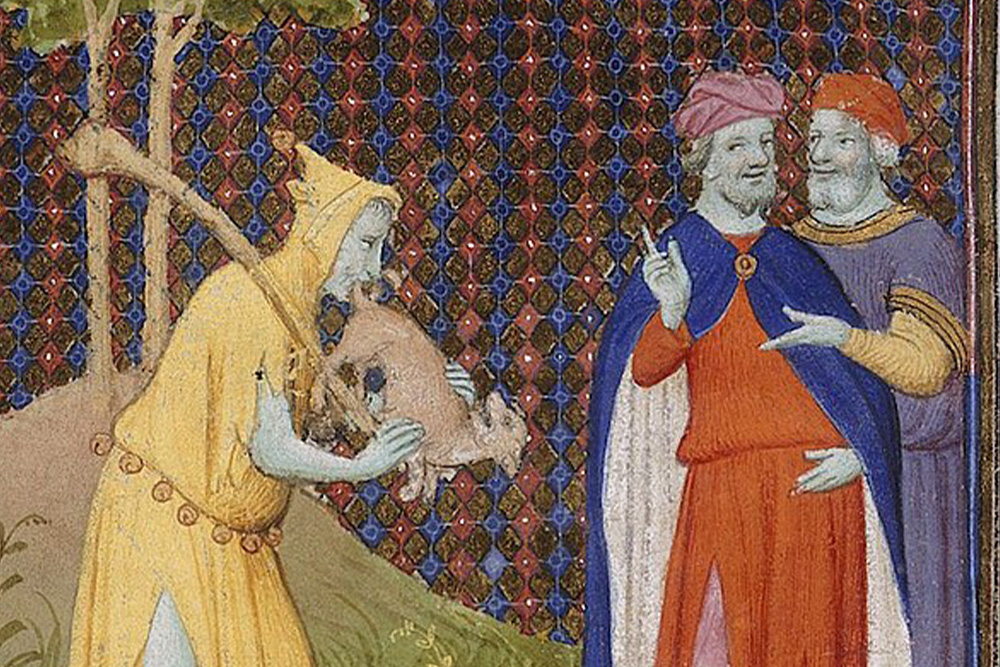
The jester has to be funny to keep his head in the court of the king. By making the king laugh, he’s permitted to criticize the king by acting a fool. He exaggerates the flaws of the king by acting like a drunk, a hothead, or a lecher; the laughs only appear if the joke bears some resemblance to reality.
“Satire must always accompany any free society. It is an absolute necessity. Even in the most repressive medieval kingdoms, they understood the need for the court jester, the one soul allowed to tell the truth through laughter.”
– Joe Randazzo
The role of humor
Humor is a key aspect of satire and the first point on our checklist. Being funny on the page is a tough task. In many ways, it’s easier to write drama than it is to write a joke.
In parody, humorous exaggeration is used for the purpose of making someone laugh. The parody doesn’t have to resemble truth to be funny. Irony and sarcasm, which have more wit and bite, can act like jokes without punchlines. They appear for reasons other than inducing a humorous reaction, though laughter is still part of the equation. Irony can point out an incongruity between our egos and reality, while sarcasm can take the air out of a tough situation.
So how do irony and humor enter into satire? We can lean on Frye again here: “Sheer invective or name-calling (‘flyting’) is satire in which there is relatively little irony: on the other hand, whenever a reader is not sure what the author’s attitude is or what his own is supposed to be, we have irony with relatively little satire.”
For humor to work in satire, it must be employed for the purpose of the attack. The jokes that the jester makes about the king have to be funny, but part of the staying power of the jester is that he’s poking at power. It gives some relief to those around the king, who might’ve seen these flaws, and gently softens the often intimidating presence of the throne.
If you’re creating a satire, there should be something funny about how you describe the vices you’re describing. Let’s take a look at an example from Gulliver’s Travels by Jonathan Swift, which satirized many aspects of society at the time and was eventually simplified to become the children’s classic we know today. In its original publication, most of its readers were adults who could appreciate the inside jokes.
Example in Gulliver’s Travels
In the third chapter, Gulliver observes one of the court customs in Lilliput. People running for political office have to show the court how well they can do at children’s games, like rope dancing or jumping over a stick. The rewards for these games are a longer tenure in office and more colored threads from the monarch.
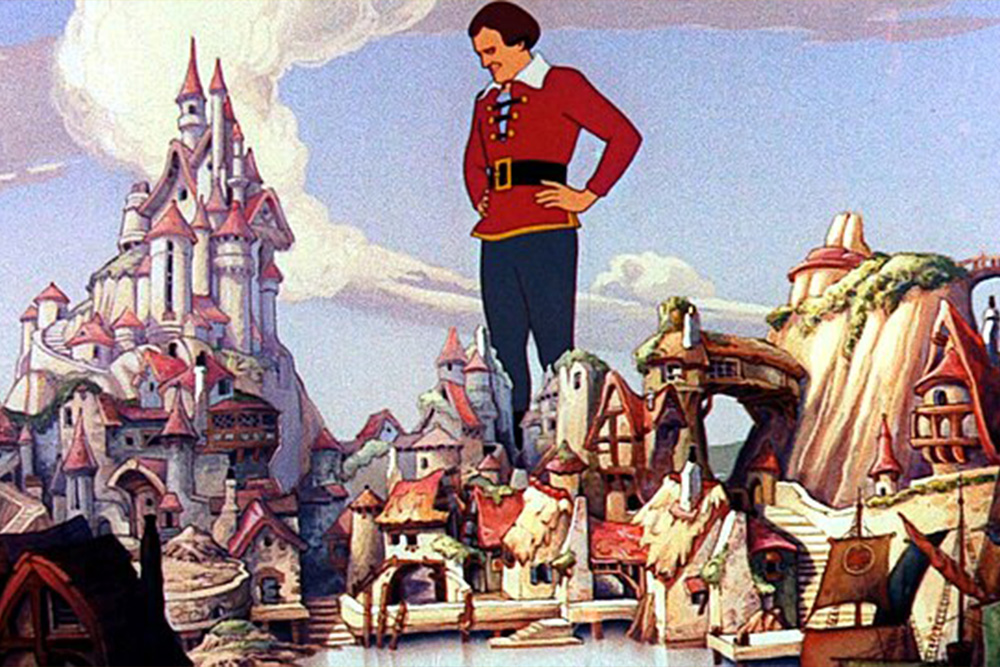
Just imagine our own political officials jumping around like children in an intensely serious game of silliness. The joy of the picture Swift paints is a key aspect of his satire. It lightens and masks the harsh criticism he’s presenting. By creating this scene of humor based on an absurd premise, he argues that politicians will accept humiliation for public distinction and illusory power. It’s like holding up a funhouse mirror to our society, or Swift’s society back then.
While politicians may not have to dance on ropes today, they certainly make a lot of TikToks and answer some absurd questions from the press. The loss of privacy and the acceptance of inane attention, for many, is a small price to pay for political office.
Object of criticism
Somewhere in the heart of the satirist is a moral objection to something that’s going on. The subject that you select for your satire is your choice and what you criticize is a moral choice.
Political cartoons and shows like The Daily Show have long been a form of resistance to power. It’s a form of “norm contestation.” A person in power or a body of power sets out a certain norm, a claim of what’s acceptable and what’s not. Criticizing their actions in the form of satire is a peaceful form of protest and a disagreement about what’s acceptable. It’s contesting that norm and saying a king, despite what he claims, shouldn’t be a drunk, a hothead, or a lecher.
The object of criticism is often someone in power. The reason for this is that people have a reason to be frustrated with groups that hold power and that there’s a real impact when the behavior of people in power is worse than we’d expect. A satire that lampoons blue-collar workers would be odd. It might get some mild laughter in the richest of circles, but it’s punching laterally or punching down; the moral failings of mechanics aren’t as damning.
Frye presents this idea in a useful way:
If a satirist presents, say, a clergyman as a fool or hypocrite, he is, qua satirist, attacking neither a man nor a church. The former has no literary or hypothetical point, and the latter carries him outside the range of satire. He is attacking an evil man protected by his church, and such a man is a gigantic monster: monstrous because of what he should be, gigantic because protected by his position and by the prestige of good clergymen.
This is the task of satire: to lay low the mighty. Underneath the jester’s outfit, there’s a person with a noble task at hand. Reminding the people that the king farts might not dethrone him, but it’ll give the peasantry a smile in their suffering.
Your story weapon: Tips to write your own satire
If you’re considering writing a satire, clarify to yourself who you’re criticizing and why. Satire written from genuine frustration has a different energy than satire written to be clever or because the target seemed easy.
The jester who actually believes the king is dangerous is funnier, and more dangerous, than the one who is merely performing irreverence. Your moral conviction here is the source of the comedy.
What is the behavior, the institution, the abuse of power that you cannot stop thinking about? What is the thing that fills you with a combination of outrage and disbelief when reality starts to seem like a bad joke? That feeling is your starting point. Follow it.
The craft of satire is to lay bare something true rather than simply mock someone. Hold the funhouse mirror just right so that what looks like a distortion is actually the clearest view anyone has had of the thing.
Keep this in mind as you write:
- The humor has to be honest. A joke that misrepresents its target in order to score a point is not satire — it is propaganda wearing a costume. The best satire is the kind where even the person being mocked has to admit, somewhere private, that the jester got it right.
- Aim your critique upward, not at those with less power. Satire directed at the powerless is just cruelty with better timing. Know the difference, and choose your targets accordingly.
When satire is done well, even the king laughs.
If you are interested in exploring deeper tools of craft, join one of my next workshops: The 90-Day Novel, The 90-Day Memoir, Story Day.