


Setting isn’t just a backdrop; it’s a signal, cueing the reader how to read what comes next. Before a character speaks a word or makes a choice, the world around them has already begun telling the story. A cracked sidewalk, a flickering streetlamp, a room that’s too quiet — these details quietly shape how readers feel long before they understand why.
The “where” and “when” of a story play a large part in delivering the right tone and establishing verisimilitude. We can think of “setting” as the particular period in time and the particular place in space where the drama ensues. This could span any number of years, or a single day. Your characters could roam the galaxy, or just a few rooms.
Creating the setting of your story is a subtle art, but one that needs mastering if you want your readers to fully enter your fictive world. In this article, I’ll explore the necessary elements to create a fully realized setting, and I’ll offer you a Story Weapon to help you build settings that bring your stories to life.
The setting of your story shapes the tone and meaning, and gives a sense of realism before a character even acts. By layering place, time, culture, and specific sensory details, you can create an immersive world that guides your reader’s emotions and understanding.
Peeling Back the Layers
Let’s think of a setting as a series of layers building upon each other to create a symphony of sensation. These layers can be conceptualized in whatever order makes most sense to you, but I’ll give an example here of how you might move through them as you build the world of your story.
Immediate location
The first of these layers would be the literal place where your characters live — where they walk, talk, sleep, and stand. This is informed by the characters you’ve sketched out.
Does your story have torrid affairs and ridiculous farces take place in a manor or the palace next door, like The Great Gatsby or Pride and Prejudice? Does it take place in a small town, like Fargo? Or a world of commerce and cheap pleasures, like in Bright Lights, Big City? This is the first step to building out your setting, deciding the props your characters use, and the things the reader “sees” in your descriptions. Try to imagine the scenes you’ve thought about and clarify the type of furniture they’re sitting on and the way they keep warm (or stay cool). Jot down what you see!
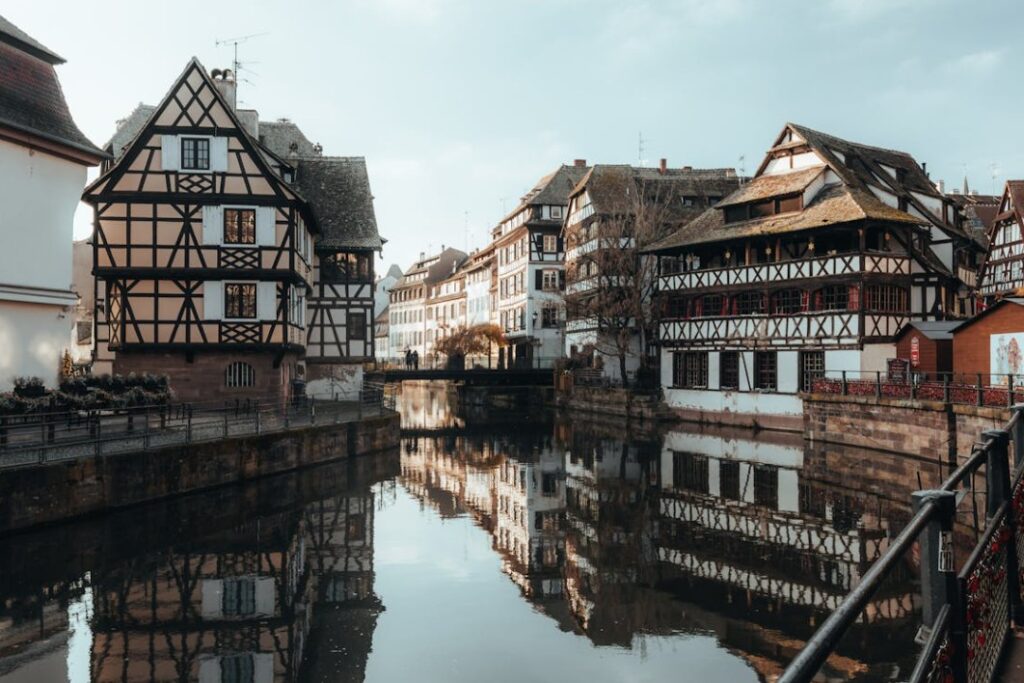
The world of your story
Now we zoom out a little and come to the second layer. What’s the larger environment of the setting? If you’ve imagined nice furniture and silk sheets, where does this fine manor stand? Is it part of a wealthy area in a utopia, or do the rich live at the expense of the poor in the surrounding slums? This is your opportunity to clarify the world of your story, not just the immediate scenery. Whether or not you mention it to the reader, the story will play out slightly differently if it happens on Venus instead of Earth.
“It is ridiculous to set a detective story in New York City. New York City is itself a detective story.”
– Agatha Christie

Establish the “when”
The third layer is time; when your story takes place. This is more than just time of day, but rather time in history (real or fictional). This informs the gadgets your characters use in the story, or lack thereof. Their manner of dress and speech is dependent on when the story takes place.
This necessitates an implicit (or explicit, depending on your style) knowledge of the history of your world. It’s simple if you’re writing in an era of human history; you just have to drop your character into the historical moment of your choosing and think about the decade before and the decade after. It’s a little more complicated if it’s an entirely fictional world. You’ll want to clarify to yourself how the setting came to be.
Societal customs and traditions
This brings us to the fourth and final layer of the setting: the cultural context of your world. Now that you know the moment in history and the physical location of your plot, you can think about the customs and traditions that your characters accept or break. This is a way to flesh out the texture and mood of your story.

Do people in your setting tend to be sarcastic and droll, conservative and uptight, easygoing and generous? Is this a time when originality is rewarded, or is there a dictator somewhere in this world? Is free speech permitted and are people treated equally? These are the factors that hide behind the scenes of our own lives and shape our habits. They can do the same for your characters.
Be specific
Now that you have a sense of the big-picture stuff about your setting, you get to think about the details that your reader will actually see. The best way to deliver on your setting is to be clear about the little things that your characters encounter. In this way you get to show the reader the world you’ve imagined instead of telling them in an expository dump of information.
For example, think about how they drink coffee (if they do). Is coffee easily accessible or a luxury? How is it made and how does it taste? Is it legal or even existent? If not, how do your characters get their caffeine? These minor details flesh out the feeling of your world and introduce, in a sensory way, the work you’ve put into this creation.
Remember that as storytellers we are creating the illusion of reality through our setting. A few well-placed details can act subconsciously on your reader as a way of heightening this illusion.
Your story weapon: Use details to create intimacy and a sense of realism
Notice the particular rituals in your own daily life, the ones you take for granted, and ask yourself how they would look in the setting of your story. This might be brushing your teeth, cooking breakfast, taking out the trash, talking to your landlord, or paying your taxes. Even your voting habits or trying to get out of jury duty are quiet statements about your relationship with the environment you inhabit.
As you get specific with these details, you will begin to notice (often in retrospect) that these details are far less random than they seemed while you were conjuring them. In fact, your subconscious is the seat of your genius, and you will likely begin to notice that these seemingly random details are more often than not germane to the story you’re telling. In fact, they are guiding you to the truth of your story.
Don’t think about getting the details right. This will make you self-conscious and can lead to cliches. Instead, do the opposite. Surprise yourself! Allow your subconscious to play and delight you, and see what emerges. Do you suddenly see your Nun smoking a cigarette, your high-powered defense lawyer living an ascetic life in a studio apartment, a barista with dreams of being an Olympic decathlete?
The best gift you can give to your characters and your story is the same intimacy with their world. Remember, you’re creating an illusion. With this focused attention to setting, you’re sure to create a compelling world for the story you’re writing.
Turn your settings into living, breathing worlds that shape your characters’ lives. Join one of my next workshops: The 90-Day Novel, The 90-Day Memoir, Story Day and start building story environments your readers can truly step inside.