


Does the word “symbolism” give you unwelcome flashbacks to your high school English classes? The idea is foreign when we first hear about it: How exactly do the curtains in the story represent the character’s sadness? Aren’t we just reading too much into these books?
That disconnect lasts up until you finally stumble upon a powerful symbol in a story that resonates with you. Maybe you watched a production of Hamlet and felt the grip of Yorick’s skull. It’s not just an object anymore, but a microcosm of the play’s theme. Maybe you finished reading Toni Morrison’s Beloved and felt the branching scars on Sethe’s back, a mark of the brutality of slavery, trauma, and survival.
In this article, I’ll look at symbolism, some tips on how to use it, and at the close, I’ll offer you a Story Weapon to help you further harness the power of symbolism in your own work.
Symbolism uses recurring images, objects, colors, or actions to quietly carry deeper meaning and reinforce a story’s themes without explicit explanation. When used intentionally and trusted to emerge through your reader’s subconscious, symbols accumulate emotional power and become inseparable from the story’s truth.
What is symbolism?
Symbolism is the art of imbuing something with meaning so that you can transcend the limitations of language. You can use colors, objects, creatures (real and imagined), or even actions and ideas to represent something deeper.
The color red, for example, has many uses. It can symbolize passion, or anger, or highlight something important in your story like the girl’s coat in Schindler’s List or the multitude of red items connected to the ghosts in The Sixth Sense.
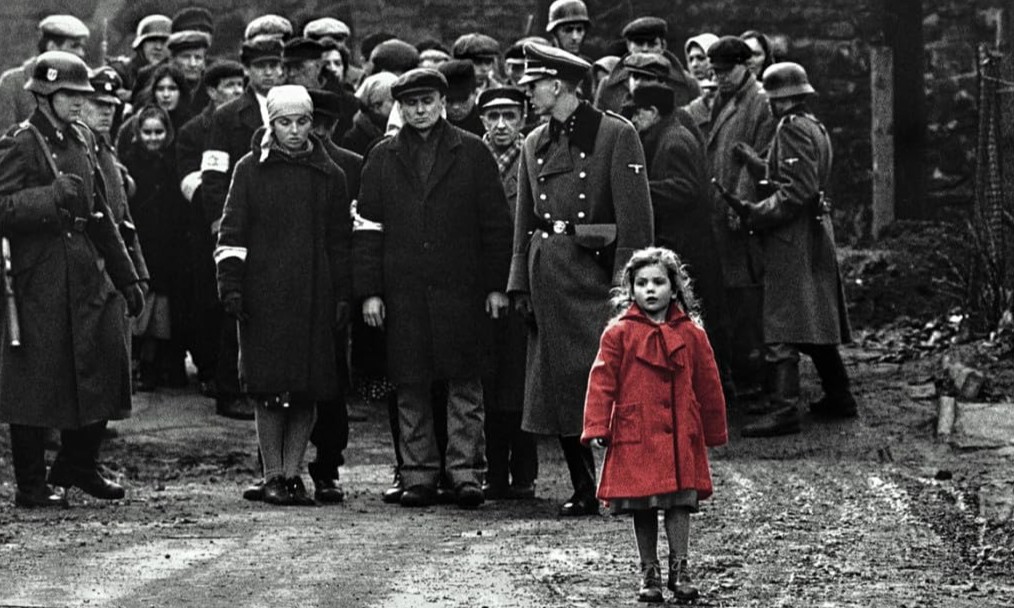
There is a mystical aspect to symbolism; those resounding moments when we see an image and know what it means stick with us long after the story ends. A well-chosen symbol doesn’t explain itself or ask to be decoded, but rather reveals itself. In this way, symbolism works to quietly accumulate meaning until it becomes inseparable from the emotional truth of the story.
Tips for using symbolism
It can be difficult to implement symbolism in your own work at first. It might come across as one of two extremes: too heavy-handed or too subtle for the reader to notice. To get more confident with symbolism, here are a few tips for making powerful symbols in your work.

Establish the pattern
Symbols may surface in a single, striking moment, but more often they return again and again, deepening their meaning and weaving themes through the story by repetition. For symbols to be comprehensible to the reader, it often helps for them to be consistent. The goal is to create an association of ideas for your reader, particularly one that is implicit rather than explicit.
Every time you mention in your narration or show on screen a certain object or color, for example, you begin to plant seeds of association in the mind of your audience. As that object or color reappears from time to time, the association grows stronger.
This suggests that you must be intentional and sparing in your use of a symbol. If you choose a certain color — say, forest green — it should stand out from the color palette that populates your story. If it’s an object, let it be a rare one. It would be hard to pick out Yorick’s skull in Hamlet if it was one of fifty skulls we saw throughout the play. For the association of ideas to be clear to your audience or readers, there must be consistency in when you allow the symbol to appear.
If you’re working with a symbol to represent a certain idea, like the character’s distance from their nature, then the symbol has to appear in the specific moments that it stands for. When the character shows us how they’ve stepped away from nature or how they’re hurting themselves by doing so — boom! There’s the symbol. Further on in the story, we should be able to see the symbol and know that the character will step away from their nature again. Or, when the character finally steps toward their nature, the symbol can change in sync with them.

A good example can be seen in the 2010 remake of The Karate Kid. During the training sequence, the protagonist makes repeated attempts to kick a bell but keeps failing. He gets better and stronger throughout the course of training, but we keep returning to the image of him failing to kick the bell.
As the big fight approaches, the protagonist certainly looks more able than he did at the start, but it’s only when he kicks the bell and it rings out that we know he’s ready. Without dialogue or exposition, the audience implicitly associates the development of the protagonist’s fighting prowess with his ability to kick that bell.
“Symbolism is the language of the Mysteries. By symbols men have ever sought to communicate to each other those thoughts which transcend the limitations of language.”
– Manly Hall
Build strong motifs connected to your theme
The nature of symbolism is that you shouldn’t veer too far off track. Symbols that are connected to the deeper themes of your story build in meaning and become a motif. For a motif to truly fit, the symbols supporting that theme can’t be associated with random ideas.
Because symbols are implicit, your audience or readers will naturally associate the meaning of the image with what they’re getting from the story. The more clear you are on what the symbol represents, the more clear it will be for them.
An example of a symbol directly tied to the story’s theme can be found in The Picture of Dorian Gray. The titular portrait shows the inner life of Dorian, even as his outer form remains beautiful and youthful. The more wretched his character becomes, the more wretched the portrait becomes. This symbol shows us, in a physical sense, what Oscar Wilde is saying about decadence and cruelty.
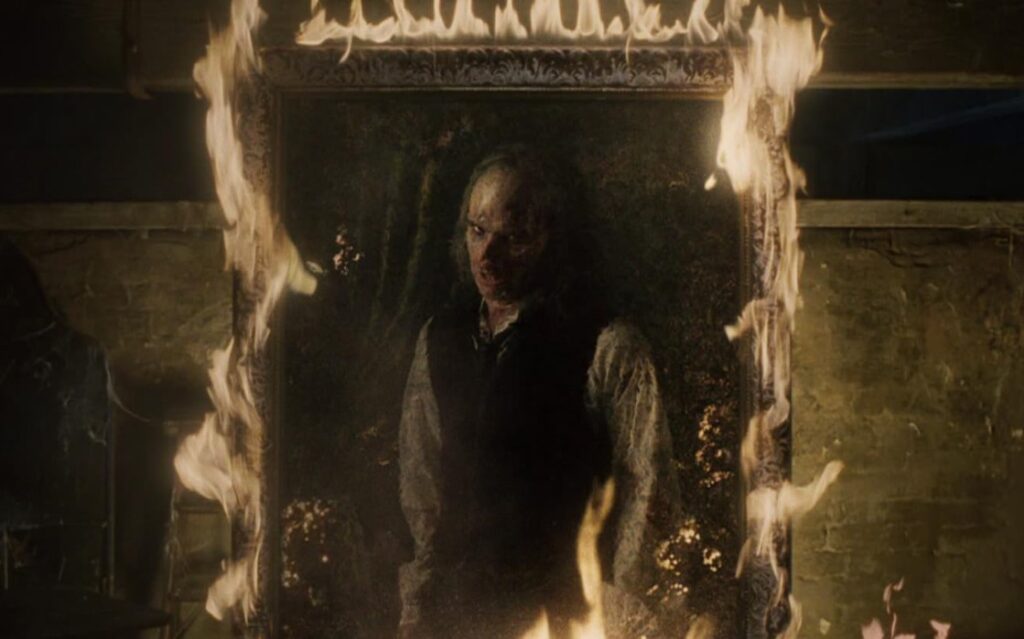
It would be hard to carry the intent of that symbol outside the story, because it’s so deeply focused on the theme. In another story, a changing portrait could mean something else entirely. In Oscar Wilde’s book, it changes along certain lines and those implicit rules communicate to the reader what it means.
Just like that portrait, your symbols can be dynamic as well. If you’re looking to symbolize the loss of innocence in a character, there might be a stuffed animal or toy that they keep with them. As the story continues, it can become more ragged and worn. Maybe an arm falls off the toy or it stops making sounds. The way the symbol changes tells us how the character is changing. If the story ends with the image of that toy, freshly cleaned or put back together, we know exactly what that means for the character.
Your story weapon: Trusting the subconscious
A powerful symbol or motif is not something the writer self-consciously summons at will, but is rather something that reveals itself through the process of story creation. Focusing on how to create symbolism in your work may likely lead to awkward storytelling. My advice to you is to write your first draft quickly, from your subconscious, and in the rewrite process begin to investigate what your subconscious created quite naturally.
In the rewrite you will begin to notice patterns and images that you likely were unaware of in your first draft. The goal of the rewrite is to become conscious of what you did unconsciously, and thus, begin to drill down to the core of what your story is about and discover the symbols that emerged quite organically. As you do this, you will begin to will best help you to dramatize your vision.fmotif
Uncover the symbols already living beneath your rough draft and learn how to shape them into resonant, story-defining moments in one of my next workshops: The 90-Day Novel, The 90-Day Memoir, Story Day