


There are some rules that are so deeply ingrained in us that they just feel natural.
We’re used to things coming in threes. You only get three wishes from a genie. There are three witches in Macbeth. There aren’t two bears in Goldilocks’ story, nor are there two musketeers. It might be less fun if there were two stooges and too much chaos if there were four. Stories have a beginning, middle, and end. The rule of three states that, when grouping elements together, groups of three tend to be the most satisfying arrangement. Why is this?
In this article, I’ll explore the rule of three, what makes the rule work in the first place, and where we see evidence of its existence. Lastly, I’ll give you a Story Weapon to use the rule of three to the best advantage in your own work.
The rule of three is a writing principle rooted in the human brain’s love for pattern-making, suggesting that groupings of three are more satisfying, effective, and memorable than any other number. By utilizing this “fundamental pattern,” writers can create a sense of rhythm and completeness in everything from character dynamics to plot structure.
The power of three
There’s something fundamental about the number three. It’s memorable and satisfying. The reason that we find trios so gratifying lies in one of the basic functions of the human mind: pattern-making.
One thing isn’t a pattern and two similar things could be a coincidence. Once a third element is introduced, our brain starts forming patterns.
In this excerpt from a lecture cartoonist Art Spiegelman gave to students at the School of Visual Arts, he explains why he would draw three rocks in a picture to convey the idea that there are some rocks in the area:
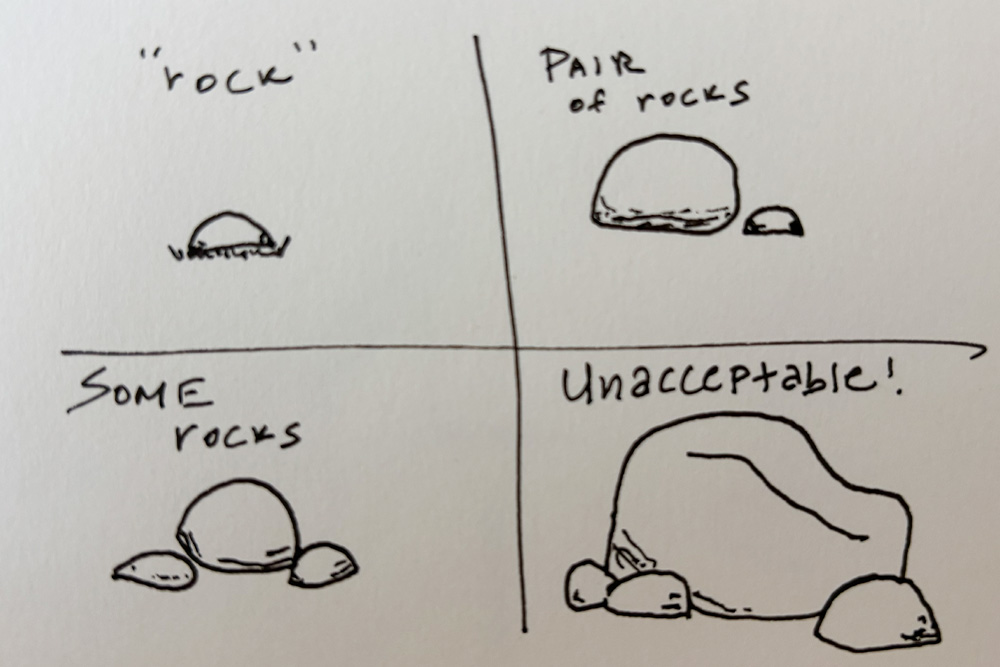
“It was always three. Why? Because two rocks wouldn’t be ‘some rocks.’ Two rocks would be a pair of rocks. And four rocks was unacceptable because four rocks would indicate ‘some rocks’ but it would be one rock more than was necessary to convey the idea of ‘some rocks.’”
Once there are three elements, there is rhythm and cadence introduced to the equation. We could call groups of three the most fundamental pattern that exists for the human mind.
Think of Isaac Newton and his three laws of motion. Nearly every great orator has learned this rule and made use of it; Caesar claimed, “I came, I saw, I conquered,” and Lincoln promised “a government of the people, by the people, for the people.”
The rule of threes in visual mediums translates directly to photography’s rule of thirds.
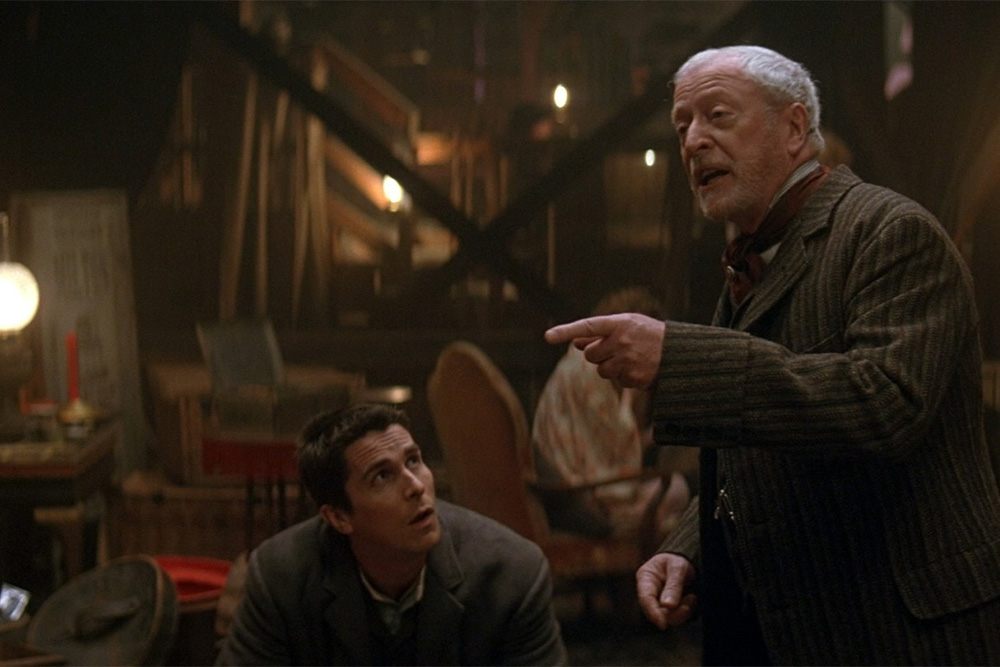
Remember the three parts to any magic trick listed by Michael Caine’s character in The Prestige? The pledge, the turn, and the prestige.
“Three is a sacred number. There are three Fates, three Furies, three Olympian sons of Kronos. It is a good strong number that stands against many dangers.”
– Chiron, Percy Jackson and The Olympians
Character trio dynamics
The rule of threes applies as well to creating characters. Let’s take one of the most famous examples: Harry Potter, Hermione Granger, and Ron Weasley.
You could take any pair of these characters and find something interesting about their relationship. All sides of the triangle are valuable.
Harry and Hermione challenge each other; Harry shows Hermione that intelligence isn’t enough for greatness and Hermione shows Harry that being chosen isn’t enough either.
Harry and Ron are a dynamic duo. Ron welcomes Harry into a world that feels alien to him and his family shows Harry love that he never got at home. Harry welcomes Ron into the often painful world of adventure and destiny, where one is called to be more than they think they are.
Ron and Hermione eventually become husband and wife. Ron relaxes Hermione and lets her be herself, with no pressure to be stunningly intelligent all the time. Hermione asks Ron to be not just a boy, but a man.
We get to spend time with these characters as pairs, but there’s a reason that they’re a trio. In the center of the triangle is a space that can’t ever appear when we’re looking at two points connected by a line. They make for interesting pairs, but it takes all three to fulfill the prophecy and take down Voldemort. The three of them together form a powerful force of love, intelligence, and courage. This is what outlasts death.
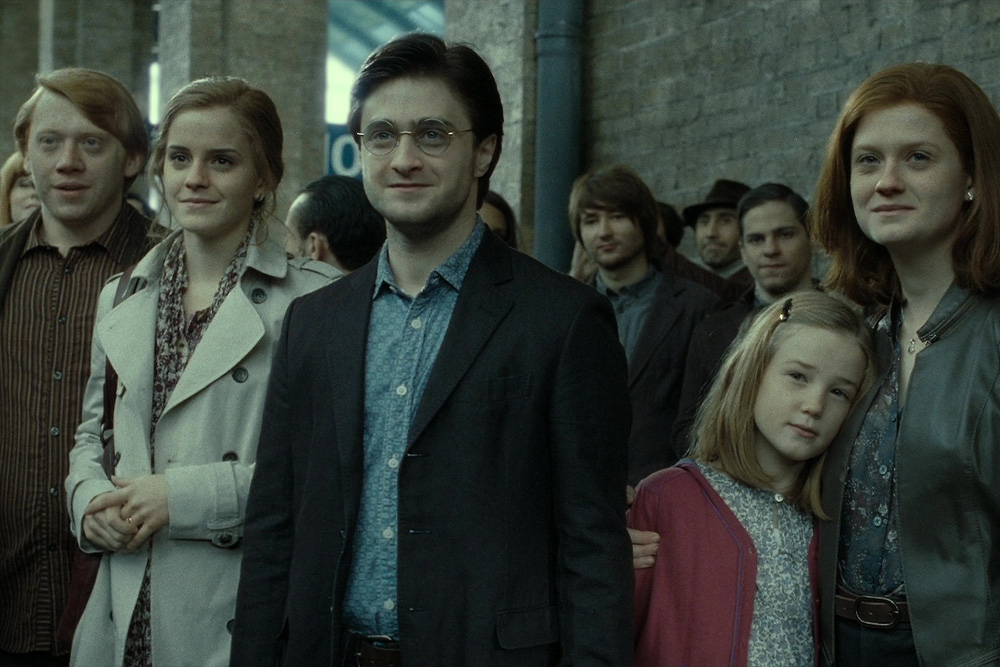
Now why couldn’t that trio add Neville Longbottom or Ginny Weasley? You can of course have a team of four characters together, but there are natural limits to the attention span of the audience and your page count. For readers to love and understand these characters in depth, we need to spend as much time with them as possible. Three characters is the number that allows us to focus on the individual traits of each before we bring them together. Add another, and there are now group dynamics and unnecessary details to deliver the impact of the whole becoming more than its parts.
Your story weapon: Use the rule of three to amplify the drama
Firstly, the Three-Act Structure exists for a reason, and by using it to explore your outline, you will join the long list of writers who have used it to make their story as tight and meaningful as possible.
Secondly, ask yourself about the essential elements in your story. Those elements might be characters, plot-relevant items, twists, or settings. How many do you have right now and what would your story look like if you limited those elements to three of each? You might not want to follow this rule for everything you do, but chances are there are a few places where four magic items could be three or perhaps you could lose one of four antagonists and give the drama to one or more of the existing three characters to make the work more dynamic.
And thirdly, don’t sweat the rule of three too much. Your group of characters isn’t wrong if there are only two or even if there are four. It’s important to remember that your characters are functions of your dramatic question, and that they each exist for a reason.
I’ll leave you with this poem from Mary Oliver on the subject, titled “Three Things to Remember.”
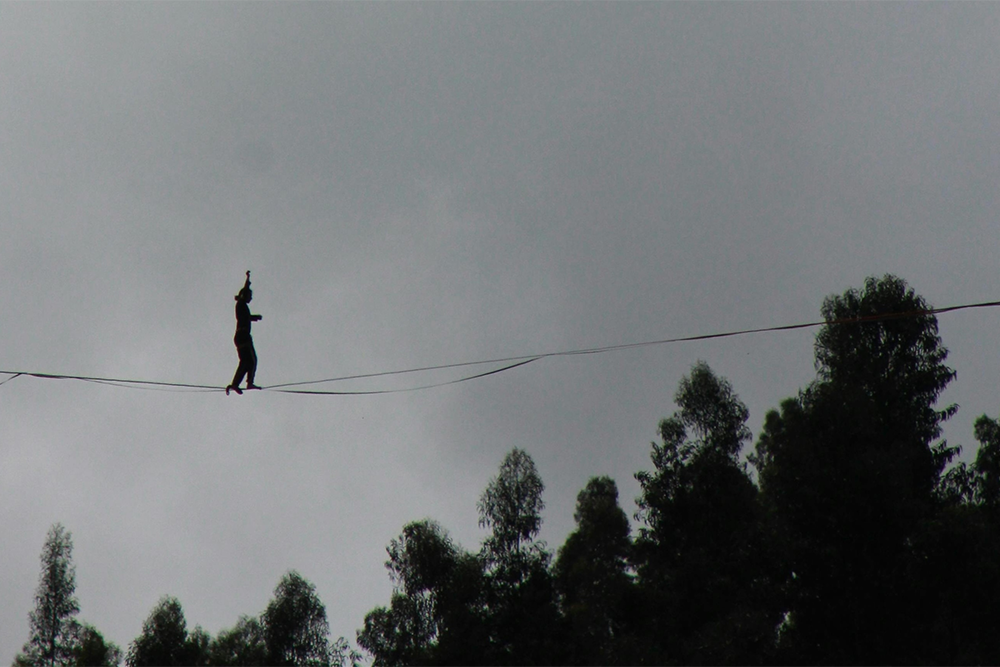
As long as you’re dancing, you can break the rules.
Sometimes breaking the rules is just extending the rules.
Sometimes there are no rules.
FREE DOWNLOAD—DILEMMA EBOOK! Are you looking to understand further how your characters’ interior worlds shape one another’s? My FREE GUIDE will help you guide your protagonist and get the source of your story.