
Irony is a comparison which reveals an incongruity. That comparison might be between events and understanding, a statement and fact, or the expectation and outcome. In the hands of the best writers, irony fleshes out the taste of a good story by adding a hint of a bitter aftertaste. After all, the flavor of life isn’t all sweet. Like any ingredient in a recipe, the way you use irony changes its effect.
The three main categories of irony are: dramatic irony, situational irony, and verbal irony. In this article, I’ll take a closer look at each of these types of irony, and offer you a Story Weapon to master these techniques.
This article explains irony as an incongruity that deepens storytelling, breaking it down into dramatic, situational, and verbal irony, illustrated with classic and modern examples. I’ll show how identifying and using incongruity can heighten tension, reveal character, enrich humor or tragedy, and make your stories more engaging and layered.
Dramatic irony
Dramatic irony is a structural conceit in which the audience or reader knows some key information that is being withheld from the characters of the story. The incongruity here is the difference between the audience as observers with privileged information, and the characters, who make their choices based on their limited understanding.
Let’s explore two examples that use dramatic irony in similar ways but to much different effects.
The Importance of Being Earnest by Oscar Wilde
Here the tension between what we know and the characters don’t is used for comedic effect. The key piece of information that’s kept from all but one of the characters is that Jack Worthing is leading a double life. He’s also his “younger brother,” who goes by the name Earnest Worthing. This provides the central mechanism of the play; the events that unfold are largely based on that secret. But it’s not a secret to the audience. Why does Oscar Wilde choose to key us in on that?
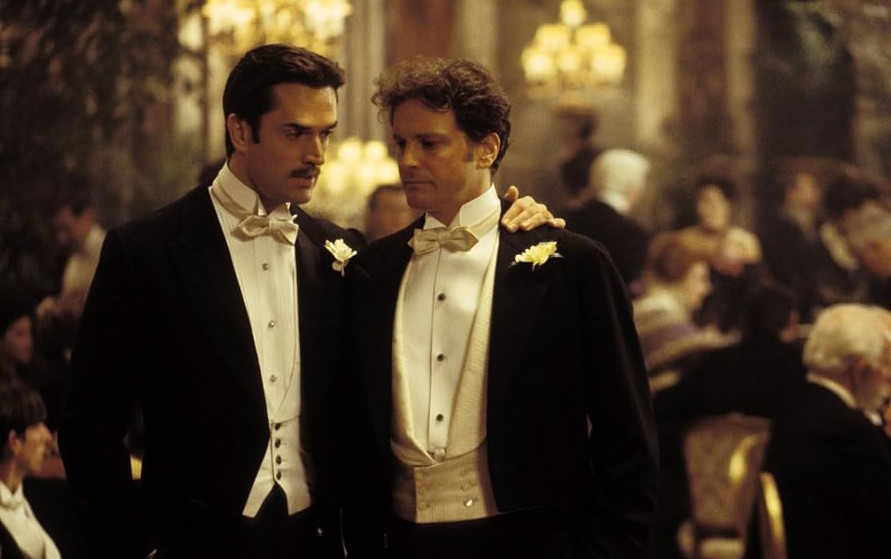
It’s helpful if we’re in on the joke. The events that follow, like when Jack Worthing announces the death of Earnest only for Algernon to arrive at his home pretending to be Earnest, require that information to be understandable to the audience. The tension between what we know and what the other characters don’t is where we get the laughs. We get to watch the two men scramble to realign themselves.
There’s a promise made implicitly when the lie is first introduced to us. At some point, that lie has to be unveiled and we get to delight in the consequences.
Sophocles’ Oedipus Rex
In this tale, dramatic irony is used to a completely different effect. The information that the audience is given but the titular character is denied is that the killer of the previous king was Oedipus himself. Oedipus doesn’t realize this as he pursues the murderer in the hopes of ending a plague in his kingdom. Worse still, he doesn’t know that his queen is also his mother.
The resulting tension is hardly comedic, though here we’re in a similar situation as the audience of the Importance of Being Earnest. The ironies, such as when Oedipus curses the murderer to a painful death or when he calls the prophet Tiresias blind to the future, might give us a grim satisfaction. Oedipus is only cursing himself to pain and he is the one who becomes blind.
The subject matter and tone of these works are very different, but they both use dramatic irony in similar ways. Where Oscar Wilde keeps the audience in the know to keep us laughing, Sophocles tells us the big secret to station our seats next to the gods. One provides us with comedic delight and the other with cosmic delight, which is certainly a bit more dramatic.
Dramatic irony fits with any genre. It’s a great way to introduce tension to the work and give the audience or reader a reason to wait for the ending.
“I am a connoisseur of fine irony. ‘Tis a bit like fine wine, but it has a better bite.”
– Lynn Kurland
Situational irony
Though our day-to-day lives may lack drama, we’re all familiar with situational irony. The incongruity in this case is between the events taking place and the expectation for those events. That could be a watch salesman being late to their meeting or a teacher giving a student detention for cheating only to get caught for tax evasion. These little incongruities serve as reminders of humility and remind us that humor is a part of nature, not just television.
That said, the best written examples of situational irony might be in TV. Let’s take a look at how the writers of a famous sitcom approached situational irony. It’s one thing for something funny to happen on screen, be it slapstick or a more complex joke. Situational irony allows for a deeper form of humor, creating the potential for even more fun on top of the situation.
Seinfeld
One of the rules that Seinfeld writers kept at the core of their approach was that the premise of a scene itself had to be funny. If there was a bit of incongruity in the setup, the punchlines wrote themselves. A great example is the sequence in which George Costanza finds that the more he acts opposite his instincts, the more the world rewards him. That idea contains situational irony. There are so many ways a writer could go from there, which is a gift to you and your pen. It’s much easier to write a layered scene when the premise is rich, rather than trying to create moments of humor or emotion on top of something more rote.
A great way to bring situational irony is to map out the sequence of events in an outline before you dive deep into the scene. Try to give each scene a one sentence description. If that description makes you laugh or makes you curious to read more, it’s probably a good premise. It’s also a surefire way to check if your attempts at irony are coming through in the form you want. If that scene description contains incongruity, you’ve given yourself a much easier time when you come to actually write that moment in your story.
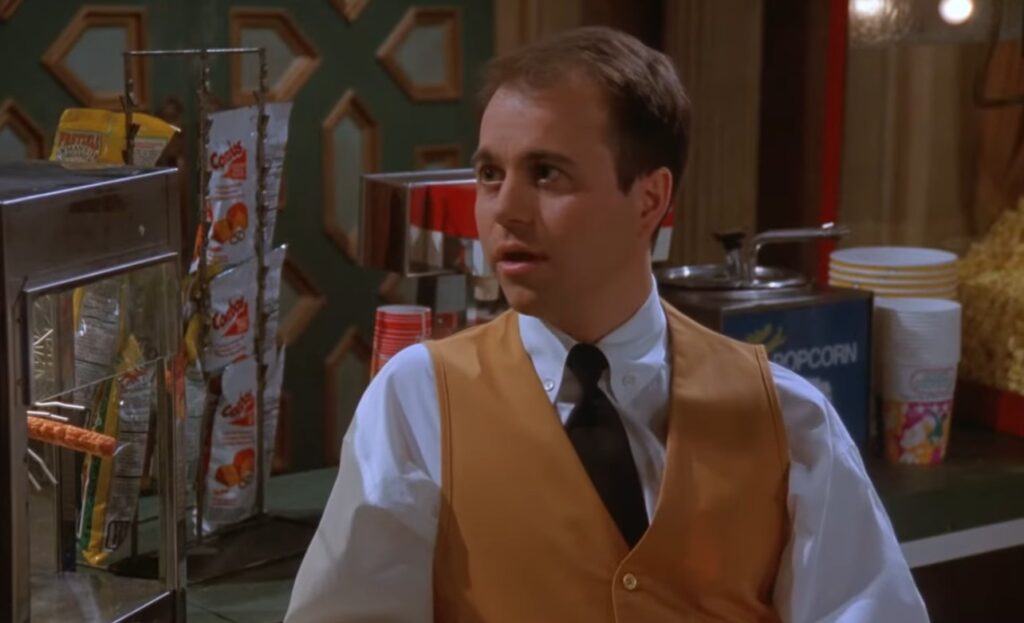
Psst – a little Seinfeld trivia. I played the Hotdog Vendor in the Chinese Gum episode. Here’s a clip.
Verbal irony
The last form of irony is verbal irony, which comes out in dialogue rather than the structure of the story itself.
The type of verbal irony you’re probably most familiar with is sarcasm, which we use all the time in day-to-day life. An easy example is someone saying “Well, isn’t this great,” right after their car gets a flat.
Verbal irony also includes overstatement and understatement. Overstatement would be like someone saying that that girl in the coffee shop is the hottest person in the world, whereas understatement would be that same character saying later: “I guess I’m a little into her.”
Here are some quick examples:
The Princess Bride (1987)
“Inconceivable!”
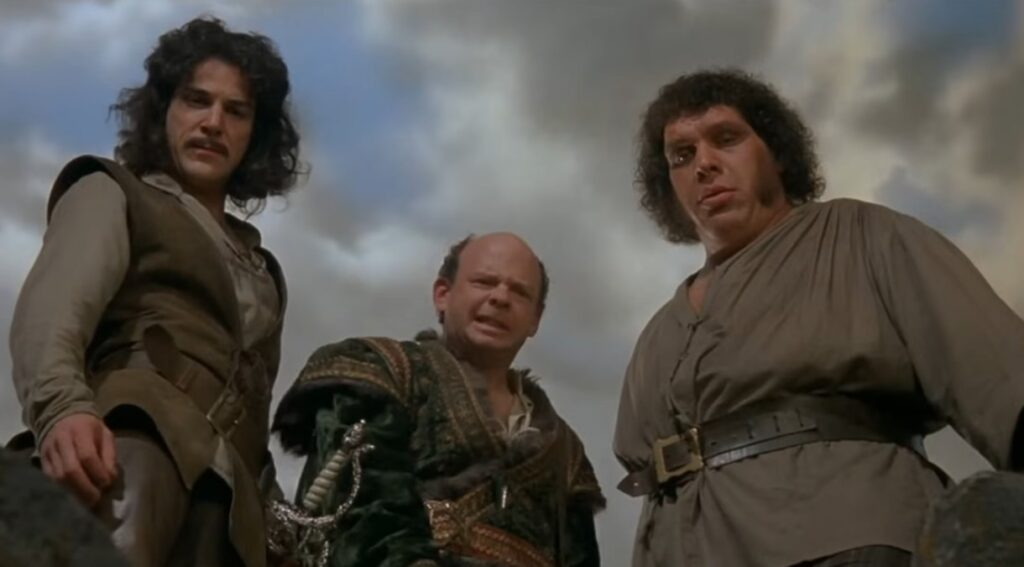
“You keep using that word. I do not think it means what you think it means.”
Inigo Montoya’s deadpan remark undercuts Vizzini’s constant use of “Inconceivable!”—a humorous instance of verbal irony because the events keep happening, proving the opposite of what Vizzini insists.
The Office (2005-2013)
“I am BEYOND thrilled.”
After learning he must complete tedious corporate paperwork, Michael says in a flat, miserable tone, “I am beyond thrilled.” The words express excitement, but his delivery communicates the exact opposite—classic deadpan verbal irony.
The incongruity in verbal irony is between the assessment of the situation, delivered by one of your characters, and what’s actually happened. So what use is it in storytelling and how can you make it work for you?
Detachment
It’s helpful to think about why a character would choose to comment in an ironic way. In the case of sarcasm or the sardonic comment, there’s something about the situation that is making your character want to remove themselves from the reality of it for a second.
There’s a reason gallows humor exists; putting a brave face on a situation can help us get to the next moment. When a character is sarcastic time and time again, it says something about them. In the case of Chandler Bing from Friends, for example, it’s a defense mechanism to keep his insecurities from being too obvious. We all know someone who can’t help but crack a joke about what’s going on. That’s an easy way to ensconce oneself in ironic detachment. It keeps the world at a safe distance.
Overstatement and understatement, on the other hand, help someone communicate the intensity of a situation. It’s one thing to say you love a song; it’s another thing to say that it’s your favorite song. The same is true for the inverse. An understatement would be someone saying, after a three-day fast, “I’m a little peckish.” Though it’s somewhat of the opposite of overstatement, the effect is the same. You can see how the line “I’m so hungry I could eat a horse” in the same situation lacks the irony; there isn’t an incongruity there.
When deciding if and how your characters use these tools, ask yourself how expressive they are and what has formed their habit of speech. A salesman, for example, might be a better candidate for overstatement and understatement than a grizzled war general. One is used to being rewarded socially and financially for being effusive; the other is rewarded for the exact opposite.
Your story weapon: Identifying incongruity
However you choose to employ irony, whether it’s verbal, situational, or dramatic, keep the incongruity at the center of your understanding. It can be a little hard to tell at times if something is actually ironic or if it’s just unexpected.
Start paying attention to incongruity in the stories you love and in your own work. By identifying where the incongruity is, you’ll develop your sense of irony and your readers will benefit. As you draft your next scene, ask yourself what the audience knows that the characters don’t, what outcome is expected versus what actually happens, or how a character’s words clash with reality. Experiment with each type of irony, then read the scene aloud and feel how the tension changes.
Irony is a great tool. It can help you manipulate the tension in your story, add layers to your scenes, and color the style of your dialogue. Most importantly, it makes your writing more fun to read. After all, nothing cuts like a sharp wit.
Want to sharpen your storytelling edge? Join one of my next workshops: The 90-Day Novel, The 90-Day Memoir, Story Day