


Rhythm is one of those craft issues that writers talk around without really discussing. They might lump it in with general recommendations like “mix up your sentence structure” or “read it aloud” without further explanation, but it’s unclear why or what you should be listening for.
It’s more than just sentence variation. Rhythm is the heartbeat underneath your language, the cue that controls your reader’s pace. Do it correctly, and your work sings.
In this article, I’ll define rhythm in writing, demonstrate what rhythm means on the sentence level as well as the scene level, and point out common mistakes writers make. Finally, I will present a Story Weapon that leverages rhythm, not just as a stylistic element but as a powerful tool for precisely shaping your reader’s emotional responses.
What is rhythm in writing, exactly? It’s not simply a matter of varying sentence length — it is the primary mechanism by which a writer controls how a reader feels at any given moment in a scene. Long sentences slow the reader down and create emotional weight; short ones accelerate pace and generate urgency; and the misalignment between sentence rhythm and emotional tone is one of the most common — and least diagnosed — problems in early drafts across every form of writing.
What rhythm actually is
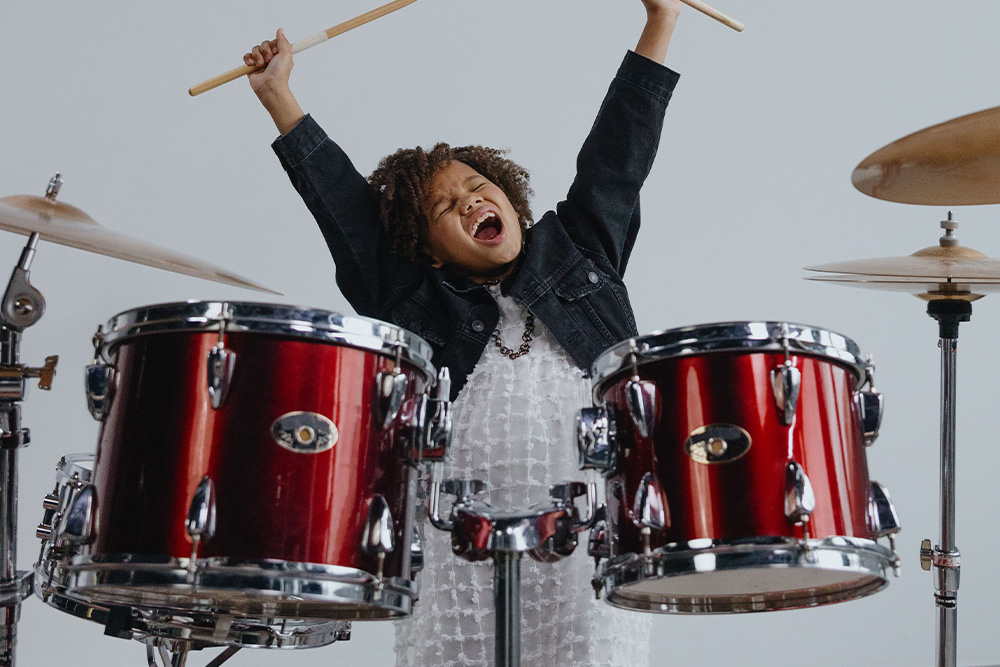
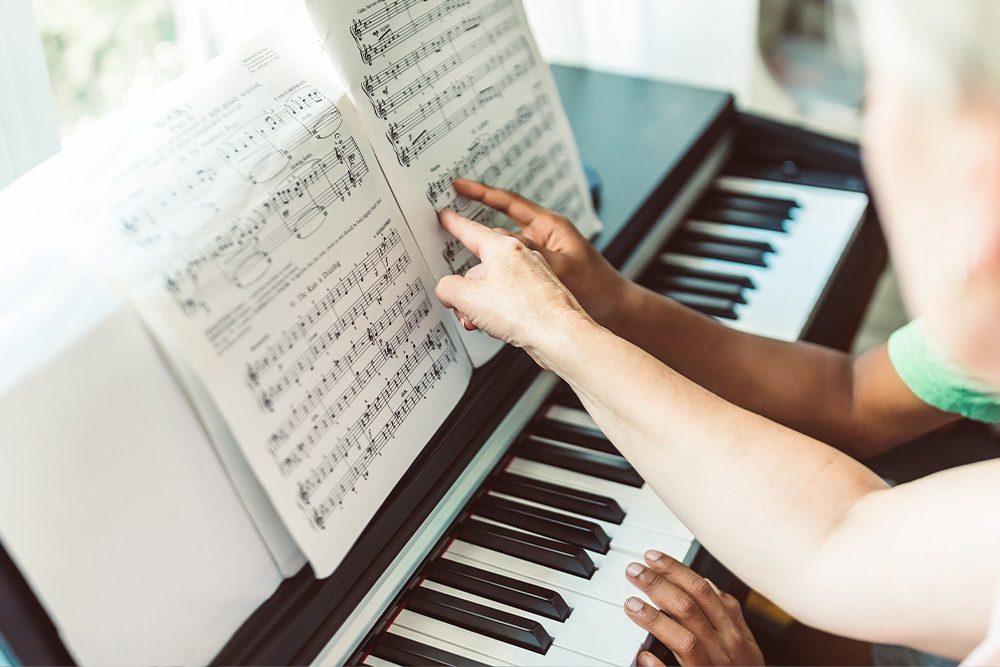
In music, rhythm is how beats are arranged over time. Some beats land hard, some are light, some come fast, some come slow. The variation is what gives music its feeling. A steady, unbroken beat becomes monotonous. Variation is where emotion lives.
Prose rhythm works the same way.
Every sentence has a length, a weight, and a pace. A long sentence that moves through clauses and subclauses and qualifications tends to slow the reader down; it asks them to hold several things in mind at once before they reach the period. A short sentence stops them. Like this.
When you vary sentence length with intention, you create a natural rise and fall that the reader feels physically, even if they can’t name it. A page of nothing but long, complex sentences feels exhausting. A page of nothing but shorter, quick sentences starts to feel choppy and anxious, like someone talking too fast. The combination, handled well, gives prose its sense of movement and breath.
But rhythm isn’t only about sentence length. It’s also about:
- Where the stress falls – English is a naturally stressed language, and some syllables hit harder than others. The end of a sentence carries more weight than the middle. If you bury your most important word somewhere in the middle of a long clause, it gets lost. If you put it at the end where the natural stress falls, it lands.
- Sound patterns – Repeated consonants, vowel sounds, the way words move from one to the next — all of this contributes to rhythm at the level of individual words. You don’t need to write poetry to think about this. You just need to notice when a sentence sounds right and when it sounds clunky, and understand that “clunky” is often a sound problem, not a meaning problem.
- The length and pace of scenes – Rhythm exists at the macro level too, not just the sentence level. A scene that takes four pages to do what could be done in two has a rhythm problem. So does a chapter that rushes through three emotionally significant moments without giving the reader time to feel any of them.
How rhythm controls what a reader feels
Here is the part that nearly all craft books fail to tell you: rhythm is not purely aesthetic. Rhythm is emotional.
Long, flowing sentences slow the reader down. They settle into the language and feel its weight. This matters when a scene needs depth, reflection, or emotional weight.
Short sentences speed the reader up. There is simply no time for them to savour a sentence or to stop and absorb it. These short sentences serve as instruments for action, conflict, surprise, and revelation, when the ground must give way beneath the reader’s feet.
Most scenes contain elements of both, and it’s your role to orchestrate the shifts.
Notice what happens when an intensely charged scene is all rendered in long, dense sentences: the tension drains from them. The reader may struggle to process sufficient information to sense any urgency.
Now consider what happens when a contemplative scene is rendered in short, flat sentences: the tone becomes staccato. There is no space to inhabit the feeling being described because the pace becomes relentless.
The misalignment of the sentence rhythm with the emotional tone of the scene is one of the most frequent — and one of the least frequently diagnosed — problems in early drafts. It’s why correctly plotted and composed scenes often feel off in execution.
The most common rhythm mistakes
Equal sentences
This is the most common rhythm problem, usually brought on by a writer’s devotion to clear, simple prose and a wish to carry that simplicity just a shade too far.
Clarity is important. But clarity without variation is dull. Sentences of similar length will begin to lose a sense of pace. Your reader’s eye will slide across the prose in a way that will cause no particular words or phrases to rise above the others or hit with any force.
Keeping your punchline buried
She was standing there on the platform watching the train come at her, considering everything she’d been fighting in her head for months, and she realized she still loved him.
Here the real revelation, that she still loved him, is too far back in the long previous clause to register properly. Let’s break it up a little.
Standing on the platform watching the train come at her, she realized something she’d been fighting in her head for months. She still loved him.
Now the punchline hits at the end, where the stress naturally falls, and the reader doesn’t have to stop for a breather on the way there.
Working against the emotion of a scene
Writing long, elaborate sentences for a chase sequence. Using short, choppy sentences for an intimate reunion. It may sound obvious, but writers of all stripes struggle with this. It’s not because they don’t know better, but because they get caught up in the scene and don’t recognize what effect their writing is having on the reader’s feelings.
Abuse of the comma
The problem with long sentences isn’t necessarily the length, but that chaining several ideas together with commas rather than allowing the natural breaking point of a period, can strain your reader’s ability to track the sentence’s meaning. You can technically make a sentence as long as you want, as long as it has a building force toward something. It is different to use a long sentence that simply keeps going because the writer can’t think of a way to end it.
A few things worth knowing in practice
Read your work aloud — not just in your head
There is no single exercise that can help your rhythm as much as reading your work out loud. Your ear hears things that your eye misses.
If you are running out of breath before you finish a sentence, it may be too long. If you are stopping and starting too frequently, your sentences may be too short to hold the emotional weight. If you trip over a word or a phrase, it may be a problem of sound, and you might consider something that rings more clearly to the ear.
Periods are rests
A period marks a pause — an actual beat of silence between thoughts. Placing those rests is a rhythmic decision. A brief, punchy sentence after a long one can function like a beat of silence in music, giving more weight and importance to what came before it.
Read other writers closely and analytically
Take a paragraph of a work you admire and count the sentence lengths. Where do the short ones fall? What word ends the sentences, and why is that the word that ends it? What you are likely to see is that the rhythm is intentional. Nothing is random in first-rate prose.
A note for different kinds of writers

Novelists: Rhythm is what separates prose that readers stay up late to read from prose they put down without knowing why. In a novel, you have enough space to really work the rhythm — to let scenes breathe, to control pace across chapters, to use the contrast between a slow reflective passage and a fast-moving scene to give each one more power. Pay attention to the rhythm of your chapters as a whole, not just your sentences.
Memoirists: In a memoir, rhythm does something specific. It controls emotional distance. When the prose slows down and expands, the reader moves closer to the experience. When it speeds up and contracts, they pull back slightly. You can use this intentionally: let the prose open up around the moments that need to be felt, and tighten it around the moments that are being reported rather than experienced. That shift in rhythm tells the reader how to calibrate emotionally.
Screenwriters: Rhythm in a screenplay lives in different places. The length of scenes, the pace of dialogue exchanges, and the white space on the page. A script that’s dense with action lines and long dialogue blocks feels slow, whatever the content. Short, punchy exchanges move fast. Knowing when to let a scene breathe and when to drive it forward is a rhythm decision. It’s one of the things that separates a script that reads well from one that reads like a chore.
Your story weapon: Use rhythm to tell the reader how to feel
Here’s a secret that storytelling teachers don’t always spell out: The reader doesn’t just feel events — they feel the way your prose moves.
Before you touch your next scene, ask yourself: What should the reader be feeling right now, and does the rhythm work with or against that emotion?
For the reader to feel looming dread, consider slowing down your prose. Make your sentences longer. Use heavier words. Let the moment linger past the point of comfort. Let the reader feel the weight of the passage of time, how stretched it feels when the bad thing is about to happen and cannot be prevented.
When you want your reader to feel panic, keep sentences short. And quick. Avoid allowing them to settle in. Make them keep going. Don’t breathe.
For your reader to feel a deep, quiet grief, consider using an unexpected alteration in your rhythm. Give them one long descriptive sentence about something small and familiar. Then a brief sentence on what is lost. Contrast in sentence structure does what explanation never can.
The reader feels the rhythm before they ever understand it. It operates beneath the language of the story. When the rhythm is right, it settles into the reader, who won’t even realise that it is happening.
That’s when the writing rhythm truly works.
Mastering rhythm can transform competent prose into writing that carries readers effortlessly from one page to the next. If you’re ready to strengthen every aspect of your storytelling craft, join one of my next workshops: The 90-Day Novel, The 90-Day Memoir, Story Day.