




A powerful way to shift the perspective of your audience is to employ dramatic irony. This literary device lets the audience see further than the characters and feel the tension of an unseen truth hovering over the scene.
You can build suspense, deepen a tragedy, or sharpen a comedic scene long before the characters themselves catch up. In this article, I will explore how this technique works, and give you a Story Weapon you can use to craft moments that will resonate with your audiences.
Dramatic irony occurs when the audience knows more than the characters, creating tension, suspense, or heightened emotion as we watch them move toward a truth we already see. By controlling what information you reveal and when, you can shape the tone of your story and guide your audience through a more powerful emotional experience.
What is dramatic irony?
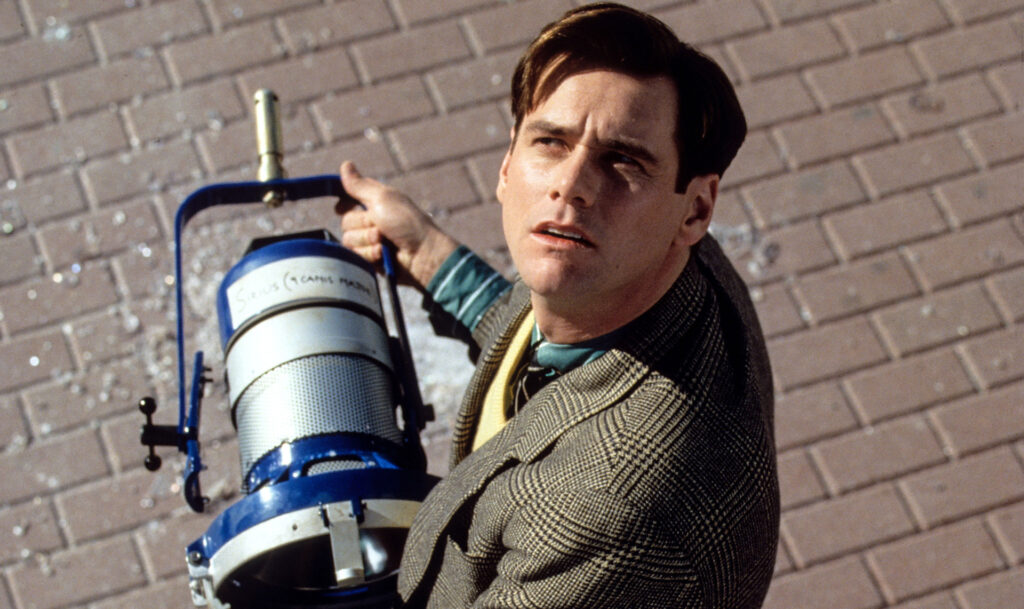
How does dramatic irony differ from verbal irony or situational irony? Found most often in works for the stage, dramatic irony is a literary device in which the audience is given more information about the story than the characters in the story. We get to know something that they don’t and the tension builds as we wait for the characters to react to the inherent lie, like Truman finding out he lives in a TV show in The Truman Show.
Example of dramatic irony: Romeo and Juliet
To get a sense of how dramatic irony affects the audience’s understanding of a story, let’s take a famous example of its use and see how the moment changes without the technique. One of the most famous examples of dramatic irony in literature is the end of Romeo and Juliet.
In Act 5, Scene 1 of the play, there is still a chance for a happy ending. The audience watches Romeo hear the false news of Juliet’s death and then purchase the poison. We might yet hope that Friar Laurence’s letter outlining the plan will reach him, or that Juliet will awaken at the right moment and we’ll get our happy ending. But instead we learn that Friar Laurence’s letter never arrived and Romeo is rushing to Juliet’s side, armed with his poison.
The climax of the play hinges on dramatic irony. After seeing Romeo slay Paris, we watch with immense apprehension as he delivers his final monologue.
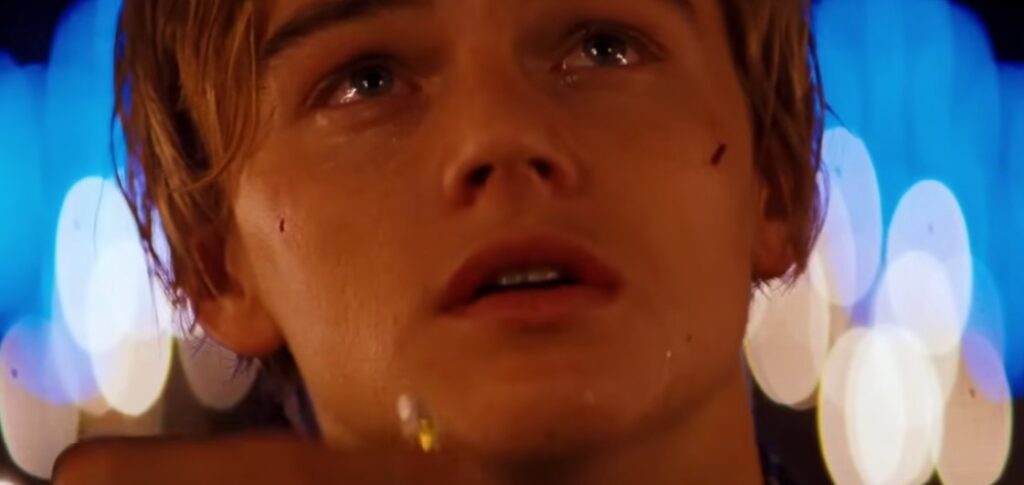
We know, from the start of the scene, that Juliet is alive as Romeo dies for her. Juliet wakes and finds her lover’s corpse. And thus, she chooses to join him in death with his dagger.

Now let’s think about this scene without the dramatic irony. Shakespeare might have easily written this ending having only told us what Romeo knows. No doubt there was a draft of that version somewhere, in Shakespeare’s head if not on parchment. We might find out with Romeo in Act 5, Scene 1 that Juliet is dead, perhaps having ended her life rather than marry Paris. Act 5, Scene 2 would be omitted and we’d rush to Juliet’s side with Romeo to see her dead as he does. This is where it gets interesting.
Romeo’s monologue rings differently when we’re mourning with him:
How oft when men are at the point of death
Have they been merry! which their keepers call
A lightning before death: O, how may I
Call this a lightning? O my love! my wife!
With us thinking that Juliet is dead already, Romeo’s own death makes perfect sense in that moment of drama. We mourn her, we mourn him, and we mourn them. The conclusion of a satisfying tragedy. Then, we see Juliet wake up from the dead.
We might for a second imagine it to be a dream or her awakening to a life after death, until she explains in a heartbreaking monologue the whole affair. Now, we deal with the shock and the tragedy of that, and watch Juliet die again. Maybe Friar Laurence arrives all too late, and we watch him try to rouse her before he sees the knife. The final scenes can remain the same.
So how different is the play without dramatic irony, with us finding out information as Romeo does? For one, you can see how a writer gets to play with the tension his audience experiences. In the actual play, the tension rises and rises until we’re at a boil during Romeo’s monologue. We hope Romeo will find out or Juliet will awaken in time, until the very last second.
In the alternate course of events, we mourn them both but the events might be happening too rapidly for us to properly understand and react to them. Juliet’s second death would seem a tad contrived, and we can hardly mourn her again. Still, under the pen (or quill) of Shakespeare, it might emerge as a stunning plot twist and be remembered for that.
Dramatic irony affects the tone of your story
“If you were in a restaurant and said out loud, ‘I can’t wait to eat the veal marsala I ordered,’ and there were people around who knew that the veal marsala was poisoned and that you would die as soon as you took a bite, your situation would be one of dramatic irony.”
– Lemony Snicket
Many of the dramatic stories we tell these days — told most simply in the string of superhero movies that have dominated the box offices — are tales of triumph. Some anthropologists theorize that part of the reason that these types of stories are so popular in the modern world is that humanity has, in a sense, triumphed over the environment. The world shuts down because of a virus, and a year later a vaccine is created. Infant mortality is down to an insignificant level. We live longer and the list of modern conveniences available to the common person would make a duke of medieval times look like a pauper.
When Shakespeare wrote his plays, the Black Death was still present in the minds of the people and an active part of their understanding of the world. The world had essentially ended when the bubonic plague hit; half the population perished. People rarely ascended from their economic station in life and the story of humanity must have felt like a tale of tragedy.
Shakespeare joins the tradition of Sophocles when he writes his plays. He puts his audience in the shoes of the gods, who are assumed to know more than the people running about the Earth, and they can only watch in pity as the events of the play unfold. To not know what’s going to happen next, especially if death looms around the next corner, is a feeling his audiences escaped when they showed up to the Globe Theater.

These days, we’re usually given as much knowledge as the characters. When they win, and they usually do, we win with them. When Romeo and Juliet “lose,” we don’t lose with them. We watch them experience the tragedy, but are ensconced in the prescient knowledge the script gave us.
From Jean Alouih’s brilliant retelling of Sophocles’ Antigone:
In a tragedy, nothing is in doubt and everyone’s destiny is known. That makes for tranquility. There is a sort of fellow-feeling among characters in a tragedy: he who kills is as innocent as he who gets killed; it’s all a matter of what part you are playing. Tragedy is restful; and the reason is that hope, that foul, deceitful thing, has no part in it. There isn’t any hope. You’re trapped. The whole sky has fallen on you, and all you can do about it is to shout.
Your story weapon: Set the tone
You get to choose the tone of the story you’re telling. Is there an inevitability to the course of the events in your story? Do you want your audience to feel as vulnerable as the characters in the story, or would they benefit from a more removed perspective?
Try to track when and how you reveal key information to your readers or audience members. Follow the tension and see if it can’t swell at the moment of climax, only to wash away in the denouement.
You might be writing the next great tragedy, rife with dramatic irony, that some blog hundreds of years in the future will dissect.
You don’t have to be Shakespeare to tell a great story. Get down to the bedrock questions that are driving your narrative in one of my next workshops: The 90-Day Novel, The 90-Day Memoir, Story Day.