

The best way to flesh out something is by showing what it isn’t. If that sounds like a paradox, you’re feeling the friction of juxtaposition.
Chaos vs order, old vs new, stress vs calm. We see juxtaposition used often in our daily lives through visual art, photography, marketing, journalism, etc. The sharp contrast grabs people’s attention and naturally invites us to compare the elements or ideas being presented. It can be used the same way in stories.
In this article, we will explore the power of juxtaposition, both in the written word and visually in film, and I will give you a Story Weapon to help you understand how to use it in your own writing.
Juxtaposition is a writing tool that places contrasting ideas, characters, or images side by side to highlight their differences and deepen meaning. By letting opposites coexist—light and dark, hope and despair—it invites readers to actively interpret themes, heightens emotion, and strengthens tension without explicit explanation.
The definition of juxtaposition
Juxtaposition is a literary device in which you place two elements in close proximity that intentionally contrast with each other.
As humans, we naturally understand concepts in relation to one another. We’re wired for pattern recognition. Put random items together on a table and our brains will try to find some sort of connection between them. Juxtaposition uses that aspect of our minds to emphasize the contrast between things more clearly.
We recognize good because we know bad. We understand joy because we have experienced sorrow. You can highlight what makes these elements different and drive the friction between them to make a greater impact in your story.
Why does it matter?
Contrast naturally invites your reader or viewer to look closer, compare, and draw meaning out of what they see. Seeing one thing next to another gives insight into both of the elements at play.
By pitching light against darkness, affluence against poverty, innocence against experience, tradition against change, you can help clarify the meaning and importance of both sides of an argument and how it relates to your characters. Placing opposing ideas side by side, you can present complex themes, add emotional depth, highlight conflict, and encourage critical thinking.
This technique is a great tool for “show, don’t tell” — a phrase you’ve probably heard in your writing circle before. Instead of explaining an idea directly, let the reader or viewer discover the intended meaning on their own.
“I’m definitely a fan of juxtaposition. Using the most beautiful line to say the most horrific thing — I think one of the main things in songwriting is definitely friction between the words and the melody.”
– Rufus Wainwright
Juxtaposition in Literature
Writers often use juxtaposition to build characters, investigate ideas, and control story tension.
Characters
Opposing characters serve to emphasize each other’s qualities. A brave and mighty character looks even more heroic next to a fearful, shrimpy person. Next to someone corrupt, a morally straight character stands out all the more.
Here are some examples:
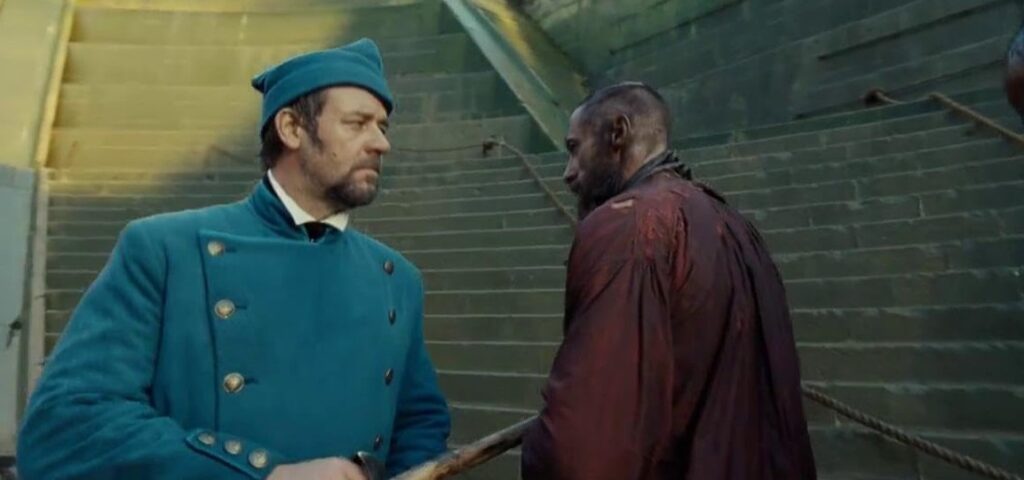
Les Miserables by Victor Hugo
Jean Valjean represents mercy and redemption, while Javert embodies rigid legalism. The contrast between them clashes on the argument and merits of following the law to the letter vs compassion.
The Handmaid’s Tale by Margaret Atwood
Offred and Serena are juxtaposed as women oppressed by the same system but in radically different ways. Offred’s enforced submission as a handmaid contrasts with Serena’s limited authority as a wife, revealing how the power structures in place pit women against one another while denying true autonomy to both.
Of Mice and Men by John Steinbeck
Lennie’s innocence and physical strength are set in close contrast with George’s intelligence and cynicism. Steinbeck digs into several themes through these characters, including responsibility, vulnerability, and the fragility of dreams in a harsh world.
Through powerful contrasts in close proximity, your readers can more easily understand what makes your characters tick in relation to one another.
Themes
Rivaling ideas and concepts explored as themes are commonplace in literature; they coexist in powerful narratives. Rather than choosing one idea over the other, juxtaposition allows you to consider both sides and ponder how complex life can be without spelling things out. This tension creates depth and emotional meaning in your story.
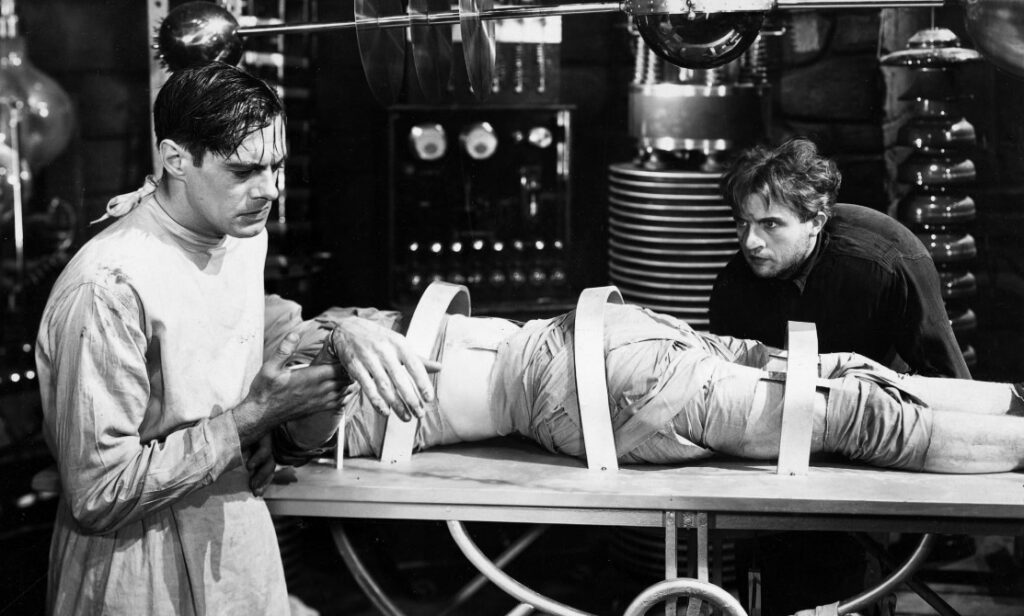
For example, Mary Shelley’s Frankenstein explores creation vs destruction, throwing Victor Frankenstein’s scientific ambition against the consequences of ignoring any moral responsibility. The contrast between his drive for knowledge and the abandonment of his creation shows how unchecked ambition without compassion leads to destruction. The scientific triumph of bringing life twists into a tragic cycle of death.
Controlling tension
When hope exists next to despair, or innocence beside corruption, the contrast can create a sense of unease. The reader senses that something must give, even if they don’t yet know how.
A peaceful domestic scene interrupted by hints of looming violence builds tension not through action, but through expectation. The calm becomes fragile, and you know it’s going to break soon.
By delaying the clash between these forces and allowing opposites to coexist, you can stretch the suspense. The eventual collision in the climax and resolution will then feel both inevitable and satisfying.
Juxtaposition in poetry
Poets are masters in juxtaposition. Because poems are usually brief, they rely on strong contrasts to communicate meaning efficiently.
There you will find beauty next to decay, silence next to noise, or hope next to disappointment. Different approaches intensify emotion and invite interpretation. A single image gains new significance when placed beside another.
In poetry, juxtaposition flows through the line breaks and stanza transitions, and rests in the symbols and imagery. The space between ideas becomes just as important as the ideas themselves.
Juxtaposition in film
This technique plays a major role in film. Directors carefully place images together to guide the interpretation of their viewers.
A joyful scene may be followed immediately by tragedy. A quiet domestic moment set against a backdrop of war can be more powerful than dialogue alone. This contrast gives a greater emotional impact for the viewers.
Visual juxtaposition can also be seen in:
- Color contrasts (bright vs. muted tones)
- Framing (crowded vs. empty spaces)
- Editing (fast cuts vs. long takes)
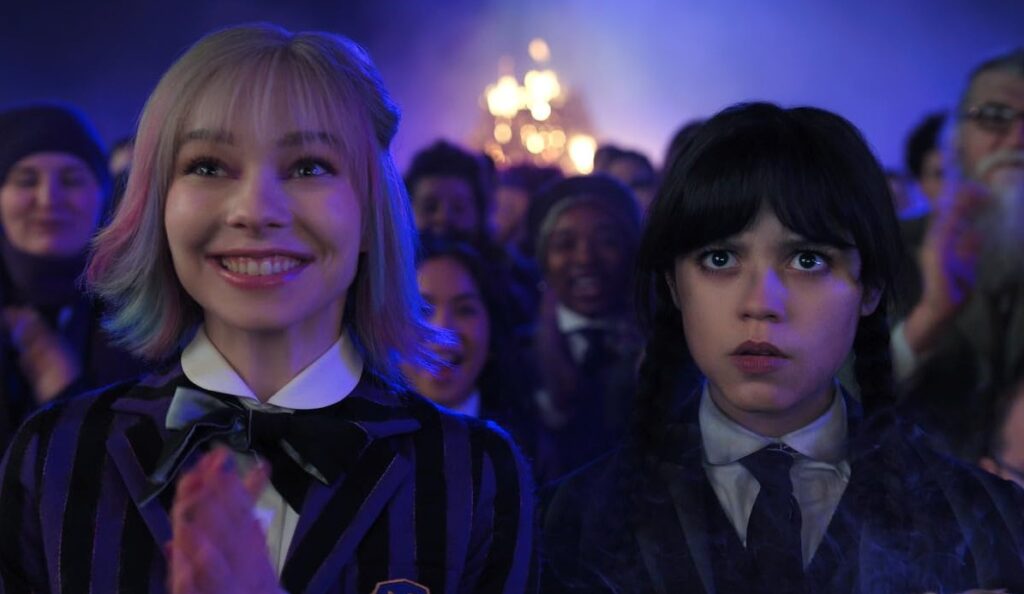
These choices shape how viewers feel and what they focus on.
Your story weapon: Juxtaposition as a powerful literary tool
Juxtaposition forces active engagement. Rather than handing the reader a conclusion, it demands observation and reflection. Whether it’s used as a subtle poetic device or a bold cinematic cut, juxtaposition is a primary tool to emphasize meaning in your story.
When you use this literary device, you’re entering the play of duality. One of the interesting aspects of existence is that there’s always an opposite pole. For every Jekyll, there’s a Hyde. For every moment in heaven, there’s one in hell. Laughing is awfully close to crying. These opposites are deeply connected and one doesn’t exist without the other.
Whether you’re contrasting characters, language, or themes, juxtaposition is a wonderful way to flesh out the elements of your writing. In your next draft, try your hand at some juxtaposition. Put two divisive characters in the same room and see if there’s any harmony in their dissonance. There’s no telling what you might find.
When applied with precision and meaning, juxtaposition can transform ordinary concepts into unforgettable experiences.
Juxtaposition thrives in practice, not just theory — so if you’re ready to put opposing forces on the page and discover what sparks in the space between them, join one of my workshops: The 90-Day Novel, The 90-Day Memoir, Story Day