


Can you recall some of the most well-executed foreshadowing examples in books you’ve read? Or in your favorite films? In a great story, inevitability leaves a mark on each event taking place.
This is especially true of tragedies. No matter how absurd or dramatic the tragedy that befalls the protagonist, readers recognize when there’s a shadow hanging over them from the start. It couldn’t have gone any other way. One of the tricks of the trade that helps shape this sense of foreboding in the mind of your readers is foreshadowing.
“If your story is going to end badly, it must end badly from the beginning.”
Foreshadowing is a literary device in which the author includes clues about what’s to come. Sometimes those clues are incredibly subtle, sometimes less so. These clues might be given in prophecies, dreams, or quiet asides that we only pick up on a reread.
In this article, I will give you some tips on foreshadowing with examples, and I’ll give you a Story Weapon on how to approach foreshadowing in your own work.
Subtle clues and motifs are foreshadowing examples that create a sense of inevitability, ensuring that even the most dramatic plot twists feel plausible and earned. Read examples from a classic novel, TV show, and play to see how to foreshadow in your own story without being too heavy-handed.
Don’t be too subtle with all the clues
When readers pick up on the foreshadowing clues in a story, consciously or subconsciously, it keeps them turning pages to find out what happens.
There’s something to be said for events that blindside your audience, but if the clues and symbols are invisible, or hidden too deeply beneath layers of meaning, then you risk losing their interest.
The best storytellers employ foreshadowing to escalate tension and heighten anticipation with each turn of the page.
Foreshadowing example #1: The Lighthouse (2019)
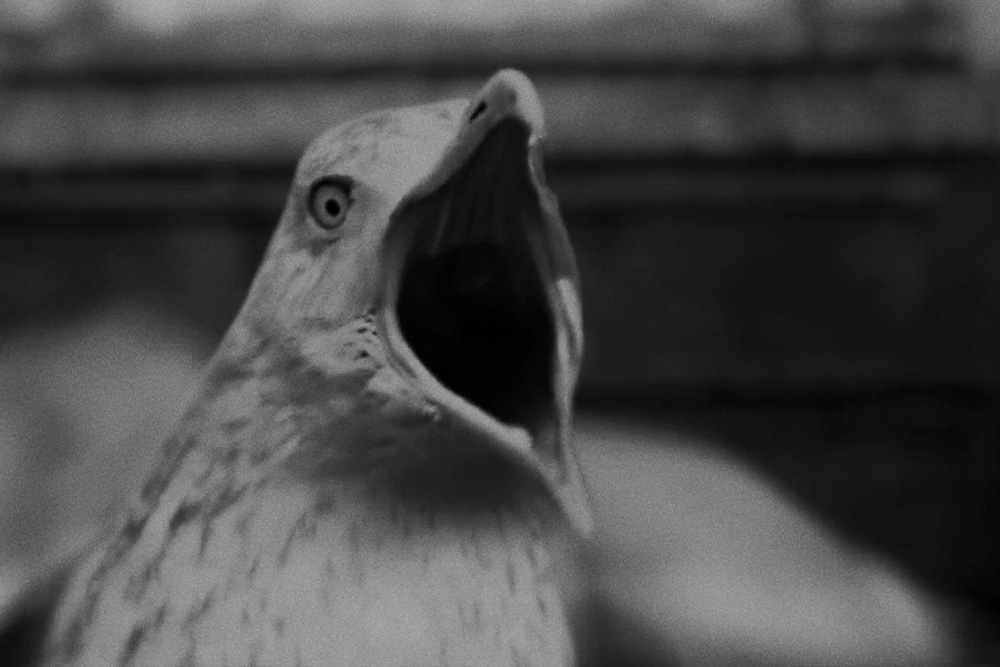
Laying the groundwork for the violence to come, the older lighthouse keeper warns the younger of a bad omen. In particular, he warns the younger man to leave the aggressive seagulls alone. It’s bad luck to kill one, he claims.
We all know what has to happen. This warning foreshadows the breaking of that rule and what follows. The younger lighthouse keeper eventually loses it and the events that unfold are a result of his anger. All of this keeps us engaged in the story, promising and delivering on the action.
Foreshadowing example #2: Of Mice and Men by John Steinbeck
Steinbeck also does not hide what is coming. Early in the story, Candy’s old and ailing dog is taken outside and shot by a ranch hand. It’s a mercy killing that the old man did not have the heart to carry out himself.
The parallel isn’t subtle. By the time Lennie’s fate becomes unavoidable, we’ve already lived through a smaller version of it. The foreshadowing works here because it is almost unbearably clear, and yet we keep hoping we are wrong.
“It’s funny about people. Just before something happens, you almost know what it is. You do know what it is, I believe. You just haven’t had the time — and now you won’t have the time — to say it to yourself.”
– James Baldwin, If Beale Street Could Talk
Make the plot plausible
Part of the reason we’re drawn to fiction is the heightened stakes and circumstances. To deliver on that, the events in the plot must be both exciting and plausible. Otherwise, it’s easy to slip into melodrama.
Foreshadowing is an effective way to make the plot points support the story as it evolves. Even if readers don’t consciously pick up on all the clues, the feeling of satisfaction that arrives with the climax is due, in part, to the possibility that they might’ve seen it coming.
Think about the dramatic plot twists in the Game of Thrones series. It’s hard to predict them, but when we remember that Ned Stark warned his children from the start that winter was coming, we realize that we were forewarned.

Foreshadowing example #3: Oedipus Rex by Sophocles
You might have a hard time pitching a story in which the main character gouges his own eyes out today, but it works perfectly in Oedipus Rex. That’s a textbook example of foreshadowing setting the foundation for the action.
The play is full of mentions of blindness and eyes, not least the blind prophet who warns King Oedipus of his downfall. Although you might not have expected the ending the first time you encountered this story, it feels all too inevitable when it happens.
The words of the prophet echo in our ears:
So, you mock my blindness? Let me tell you this,
You with your precious eyes,
you’re blind to the corruption of your life,
to the house you live in, those you live with.
Foreshadowing example #4: Breaking Bad (2008-2013)
In the pilot episode of Breaking Bad, Walter White tells his chemistry class that chemistry is the study of change. Growth, decay, transformation. It’s a throwaway line in a classroom. It is also the entire arc of the series stated plainly in the first ten minutes.
By the time Walter has become someone unrecognizable, it’s not a surprise. It doesn’t feel like the story broke its own rules. We watched the slow, terrible logic driving this man unfold on screen.
Your story weapon: Dramatizing the inevitable
These masterful examples of foreshadowing make it look easy, but many writers struggle to get it right. The clues end up too heavy-handed or awkward.
When you next want to foreshadow something in your story, resist the urge to shoehorn in something too clever or too self-aware. You don’t want the characters guessing their own fates early.
One way to approach this is to hold back on foreshadowing in your first draft; just plow through to the end. When you return for the second draft, you’ll know the major events that need to happen in the plot. Consider those moments and how you can hint at them earlier. If it’s a sudden car crash, maybe introduce a character’s speeding habit or a fascination with classic vehicles. If it’s a case of a lost twin, you can pepper in mirrored objects before the big reveal.
Framing your clues around motifs and metaphors is a great way to avoid clumsiness. It ensures that your clues exist ephemerally rather than literally. If you’re writing a murder mystery or a procedural, on the other hand, literal clues are handy. It’s a tough balance to strike; no one wants a mystery that’s easy to solve.
However you choose to foreshadow the climactic moments of your story, the goal is to make the ending both a total surprise, and yet, utterly inevitable.
Foreshadowing is the craft of narrative control: ensuring that every ending feels earned because it was quietly present from the very beginning. If you are ready to develop this level of intentionality in your storytelling and apply these techniques to your own work, join one of my workshops: The 90-Day Novel, The 90-Day Memoir, Story Day.