


While every story is unique, the history of literature is populated with reinterpretations of common themes.
Through the lens of different voices in different epochs, we turn to the human condition again and again. We explore the same questions in different ways, spinning out answers that reflect ourselves and the times in which we live. In that way, we tell each other how to live and remind ourselves that our story is a shared one.
In this article, I’ll take a look at common themes found in literature, offer some examples, and then, I’ll give you a Story Weapon to help you connect to the themes that are calling to you.
Great literature uses common themes to explore the workings of the subconscious. By identifying how others tackle the “great problems of existence” — like love, mortality, and hubris — you can find a path to your own authentic voice. Follow these examples to uncover the questions you’ve been carrying and learn how to let your theme reveal itself naturally through your characters.
Love
The impetus of countless poems and a central part of existence, love in all forms is a common theme in literature. You could even argue that love is the center of every story ever told.
We write stories that explore the nature of romantic love, platonic love, familial love, love of nature, love of a craft, and so on. Some of the most famous examples include Jane Eyre by Charlotte Brontë, Love in the Time of Cholera by Gabriel Garcia Marquez, and Anna Karenina by Leo Tolstoy.
Books on romance populate book shelves in book stores and libraries throughout the world. It’s a reservoir of material with endless variations, each unique to the author. The same is true for romantic dramas and comedies in the world of screenplays.
If you’re writing about love, you’re in good company.

“Fools are my theme, let satire be my song.”
– Lord Byron
When you’re writing your story, ask yourself how love plays a part. Odds are high that even if you’re writing something unrelated to romance, someone in your book loves something or someone and acts in response to that. In other words…love is the mystery that is always on the table.
What do you love and how is that manifest in your manuscript? The topics that interest you most are an expression of affection, whether you admit that to yourself or not.
Here’s a quote from Ray Bradbury on the subject:
Thomas Wolfe ate the world and vomited lava. Dickens dined at a different table every hour of his life. Molière, tasting society, turned to pick up his scalpel, as did Pope and Shaw. Everywhere you look in the literary cosmos, the great ones are busy loving and hating. Have you given up this primary business as obsolete in your own writing? What fun you are missing, then.
Mortality

If love is a central theme of existence, mortality is certainly the central question. The questions of why we exist and why we perish have been ample ground for exploration in stories. Authors throughout history have approached this question. Chief examples are The Death of Ivan Ilych by Leo Tolstoy and As I Lay Dying by William Faulkner.
Outside of fiction novels that explore the theme of mortality, this theme plays out frequently in the world of memoir and non-fiction as well. Memoirs are often visited by the specter of death, as are we all. Non-fiction books on spirituality and death practices are popular as well. They offer glimpses of how other cultures and people have understood this premise of existence.
If you find questions of mortality appearing on the pages you write, you’re writing on a rich theme. It can be intimidating and even painful to approach the topic, but thankfully the path to opening up that channel is relatively simple. Under the bustle of everyday life, rings the tolling bell that signals the end of our existence. As you reflect on your own mortality, you might uncover some literary gold.
Here’s an excerpt on the subject from The Book Thief by Markus Zusak, where the narrator is Death itself:
HERE IS A SMALL FACT: You are going to die. I am in all truthfulness attempting to be cheerful about this whole topic, though most people find themselves hindered in believing me, no matter my protestations. Please, trust me. I most definitely can be cheerful. I can be amiable. Agreeable. Affable. And that’s only the A’s. Just don’t ask me to be nice. Nice has nothing to do with me. REACTION TO THE AFOREMENTIONED FACT. Does this worry you? I urge you — don’t be afraid. I’m nothing if not fair.
God
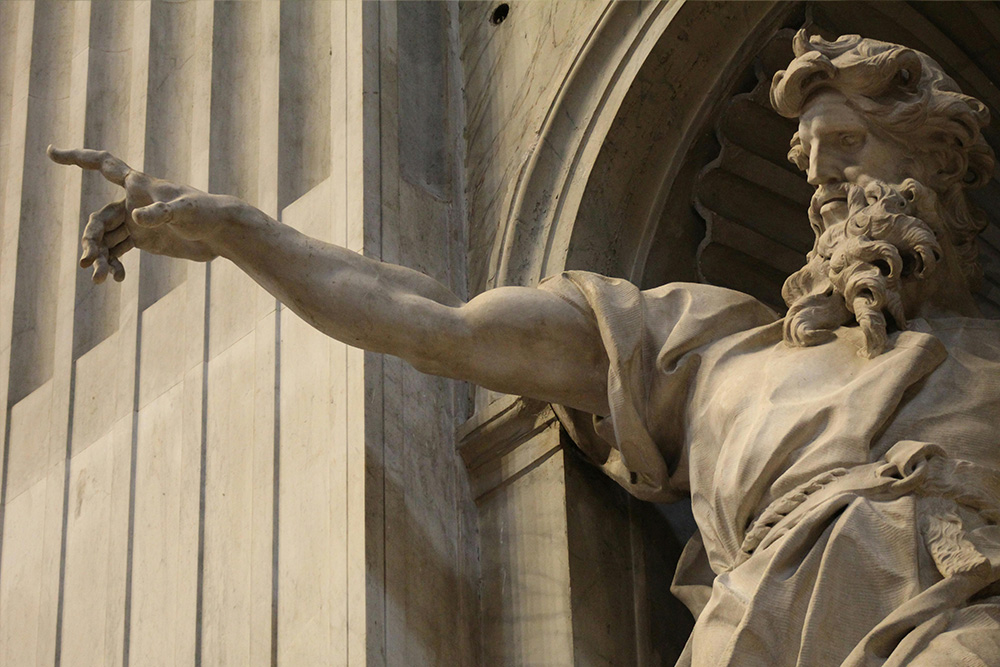
Connected to our last point, the issue of divinity is a common theme throughout literature. We all have our own relationship with God, the gods, no god, the universe, the Tao, the Absolute, the Mystery, whatever you choose to call it. Exploring this relationship and the struggle to find the light is great fodder for writing. If you find yourself writing about God, you’re joining the ranks of Fyodor Dostoevsky, who explores the theme most prominently in The Brothers Karamazov and C.S. Lewis, who dives deep into the idea in Till We Have Faces.
There are also more straightforward books on the idea of God in the world of non-fiction. There are translations of sacred texts, books that compare and contrast the teachings of different religions, and tomes that document the idea of the divine in different cultures throughout history. You’ll never run out of books on the subject and many of these books are wonderful gifts to those exploring their relationship with divinity.
Questions about God are right at home in the pages of your story. It’s a wonderful practice to put opposing arguments in the voices of different characters, as a way to explore this question, as you allow the interplay between your conscious and subconscious mind to unfold. The key to writing a compelling scene is to remember that both sides are right. Both sides have a very good point! And your job, as a storyteller, is to play both sides of the argument with equal integrity.
For example, when writing about the existence of God, it’s important to be personal and specific. Think of it this way. The more universal the theme, the more personal your approach has to be to ground it. God is the most universal idea there is, and thus asks of you the most vulnerable approach.
Here’s an excerpt from East of Eden by John Steinbeck, in the form of a letter from a father to a son:
I would be disappointed if you had not become an atheist, and I read pleasantly that you have, in your age and wisdom, accepted agnosticism the way you’d take a cookie on a full stomach. But I would ask you with all my understanding heart not to try to convert your mother. Your last letter only made her think you are not well. Your mother does not believe there are many ills uncurable by good strong soup. She puts your brave attack on the structure of our civilization down to a stomach ache. It worries her. Her faith is a mountain, and you, my son, haven’t even got a shovel yet.
Coming of Age

It’s a special moment in life. When we’re on the cusp of graduating from adolescence to adulthood, we start to come of age. There’s a wealth of literature that attempts to capture the magic of that time. The stories there are great for young adults around that age, if only to remind them that their struggles are shared by other people. They’re also great for adults looking to remember that period of transformation.
Coming of age as a theme is a hallmark of the young adult genre. Sometimes it takes place in dramatic situations like The Hunger Games by Suzanne Collins and other times drama unfolds in more mundane places, like in The Perks of Being a Wallflower by Stephen Chbosky.
On screen, you’ll see the theme in movies like Lady Bird by Greta Gerwig and Superbad by Seth Rogen and Evan Goldberg. Regardless of how it manifests, the theme includes topics like sexuality, adventure, and the creation of identity.
The theme has also found growth beyond the usual focus on adolescence. Some have contended that we’re always coming of some age and that the transition from adolescent to adult is just one of those moments. We “come of age” when we get married, when we have children, when we lose our parents, when we get divorced, when we retire, and when we approach death ourselves. In each of those moments, we relinquish a part of ourselves to grow into someone new.
Here’s a great excerpt from Tom Sawyer, Detective by Mark Twain. His books featuring Tom and Huckleberry Finn, who’s the narrator here, do a great job of exploring identity and boyhood:
It was always nuts for Tom Sawyer — a mystery was. If you’d lay out a mystery and a pie before me and him, you wouldn’t have to say take your choice; it was a thing that would regulate itself. Because in my nature I have always run to pie, whilst in his nature he has always run to mystery. People are made different. And it is the best way. Tom says to the waiter:
“What’s the man’s name?”
“Phillips.”
“Where’d he come aboard?”
“I think he got aboard at Elexandria, up on the Iowa line.”
“What do you reckon he’s a-playing?”
“I hain’t any notion — I never thought of it.”
I says to myself, here’s another one that runs to pie.
Hubris
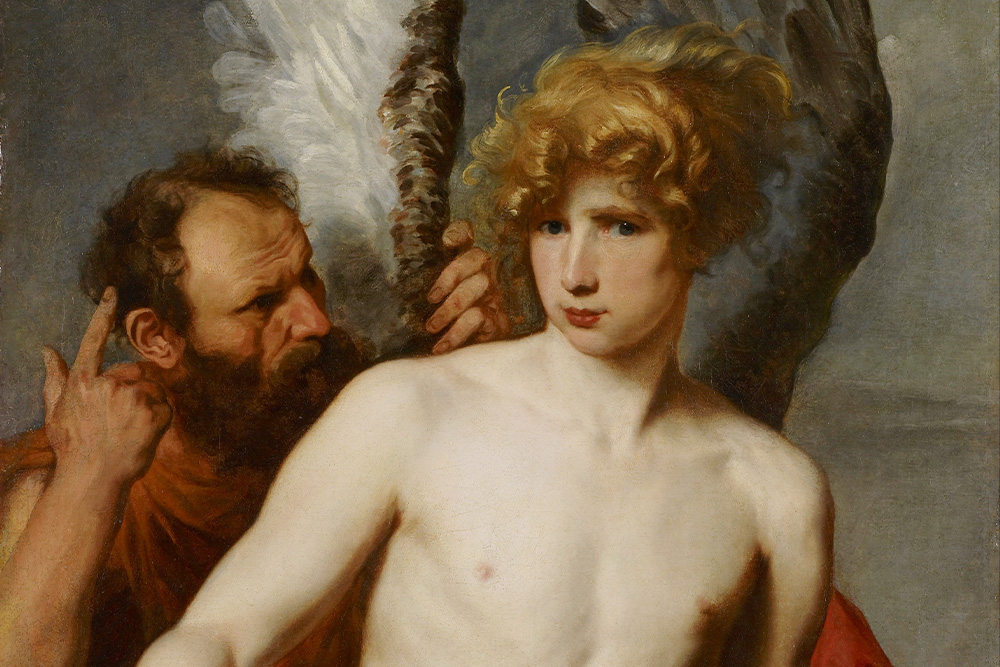
As they say, pride cometh before the fall. Hubris is a classic theme in literature, a little more popular in ancient times perhaps than today. Many stories explore pride as a way to communicate the moral of humility.
You might be familiar with this in the story of Icarus flying too close to the sun, or Oedipus Rex running from a prophecy only to fulfill it. We can see it explored in more modern works, like The Great Gatsby by F. Scott Fitzgerald and Citizen Kane by Orson Welles. Certainly there’s still room to explore the idea.
Other authors have inverted the classic trope of hubris being a character flaw. In the works of Ayn Rand, pride is a virtue in certain people. It might even be a sign of clarity. It’s a great reminder that there are gray areas in these themes and room for argument. After all, what one might call hubris another would call confidence. These moral standards and how we react to them reveal our character, or the characters in our stories.
If you’re exploring hubris, you’ve got a great opportunity to consider how it shows up in your own life. Are there people you know that suffer from hubris? Do you? Where do you feel its temptations and what have you noticed about its effects? If each of these answers is a different character, you may have a compelling story on your hands.
Here’s a great exchange from a more modern exploration of hubris, from The Sea of Monsters by Rick Riordan:
“Don’t you ever feel that way? Like you could do a better job if you ran the world?”
“Um … no. Me running the world would kind of be a nightmare.”
“Then you’re lucky. Hubris isn’t your fatal flaw.”
These are just a few of the common themes in literature. Honorable mentions include justice, power, connection, freedom, and belonging.
As human beings, we’ve mapped out every aspect of the human condition. Yet, somehow, there are still things left to write! If you’re exploring a theme touched on here or another common theme, don’t worry about its pervasiveness. If your curiosity is taking you in a direction, odds are you have something worth saying about it. The key is simply to trust yourself, follow it, and see what happens.
Your story weapon: The theme dwells in your subconscious
The theme of your story is not always something you choose. It is something you discover, usually well into the first draft when you look back over what you have written and realize that the same question has been showing up on every page in a different disguise.
If you’ve decided on your themes before writing your rough draft, be careful how you illustrate them. Don’t be too heavy handed, or your story will feel like an argument in a costume. The theme becomes visible in the wrong way. It announces itself rather than revealing itself.
Some of the writers who handle common themes most powerfully are the ones who follow their instincts without demanding to know where they lead. Ray Bradbury did not sit down to write about censorship and then invent Guy Montag. He sat down with an image, a man whose job was to burn books, and followed that idea until it told him what it meant. Steinbeck did not decide to write about the nature of good and evil in East of Eden and then construct the Trask family around that decision. He wrote about the family, and the question emerged from them.
So before you ask what your story is about, ask what you keep coming back to. Not as a writer. As a person.
What is the question you have been carrying for years without an answer? What is the injustice that still makes something tighten in your chest when you think about it? What is the loss you have never quite known how to talk about, the relationship whose logic still escapes you, the moment in your own life that keeps returning in your dreams or your daydreams or the margins of other conversations?
That is your theme. You do not have to know what you think about it at the start of your story. In fact, it might be better if you do not. A theme you have already resolved is a theme with nothing left to discover. The ones worth writing about are the themes that still have some fight in them, the questions that genuinely trouble you, even the ideas you hold two contradictory positions on simultaneously.
✒️ Writing Exercise
Write for five minutes beginning with the line: “The dilemma for my protagonist is . . .”
You will notice that your protagonist is struggling with a dilemma, and that this dilemma is the dramatization of your story’s theme.
As you do this exercise, do not edit. Do not shape the answer for an audience. Let it be as unresolved and personal as it actually is. What you write will likely show you the theme that has been running underneath your work all along, waiting for you to look at it directly.
Here is the truth about common themes in literature: they are common not because writers keep choosing them, but because writers are human.
Take the time to reflect on what your work is truly circling, and commit to exploring those themes with honesty and precision. Join one of my next workshops: The 90-Day Novel, The 90-Day Memoir, Story Day, where you can develop your ideas into fully realized narratives.