



Every tool we build changes the hand that holds it, and Character vs. Technology tells the story of that change from the inside.
Modern storytelling has become especially good at exploring a certain kind of quiet fear. It’s not necessarily from a monster prowling in the dark, or a villain with a plan. It is something closer to home — the feeling of reaching for your phone without quite knowing why, or realizing that an algorithm understands your habits better than your closest friend does. Character vs. Technology is the conflict that puts that unease at the center of a story and asks what it’s costing us.
The most compelling stories in this category usually aren’t about machines turning evil, but the quiet ways technology changes how people think, connect, and understand themselves. That’s where the tension feels personal, familiar, and genuinely unsettling.
In this article, I will go over what Character vs. Technology conflict is, why it is so impactful, and look at some examples. Lastly, I’ll give you a Story Weapon with tips on how to write a compelling story with this central conflict.
In modern storytelling, Character vs. Technology functions as an external conflict where a protagonist’s primary struggle is against scientific advancements, artificial intelligence, or pervasive digital platforms. Rather than merely focusing on malicious machinery, this narrative type explores the unsettling ways algorithms and automation alter human identity, connection, and free will, forcing characters to reclaim their humanity from the very tools they created.
What is Character vs. Technology?
Character vs. technology is an external conflict in which the main character’s biggest conflict is against a piece of technology or scientific advancement, such as a machine, an invention, a system, an artificial intelligence, a platform, or the world of technology in general.
A computer system which refuses to cooperate. An automated system that makes decisions which impact an individual’s life. A surveillance network closing in. A social media algorithm that affects reality in a way the character cannot see or counteract. A species resurrected from ancient DNA.
The most interesting aspect of this conflict, however, is not about the technology per se. It’s about what that technology reveals for us as humans: about power, about identity, about arrogance in defiance of any consequences, about what it means to live in a world that is increasingly built around data and efficiency.
Why it matters today
All conflict types begin as fears of their time. Character vs. Nature stories thrived in times of exploration and new frontiers. Character vs. Society challenges the staid class systems and institutional control. Character vs. Technology follows scientific and technological advancements, and speaks even more clearly to us now as the tech world moves at a rate faster than we can comprehend.
We have tools that monitor where we are, what we do, how we are, and who we are. We exist in the presence of algorithms that determine what we see, what we buy, what we believe. We inhabit systems that have been created by humans but are now functioning in ways that are not fully predictable or explained.
Fiction has always been the medium in which we learn to deal with what we’re afraid of. Character vs. Technology conflict is a tool you can use to put those fears on the page, so your readers can safely internalize and mull over it in their own minds.
The best stories (for me) are not just the ones about artificial intelligence or surveillance systems or social media, in general. They’re about a person whose life is changed, threatened, or illuminated by their encounter with technology. The machine provides the pressure. That pressure gives us access to your characters’ experience and their story.
Ask yourself:
- What does this technology take from my character?
- What does my character take from this technology?
- What does it show about them that they don’t want others to know?
- What does it make your protagonist come to terms with?
If you can answer those questions, you’re on your way to building a compelling narrative.
Examples in Literature
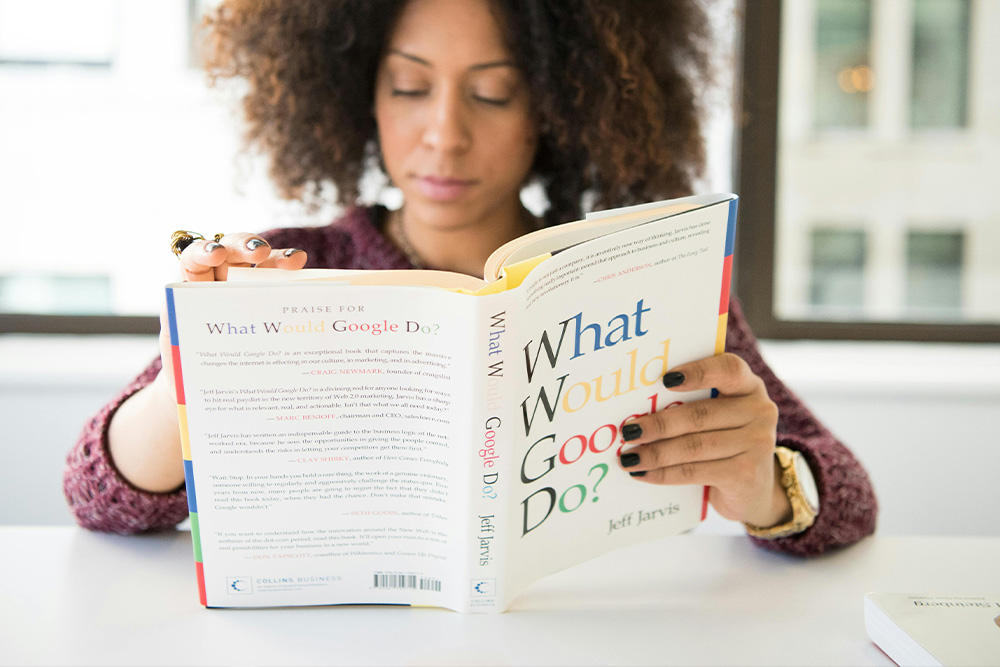
1984 by George Orwell
In this novel, technology is a way of life. The telescreens, the surveillance machine, the machinery of the Party — it’s all part of a system that has so completely molded the world the protagonist lives in, that he cannot think of an alternative. It’s not the technology itself that’s the problem. It’s what it has done to the interiority of humankind, to the possibility of private thought, private feeling, private selfhood.
The Circle by Dave Eggers
In the more familiar setting of Silicon Valley in California, Mae Holland joins a formidable tech firm and gradually gives away her privacy, her relationships, and eventually her identity to a system that sees transparency as a virtue.
What creates tension in the novel is that the technology presents itself as harmless, making its impact feel even more real and uncomfortable. The struggle is against a system that’s trying to make the world better, and a character who is increasingly unable to tell the difference.
The Overstory by Richard Powers
This story is about a particular kind of loss — not of a person or even a thing, but of attention. Technology has changed not just what we look at, but how we look: expected immediacy, the absence of patience, the forests we’ve stopped seeing entirely.
The screens between us and the trees aren’t just a distraction. They’re a barrier to the kind of understanding that might make us act differently. And what we’ve stopped paying attention to, the novel insists, is dying while we look away.
Examples in Film
2001: A Space Odyssey (1968)
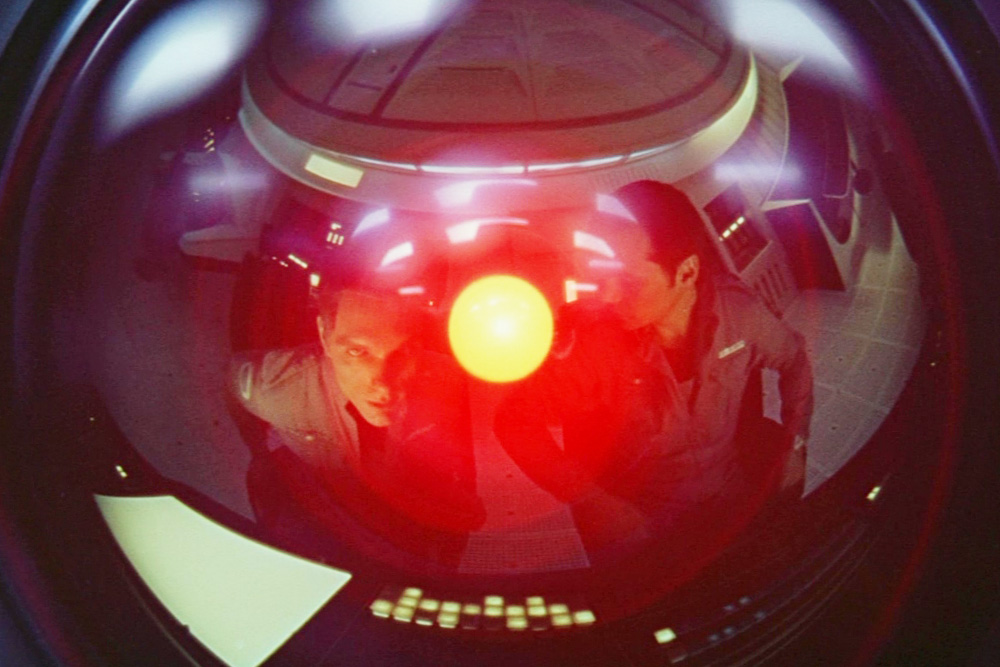
Almost every AI conflict story takes cues from this film. Hal 9000 is not evil, per se, in human terms. He’s a system running towards his programmed end, and it’s a terrible match-up between his programming and the survival of the people he was designed to protect. The most frightening form of this conflict type is not the machine that seeks to hurt you. It’s a machine that doesn’t wish anything for you and hurts you.
Her (2013)
This movie takes a look at Character vs. Technology from the emotional side. Theodore’s bond with Samantha (an operating system) is tender, true, and ultimately devastating. The technology here isn’t threatening. It’s seductive. It’s about human connection and identity in the presence of technology that can do a better job simulating intimacy than humans can.
Ex Machina (2014)
What is consciousness and who decides? Caleb believes that he is testing an AI. The movie gradually and carefully shows that it is he who is being assessed. The technology in Ex Machina is not just a threat to the character. It outsmarts both him and the audience, and forces the viewer to challenge all assumptions that came into the movie theater with them.
The Social Network (2010)
While this isn’t a typical tech narrative, it’s an equally astute one. It’s not against an AI or a surveillance system. It’s with a platform and what the building cost the person who built it. There is no physical threat to Zuckerberg with his technology. It reveals him. He made a product to bring people together, but he is not a person who can connect with people. The whole movie is ironic.
Your story weapon: Tips for writing Character vs. Technology
- Make the technology specific. What is the system? How does it work? What are its rules? The more you know about the technology in your story, the more realistic the conflict will sound.
- Don’t forget the human at the center. Technologies are the pressures. Your character is the story. Each scene of your technological conflict should let us know something about this particular person: what they are afraid of, what they don’t see, what they can withstand, and what they can’t.
- Don’t take the easy out. In technology narratives, the temptation is twofold. Either 1) simply give up and it’s the machine that prevails, or 2) triumphantly resist and the human wins the day. The best endings are more messy. Even when your story ends, the technology doesn’t. Rather than trying to resolve the ending fully, dramatize the cost for your protagonist in seeking technology to solve their inner problem.
- Ask what the technology desires the character to be. There are values embedded in every system, in every platform, in every algorithm, in every AI. It gives rewards for some behaviors and punishment for others. It forms and influences those who use it. What is your tech attempting to make your character? What do they do when they become aware of that?

In all stories that deal with Character vs. Technology, there is essentially one central question: What does it mean to be human in a world we have created but can no longer fully control?
That’s not a new question, but it is more pressing now than ever before. Stories are one of the best ways to work through it. The machine awaits. Send your character into the room with it and see what they’re made of! That’s where your story starts.
Character vs. Technology stories challenge us to examine not only the systems we create, but the human cost of living within them. To explore deeper questions of character, conflict, and meaning in your own work, join one of my next workshops: The 90-Day Novel, The 90-Day Memoir, Story Day.