




The omniscient narrator sees everything. Every private conviction, every hidden fear, every gap between what a character believes and what is actually true. And that total vision, used with intention and discipline, can make for some masterful storytelling.
Imagine a room with five people in it. Sam has decided he cannot go on and is looking for a way out. Rachelle carries a wound that Anika gave her years ago, and she has not forgiven it. Rio knows what he has to do but cannot bring himself to do it because of what it will cost Peter. Each of these people is alone inside their own version of events, unable to see the others clearly, operating from a partial picture of the truth. But the omniscient narrator allows you as the reader to know all of this.
In this article, I will look closer at what the omniscient narrator is, where the tension lives with an “omniscient” voice, and how to move between minds without losing your reader. Lastly, I will give you a Story Weapon to determine whether or not your narrator is hitting the right marks.
To use an omniscient narrator effectively, you must establish a distinct narrative voice that safely grounds the reader before transitioning between character minds. By controlling the release of information that characters cannot see, you leverage dramatic irony to build suspense, weave overarching themes, and connect multiple character arcs without losing narrative tension.
The omniscient narrator is not “you”
The first thing to understand about writing from an omniscient point of view is that the narrator is not simply you, the writer, hovering above the story and reporting what you see. It is a distinct presence with its own personality, its own way of seeing things, and its own relationship to the world you have built.
Think of how Tolstoy opens Anna Karenina. He does not ease the reader in gently. He makes a bold philosophical claim in the opening line, saying: “All happy families are alike; each unhappy family is unhappy in its own way.”
Then he opens a door onto a world of moral complexity and human contradiction. That opening presents a stance, a gravity, a voice that belongs to no single character in the novel but is present on every page.
In one scene, a waitress named Olive Snook sings to herself about how she’s “hopelessly devoted” to the pie-making protagonist. With the last verse she sits down to cry, and the pie-maker’s dog rushes forward to lick her face. The narrator clues us into both their thoughts in this moment:

“As Olive considered how much she loved Digby for paying attention to her when the pie-maker would not, Digby considered how much he loved salt.”
Your narrator knows the truths that no single character can see. They are all too deep inside their own version of events to see the whole.
The reader only knows what the narrator reveals to them. That difference, between what the narrator knows and what the reader has been shown so far, is where your story builds its meaning. Readers want to sense, even in the darkest passages of a story, that someone knows where this is going. Give them a narrator with a consistent, recognizable presence and they will follow it anywhere.
Omniscient vs. limited

Before you commit to an omniscient narrator, understand what the choice involves and what it asks you to give up. Neither perspective is superior. They serve different stories.
The limited point of view keeps the reader sealed inside one character’s experience. They know only what that character knows, feel only what they feel, and see only as far as the protagonist’s false beliefs will allow. This creates deep intimacy and is particularly powerful when the story is about a character’s inability to see themselves clearly. The Road. Gone Girl. The Hunger Games. Each of these stories lives inside a single consciousness, and that confinement is the point.
The omniscient narrator can move across time, space, and minds. It can show you what the antagonist is thinking in the same chapter as the protagonist. It can hold two contradictory truths in the same paragraph without privileging either. Pachinko. War and Peace. Middlemarch. These stories require omniscience because no single character can carry the full story their authors set out to tell.
The question to ask is not which perspective is technically better, but which would best serve your story.
If your story is fundamentally about a person’s flawed or inexperienced view of the world, keep it focused with a limited point of view. If your story is about the shared wounds of a family, a group, a community, or even multiple generations, the omniscient narrator can grow large enough to hold your story together.
The tension of knowing

In a story with an omniscient narrator, remember your characters are operating from false beliefs they hold. That is the engine of the drama.
Your protagonist believes something about themselves or their world that the story will test and ultimately reframe. Your antagonist has their own version of that false belief. So do your supporting characters. They are all locked inside their partial understanding of a situation that only the narrator can see whole.
That gap is where your tension lives.
In Pride and Prejudice, the narrator’s voice often blends with the main protagonist’s. Elizabeth Bennet thinks of herself as a perceptive judge of character and she makes several assumptions, primarily about Wickham and Darcy. Along the way, however, the narrator also clues the reader into Darcy’s growing affection for her. The truth was visible to the reader before Elizabeth knew it.
The dramatic irony this type of narration generates — the experience of watching a person you have come to care about moving confidently toward a conclusion the reader can see is mistaken — is one of the most pleasurable effects in all of fiction.
The omniscient narrator does not merely tell the story. It controls the revelation of the story.
It decides what the reader knows, when they know it, and how that knowledge shapes everything they feel in the scenes that follow.
The pitfall of head-hopping
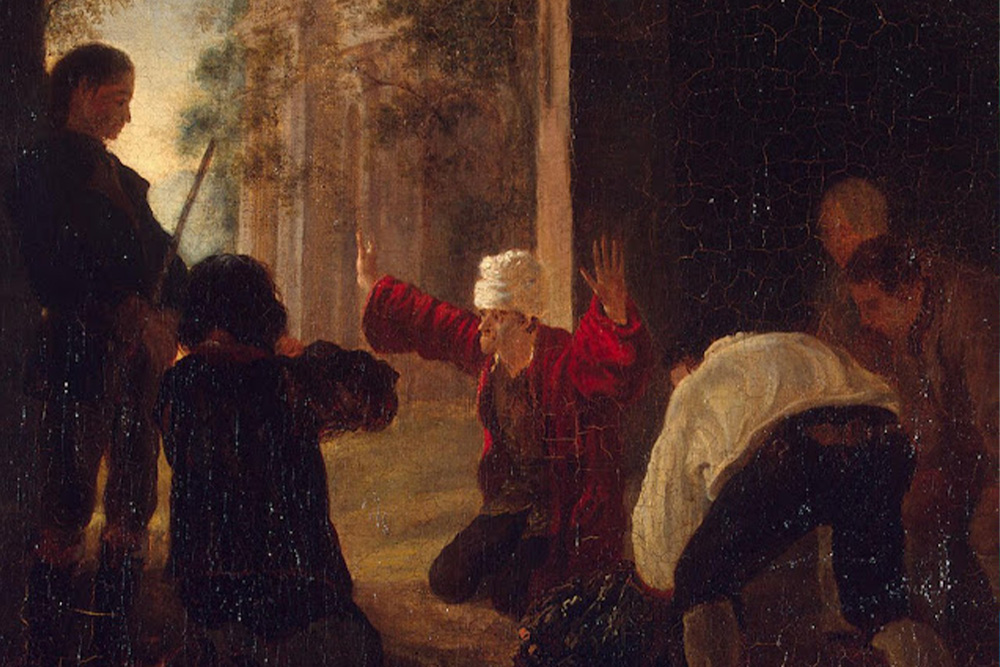
Here is where most writers who attempt an omniscient point of view get into trouble. With access to every mind in the room, the temptation is to use that access constantly.
Susan felt hopeful. Jacob was angry. Lana felt nothing at all. The narrator moves from one interior thought to the next so quickly that your readers never land anywhere long enough to feel anything. This is called head-hopping.
If this sounds familiar, you may need to rein yourself in. Move between characters with intention, and maintain your narrator’s voice.
Your narrator is always present, even if only in the background. It is the intelligence that frames each jump between your character’s thoughts and returns the reader to solid ground afterward.
Min Jin Lee’s Pachinko opens with the line: “History has failed us, but no matter.”
The narrator speaks sorrowfully here, already shaping the story’s tone before a single character has appeared. That voice establishes a relationship with the reader that holds throughout a story spanning across dozens of characters. The reader trusts it. And because they trust it, they follow it wherever it goes.
Here are 3 tips to remember:
- Ground each scene in the narrator’s voice before entering any character’s mind. Let the reader spend a moment with their guide before being taken somewhere unfamiliar.
- Be conscious and sparing about whose thoughts you enter. Not every character needs their thoughts reported. Ask whether going inside this particular person’s mind deepens the reader’s understanding of the story at this moment. If the answer is not a clear yes, stay with the narrator.
- Signal transitions clearly. When you move from one character’s head to another, name the character and give the reader an orienting detail before going deeper. Make each shift a deliberate move to pull your reader in further.
The big picture

Every character in your story is too close to the truth to see it whole. The omniscient narrator is the only one in the story that can.
In The Godfather, every major character is in the grip of the same dilemma of loyalty, ambition, and family, but none of them can see it in the others. Sonny, Michael, Kay, Vito, each one is paying a different price for the same false belief, and no single point of view could show the reader all of it simultaneously at that same level. The omniscient narrator reveals the pattern.
This is the deepest purpose of the omniscient point of view. Not simply to show multiple perspectives, but to play out the themes that connect them.
Your story weapon: Your narrator checklist
If you’re planning to use an omniscient narrator, double-check these points before you begin to open the barriers of your characters’ minds.
- Have I solidified the narrator’s voice clearly before making a switch to the mind of a different character?
- Will this transition serve the story, or am I just doing it because I can?
- Does my voice have a discernible personality — gravity, softness, irony — or does it sound like a mere observer with no peculiar opinion?
- Is the gap between what my characters know and what the reader knows creating tension?
- Am I releasing information too early, too late, or just as the reader requires it to advance the narrative? Am I withholding information that could otherwise raise the stakes?
- Am I aware of the difference between surprise and suspense? Sometimes releasing information early can create rising stakes (suspense) rather than simply a moment of surprise.
The omniscient narrator is not simply a point of view. In the hands of a writer who understands what it can do, it is the overarching presence that makes the whole human story visible, and that is the oldest and most ambitious thing a narrator can strive to accomplish.
Mastering the omniscient narrator requires patience, precision, and a deep understanding of how perspective shapes tension, character, and theme. To further strengthen your storytelling craft and develop greater control over narrative voice, join one of my next workshops: The 90-Day Novel, The 90-Day Memoir, Story Day.