
Previously, I unpacked the theory behind synopsis writing, explored the mechanics of what makes a synopsis work, and defined its purpose. A synopsis is a complete summary of your manuscript, including any spoilers, for agents, editors, and producers to evaluate your story’s worth.
Theory alone doesn’t clarify execution, however, so let’s take it from theory to applied practice. In this article, I’ll take a closer look at some examples, and show you how to summarize a complex plot compellingly while giving away the ending in a synopsis.
An effective synopsis clearly summarizes your entire story—including the ending—while highlighting stakes, transformation, and thematic payoff, tailored to its format (novel, memoir, or screenplay). The goal isn’t to tease mystery, but to prove to agents and producers that your story works emotionally and structurally from beginning to end.
What are agents looking for?
Agents often request a synopsis prior to reading your manuscript. They do this for two reasons:
- They are interested in an overview of your story.
- They want to feel something.
Novels, memoirs, and screenplays are all different narrative formats that demand different synopsis writing strategies.
A thriller novel’s synopsis and a memoir’s synopsis live in different universes. They prioritize different information, and use different tones. And they will answer fundamentally different questions.
The following examples will help you understand why certain synopses hook publishers and literary agents and why certain ones don’t.
A Key Reminder: The examples we analyze below illustrate how to distill a story’s essence. But, in each case, remember: your submission synopsis must include the climax and resolution. You’re proving your narrative competence, not preserving the mystery for readers here.
Synopsis writing for Novels
A novel synopsis needs to show the clear, cause-and-effect chain of your entire plot. It answers: What happens, to whom, and what is the definitive outcome.
The art lies in doing this concisely without becoming a dry list of events.
Example 1: Gillian Flynn’s Gone Girl (Thriller)
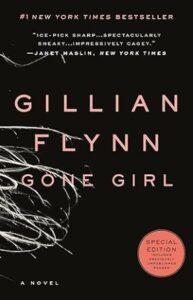
Here’s a marketing blurb for Gone Girl that’s a masterclass in tease.
On the day of her anniversary, Amy Dunne goes missing. Under mounting pressure from the police and the media, her husband Nick gets caught in an endless series of lies, deceits, and inappropriate behavior.
The classic “perfect marriage turned murderous” story might have ended there, except that Amy had written a series of diaries. And she’d mentioned several suspicious things. She’d mentioned an affair. She’d mentioned she was afraid of her husband. She’d mentioned he’d threatened to kill her. She’d also mentioned that she’d been planning her own disappearance …
In two short paragraphs, we get:
- Character intro in one sentence (Amy goes missing)
- A quick emotional twist (She’s afraid of him, but then she planned this?)
- Stakes that multiply (Suspicion first falls on Nick; the reader then realizes the wife might be the real villain)
This blurb establishes who’s in trouble with a minimal amount of words.
A lot happens in these two short paragraphs. The first paragraph promises something, but then the second paragraph instantly subverts that promise. It deliberately reflects the subversive ride readers are in for.
This is an effective hook, but it’s not a full synopsis. A synopsis would go further.
Amy, alive and in hiding, methodically frames Nick for her murder. As Nick’s public defense begins, Amy is robbed and forced to reach out to an ex-lover, Desi Collings, who she then manipulates and murders. She then sets him up to make it look like he was her kidnapper.
Amy returns home, claiming to be a traumatized survivor. Though Nick now knows the truth, the public and legal system are on Amy’s side. The novel concludes with the couple locked in a toxic, mutually destructive partnership, each holding the other’s secrets.
This thriller synopsis reveals the twist and the grim resolution. The goal is to show the agent you’ve built a shocking yet logical plot with a powerful, thematic ending — not to just “hook” them.
Example 2: Erin Morgenstern’s The Night Circus (Fantasy)

Synopsizing fantasy novels comes with different problems. They have to condense entire magical systems and an essence of their world-building into one page.
Here’s a synopsis of Erin Morgenstern’s fantasy novel The Night Circus that attempts this.
This circus called Le Cirque des Rêves arrives without warning. Within the black-and-white striped canvas tents lies a dark world of dark magic. And yes, this circus is only open at night.
A war is brewing at the heart of this Night Circus. This a magical proxy war between two powerful illusionists – Celia and Marco. Their patrons have bound them into a contest they didn’t consent to enter. Neither of them wants to fight, but both will have to – as they slowly fall in love with each other.
Celia and Marco’s game which feeds on the life force of the circus and its performers, accelerates toward a catastrophic end.
To save the circus and those within it, they innovate a new form of magic. Celia sacrifices her physical form to become the new spirit of the circus. Marco remains as its keeper. Their love persists within the circus’s essence.
Notice the use of the term “appears without warning” instead of detailing the mechanics of the circus itself. Notice also the use of the phrase “magical proxy war” instead of pages of explanation about how wars in this magic world work. These are semantically-charged terms. They carry weight and implication without much explanation to build intrigue.
And even in this enchantingly complex fantasy world, the synopsis focuses on the relationship between two main characters: Celia and Marco. It also:
- Establishes the “where” (the circus) immediately
- Sets the stakes (they’re bound, they didn’t consent)
- Raises the emotional core (they’re falling in love)
- Creates a conflict (they’ll have to fight each other)
And at the close, the synopsis states how the central conflict is resolved.
The magical “how” can be simplified here (“they innovate a new form of magic”). But, the narrative outcome (“She becomes its spirit. He becomes its keeper”) must be clarified.
Synopsis writing for Memoirs
A novel synopsis answers: What happens?
A memoir synopsis answers: Who are you? What changed you? Who did you become?
A memoir isn’t just a sequence of events or the wandering thoughts of a journal. It is a story of transformation. And memoir synopses have to prove that the transformations they’re presenting are worth reading.
Here’s how:
Example: Tara Westover’s Educated
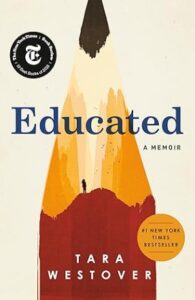
Selling personal memoirs of religious cult victims is never easy. This short synopsis aims to do that for Tara Westover’s Educated.
Tara was 17 the first time she set foot in a classroom. She was born to doomsday cultists in the mountains of Idaho. Her father forbade contact with the outside world — including hospitals. So, Tara never saw a real doctor.
Gashes were treated with herbal salves. Concussions were left to heal in the dark. The family was so isolated that there was no one to ensure the children received an education.
At 17, Tara taught herself enough to take the ACT.
She got into college — a place her family believed was an instrument of Satan. Her quest for knowledge took her over oceans and across continents, to Harvard and to Cambridge. Only then does she wonder if she’d traveled too far from home, if there was still a way back.
The memoir culminates with Tara choosing her hard-won self over the family that denies her reality. She becomes a woman shaped by two incompatible worlds, belonging wholly to neither.
The details presented here — isolated, survivalists, forbidden education, travel, university — these aren’t just facts of the story. They’re the contextual stakes that make the rest of the story matter.
The synopsis frames a very specific life (Idaho survivalist cultists) as a universal struggle between family loyalty and personal growth.
You read this and immediately understand: everything that follows is set to be radical. The memoir is about her climbing out of this box and you can’t wait to read her journey.
A memoir synopsis must articulate the state of being at the end of the transformation. The resolution is often internal: a new understanding, a difficult choice, a state of reconciliation or acceptance.
Pitch for Screenplays
Film is visual. Screenplay “film treatments” need to focus on what you see and feel, not just what happens. Film treatments are longer than a book synopsis, usually about 5-20 pages. But the core pitch? That needs to pop in one page. And the whole thing needs to make readers feel like a camera is rolling.

Example: Get Out (Social Horror)
Chris travels with his girlfriend, Rose, to meet her parents for a get-together at their secluded estate. He’s black. She’s white.
Chris initially reads the family’s overly-accommodating behavior as nervous attempts to deal with their daughter’s interracial relationship.
But as the weekend progresses, a series of disturbing discoveries — including the odd behavior of the estate’s all-black servant class — leads him to a truth he could’ve never imagined.
Chris hasn’t been invited for a party. He’s been lured into a sinister trap where his very identity is the prize.
Chris discovers his hosts are performing coercive brain transplants. They’re placing the consciousness of aging white people into the bodies of kidnapped black victims. And he’s next.
Chris fights to escape, and is nearly subdued. In a final confrontation, Chris kills the Armitage family.
As Chris kills Rose last, police lights illuminate the scene. He stands up with his hands raised, fearing the worst, but Chris and the audience finally catch a break when he sees that it’s a friend of his. Chris gets in the car and makes his escape from the estate.
Very quickly, we know this is a social drama that escalates into a life-or-death struggle for the protagonist.
Use of words like “overly-accommodating,” and “all-black servant class,” build dread. We know Chris is in for a dark ride and we can’t wait to know what happens next.
This film synopsis proves the plot works from set-up to payoff.
What do these synopsis examples teach us?
Whether you’re writing for an editor at Penguin or a producer at Netflix, every winning synopsis has the following elements and follows these rules:
| Element | Gone Girl (Novel) | Educated (Memoir) | Get Out (Screenplay) |
| Inciting Incident | Amy disappears on her anniversary | Tara decides to go to college. | Chris goes to meet Rose’s parents |
| The Stakes | Will Nick be convicted for a crime he (maybe) didn’t do? | Will Tara lose her family to find herself? | What do the parents want? Will Chris escape the estate with his life and sanity? |
| The Transformation | From a ‘perfect couple’ to a toxic, murderous war of attrition | From an isolated cult to a global scholar | From a cautious guest to a survivor of a horrific conspiracy |
| The Resolution | Amy returns; The couple enters a toxic, co-dependent stalemate | Tara chooses her self-invented life and permanently breaks away from her family | Chris defeats the Armitage family and escapes – but is he yet free? |
The best synopses also follow these basic rules:
- Start with Active Stakes: Begin where the story’s engine truly starts, not with backstory.
- Show Transformation: In novels, this is character arc. In memoirs, it is identity shift. In screenplays, it’s thematic evolution. But every good synopsis shows someone or something fundamentally changing.
- End with Resonance, Not Just Resolution: The best synopses end with a question or a feeling, not just plot resolution.
- End with the Thematic Outcome: Don’t just stop the plot summary. State the final narrative and emotional resolution to prove your story has meaning and cohesion.
Your story weapon: Track the key beats of the story
Can’t summarize your plot in one or two pages? You might have too many subplots clogging the pipes. Use these examples to reverse-engineer your own work.
If you’re not sure where to start, find five published works that are relevant to your genre. Search for their publisher synopses, or see if you can write out your own version tracking the significant beats of the story, and analyze them.
Ask yourself: Where do they establish stakes? Where’s the emotional turning point? What information do they leave out? How do they handle multiple characters or plotlines?
This is how you’ll learn the art of synopsizing in your respective niche.
FREE STORY STRUCTURE GUIDE! Are you struggling with your outline and looking for support?
My FREE Story Structure Guide will lead you through the process of marrying the wildness of your imagination to the rigor of structure to unlock your story within.