

You’ve created a character. You’ve crafted their backstory, motivation, and physical features, but maybe they still feel wooden to you. What can you do to make a character spring to life from a puppet to something more like a fully-fledged being? In this article I will explore what mannerisms are and why they matter in story. I will offer you examples from some classic stories, and finally a Story Weapon of do’s and don’ts that will help you create unforgettable characters.
Mannerisms make characters pop off the page so we can see them perfectly in our mind’s eye. They help turn a character from just a character to someone we can imagine sitting in front of us. When it comes to rounding your characters out with extra dimension, mannerisms are a key consideration.
Mannerisms are the small, repeated behaviors that make characters feel vivid and dimensional, helping readers infer emotions and traits without direct explanation. This article explains why they matter, shows strong and weak examples from fiction, and offers practical dos and don’ts for crafting vivid, memorable characters.
These are the small behavioral traits we subconsciously do repeatedly. Mannerisms include facial expressions, vocal patterns, bodily movements, physical gestures, and emotional tics.
The behavior part is important, as mannerisms aren’t the same as personality traits. These are micro-actions that happen over and over, forming a characteristic pattern.
To better form an idea of your characters’ mannerisms, think of the people around you. Perhaps your father has a particular cough, or your friend swishes her hips when she walks. Your neighbor may whistle while he walks, and your cat might trill with expectation when she hears the fridge open. All these details tell us more about the character, and we can use that to add depth.
“All your mannerisms change easily when you have inch-long acrylic nails.”
– Margot Robbie
Why do mannerisms matter?
Because mannerisms tell us more about people, we can use them to reveal characters’ emotions and thoughts. It’s a way to show, not tell. Instead of directly saying, “Brian gets passive-aggressive when in a hurry,” we can describe how he loudly taps his feet when waiting in line at a coffee shop. Mentioning mannerisms is also a great way to make your character have an emotional impact on the reader, whether it is endearing or detestable.
The point of including mannerisms is to convey an emotion or trait while coloring in the reader’s mental image.
Examples of mannerisms
Let’s examine some examples to see their effects.
Violet Baudelaire, A Series of Unfortunate Events by Lemony Snicket
“Anyone who knew Violet well could tell she was thinking hard, because her long hair was tied up in a ribbon to keep it out of her eyes.”
This line may show and tell, but it serves a purpose — it’s mentioned in the very first chapter of The Bad Beginning, setting the stage to mention it again later for greater effect. Here’s what we learn initially, just from this one behavior: Violet is someone of intense focus, who prefers as few distractions as possible when solving a problem. That in turn tells us about her self-discipline. We gain all that insight from just one line.
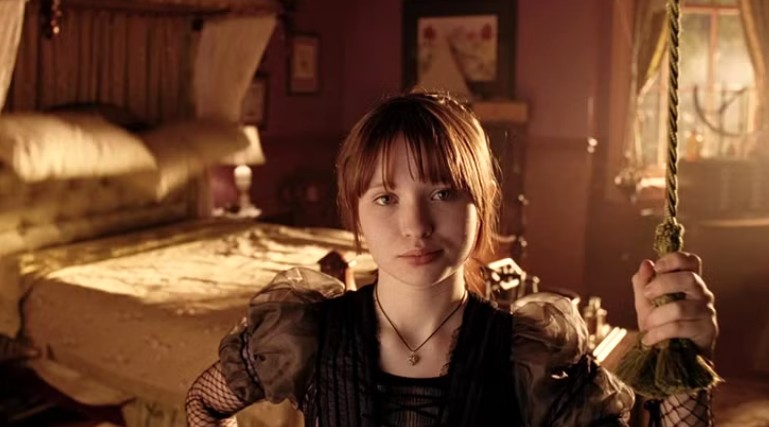
The author leverages this later in the story:
“Violet sighed too, and took the ribbon out of her hair.”
Because of the initial setup, this line tells us that Violet feels she can’t solve the problem. There’s no point in keeping her hair tied up if the situation is hopeless. She feels powerless.
This strategy allows the reader to peer into the mind of your character without direct explanation. Because the reader is using context to understand the character, they’ll feel a closer bond to them.
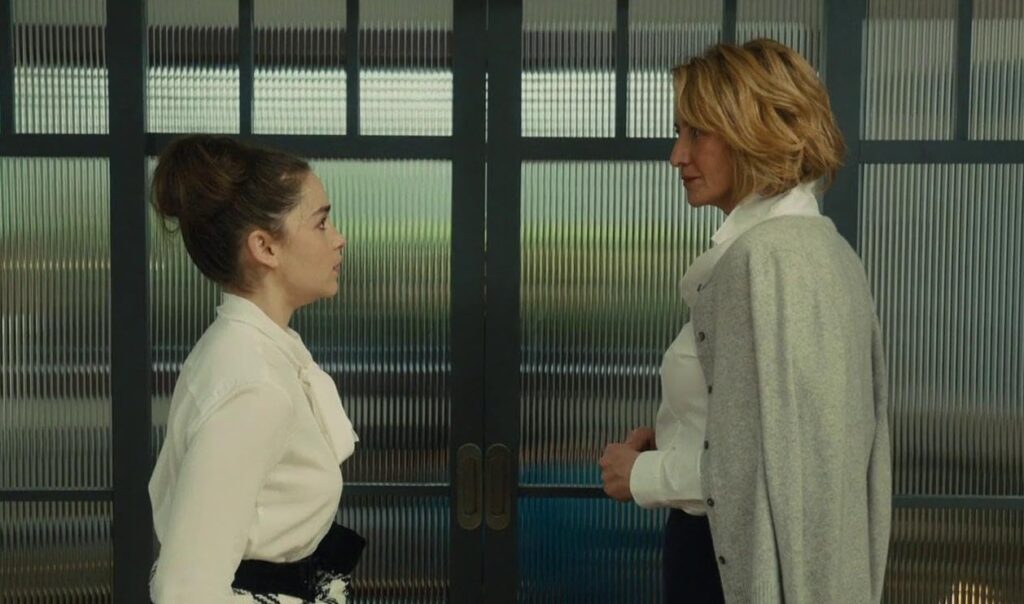
Mrs. Traynor and Louisa Clark, Me Before You by Jojo Meyes
“Mrs. Traynor was holding the cross at her neck with slim white fingers. She moved it back and forth along its thin gold chain, a nervous habit. Her face was rigid.”
Mrs. Traynor is a wealthy woman established as a judge with an impenetrable reputation due to her strong religious beliefs, and yet her paralyzed son has asked to end his life in an assisted suicide. The mannerism of clutching and moving the cross at her neck is more than just a nervous habit. It expresses her deep anxiety as a mother, her struggle with her religious beliefs, and her repressed emotions as she fights to maintain composure. This small gesture used repeatedly throughout the book conveys so much in a very simple way.
In the same book, however, the author introduces a mannerism for one of the main characters, Louisa, in a way that falls flat.
“I am pretty hopeless at keeping secrets. Treena says I touch my nose as soon as I even think of lying. It’s a pretty straightforward giveaway.”
This could be a potentially adorable mannerism, but for Louisa it is only ever referenced once in narration — and that one time comes up over 200 pages into the story. A story where this character has been keeping multiple secrets! It seems like this would be a prominent tic in that case, but her quirky fashion sense and optimistic nature take center stage instead. The only times it’s mentioned that Lou touches her nose at all before this point are actually moments where she’s being more honest rather than hiding the truth.
A misplaced mannerism like this one pulls the reader out of the story rather than immersing them more fully.
Your story weapon: Dos and Don’ts for writing mannerisms
The key to impactful character mannerisms is using them effectively. Here are my dos and don’ts.
Do:
- Use mannerisms sparingly. These details should enhance, thus they must be germane to the character in some way that brings them more fully to life.
- Get creative. Go past sighing, biting nails, furrowed brows, or playing with hair. What behavior makes sense for your character and their inner thoughts?
- Remember the purpose of mannerisms: to convey an emotion or trait.
Don’t:
- Overuse the same example. A character doesn’t need to bite their lip a hundred times; make it truthful, so that when you bring it up again, it stands out.
- Make it cliché. Do you actually wring your hands when you’re nervous? Your character wouldn’t either. A more unique tic will bring them to life in a genuine way.
- Forget to use mannerism when it matters.
✒️ Writing Exercise
Mannerisms tend to be visual. Write for five minutes, describing your protagonist getting out of bed. Take us moment by moment through their morning ritual, with a focus on their physical behavior.
Then, circle any mannerisms or interesting behavior that captures your attention.
Do this exercise and imagine them walking into the office, speaking to their mother, calling their accountant, meeting their spouse for dinner. Notice how your subconscious has an innate sense of their behavior, and the more you explore them in their world, the more they come alive to you through their mannerisms.
Want to learn how to bring your characters to life? Join one of my next writing workshops: The 90-Day Novel, The 90-Day Memoir, Story Day.