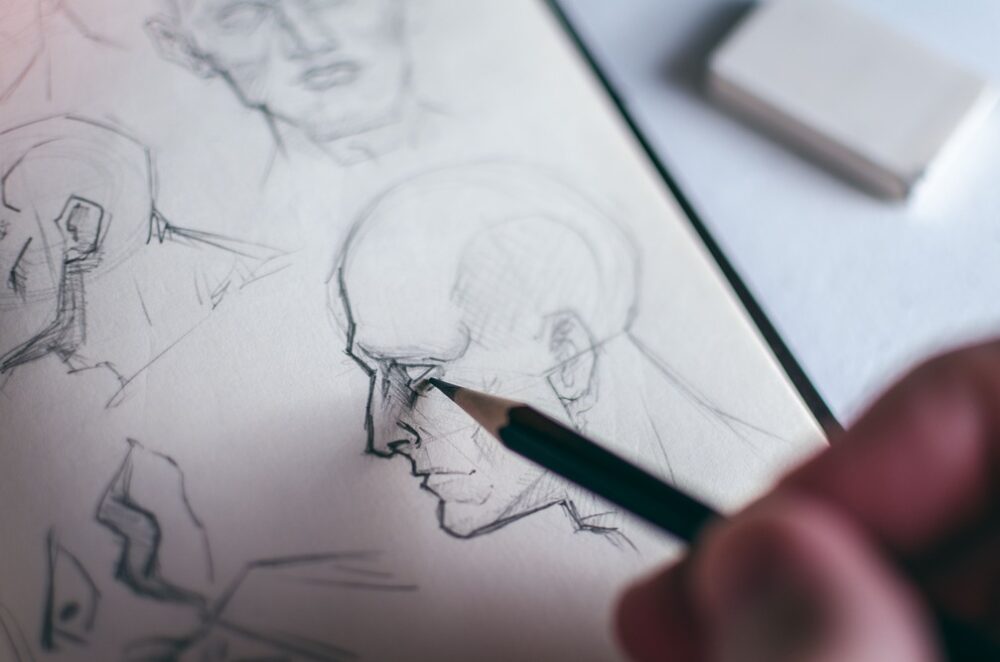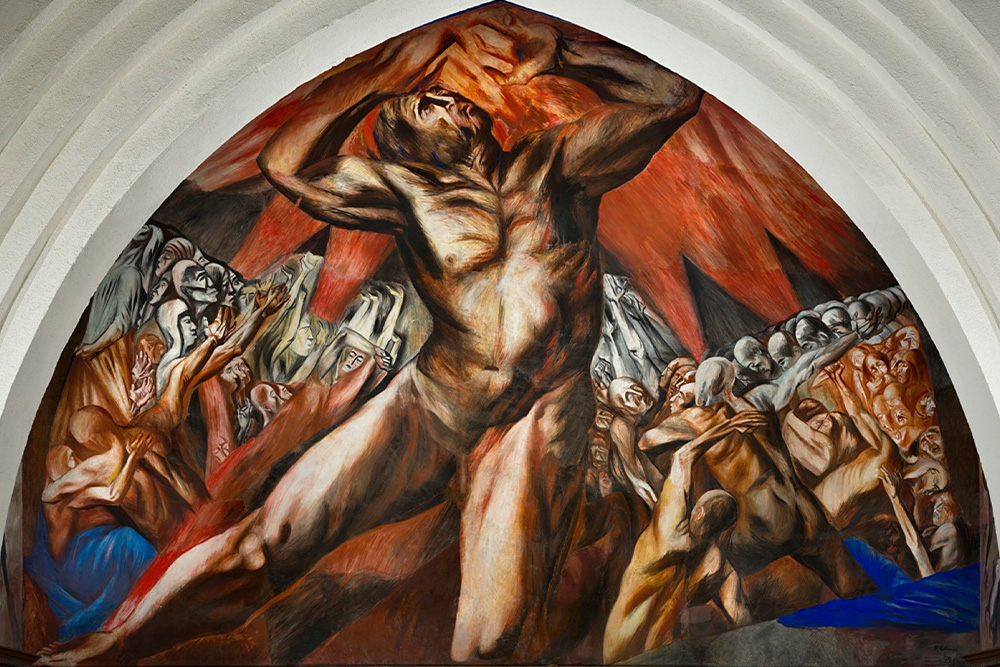



The Creator archetype is someone driven by their imagination, vision, and a need to bring something new into existence. Think of the inventor, the artist, the writer, the dreamer who builds worlds out of nothing.
They’re not always the protagonist or the antagonist in a story, though they can fill those roles as well. These are the characters who can’t stop creating, and feel compelled to give birth to something new — even if it requires everything they have, even if the cost is higher than what anyone else would reasonably pay.
In this article, I‘ll explain the Creator archetype, what it requires from a story, and how to create a character that doesn’t seem like a romanticized trope of the suffering artist. Lastly, I’ll give you a Story Weapon to understand your Creator character’s deepest motivation.
The Creator archetype is one of fiction’s most psychologically rich character types — driven not merely by artistic passion but by a deeper compulsion to leave a mark before time runs out. From Victor Frankenstein to Andrew Neiman in Whiplash, the most compelling Creators are defined not by what they make but by what it costs them, who it damages, and whether they ever stop to ask if the work justified the price.
What is the creator archetype?
If you don’t know what an “archetype” is, let me give you a short introduction.
An archetype is a universal character type that can be found in stories from different cultures and mythologies throughout history. They’re story patterns that are so ingrained in the human process of storytelling that we know them even if we can’t name them. You might have heard them go by names such as the Creator, the Hero, the Sage, the Trickster, etc.
These patterns were first organized systematically and their significance explained by the Swiss psychologist Carl Jung. You can find my overview on Jungian archetypes here.
The Creator archetype is a character who has the need to create. To create, construct, imagine, to add something new to the world. They may be an artist, a scientist, an architect, a writer, a musician, an engineer — it doesn’t matter what their occupation is so much as what drives them.

Creation is their strongest power — and the source of almost every issue they have in a story. The Creator’s bond with their work often takes precedence over all other relationships, stability, their values, even their own self-preservation. They create because they have to. And what they build, and what it costs them, is where the story lives.
The creator and the question of control
The tension that exists in many Creator archetype stories comes when they can no longer control what they’ve brought into being. Dr. Frankenstein and his monster are prime examples.
Your Creator might be a painter whose work transcends their reputation, a scientist whose discovery is turned into a weapon, or a god-like figure whose creation takes on a life of its own.
The process of creation is a process of release as well. They create something, it becomes part of the world, and the world will use the thing as it wishes.
The shadow side
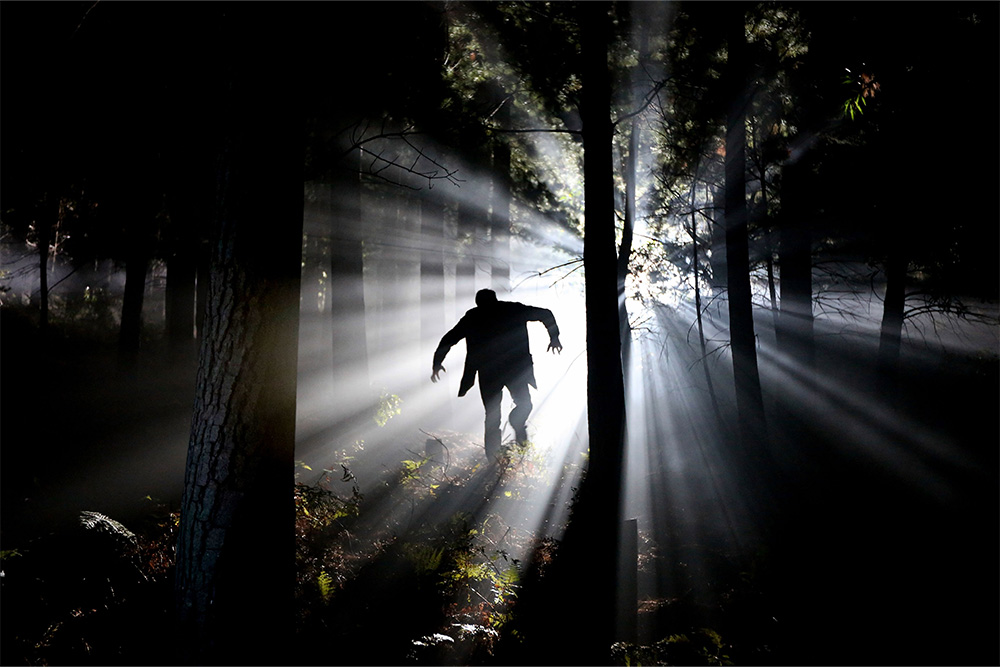
Each and every archetype has a shadow: an out-of-balance version of itself. For the Creator, the shadow side is the character who creates not for the purpose of giving to the world, but for the purpose of dominating it. They want to impose their vision on others. Not from a sense of love or curiosity, but the need to prove something to themselves, to those who doubted them, to the world that didn’t appreciate them early enough.
Here, the Creator turns into the Destroyer. Not because creation and destruction are opposites, but because they’re often two sides of the same compulsion.
To make a new thing, you must sometimes break the old one. The Creator who loses perspective on that — who starts destroying things that didn’t need to be destroyed — is one of fiction’s most compelling and most terrifying figures.
Frankenstein’s monster isn’t the real horror of that story. Victor Frankenstein himself is. He’s a creator so immersed in his work that he never asked himself if he should go through with it. The moral of nearly every Creator archetype story worth reading is that question: not can I, but should I?
Examples in literature
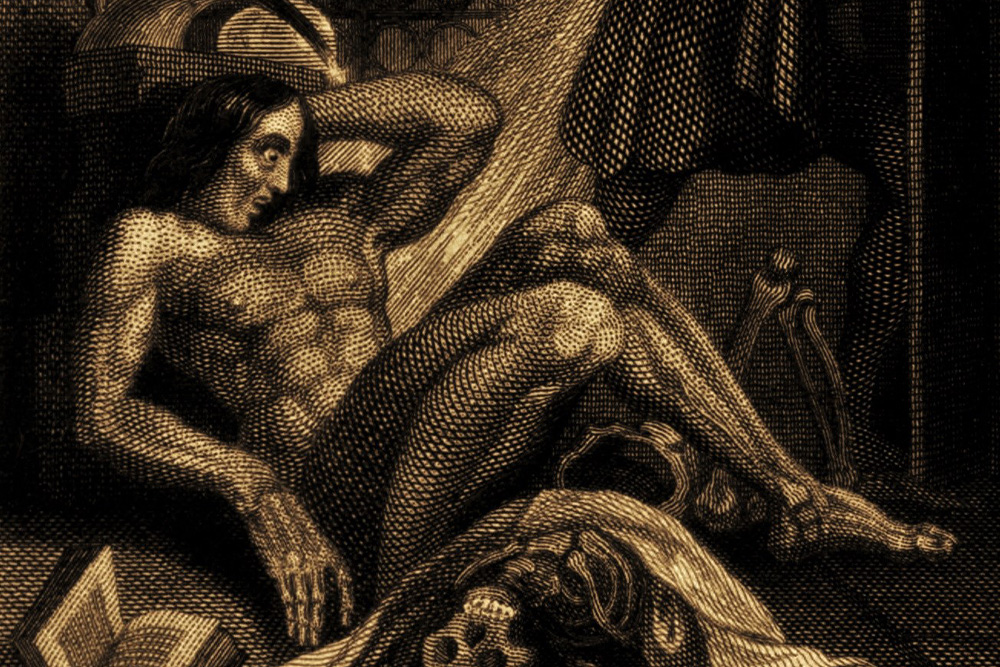
Mary Shelley is the author of the classic work Frankenstein. Victor is brilliant, hyper-focused, and can’t help but get into trouble when he starts. He creates because he has to — because the urge is greater than his sense of judgment, greater than his relationships, greater than his sense of responsibility for what he is creating. The tragedy of this novel is not the monster. It’s the maker. A man who decided to play God and learned the hard way that the game has its consequences.
Salieri in Peter Shaffer’s Amadeus is a Creator archetype of a different and equally devastating kind. Here is a man who has dedicated his life to music, who has sacrificed, disciplined, bargained with God, and who has been endowed with just enough talent to see others become great and yet not enough talent to become great himself. His tragedy is that the Creator knows the end, and is sure, with absolute certainty, that he will not get there.
Zora Neale Hurston’s Their Eyes Were Watching God gives us Janie Crawford — a Creator not in the artistic sense but in the deepest one. This is a woman who is self-made in a world that is constantly attempting to define her from the outside. An internal act of creation — the self as the work — that’s one of the more expansive uses of this archetype, and Hurston handles it gracefully while at the same time in a radical way.
Examples in film

Whiplash is a tale of a Creator who’s caught up in his own obsession. Andrew’s drumming isn’t a hobby or even a career. It’s what his whole identity is built around. The compulsion doesn’t care what it tears down on its way to the work, that’s what Damien Chazelle knows about the Creator archetype. Everything that Andrew does is done in the name of becoming great — relationships, health, basic human decency. The movie doesn’t completely fault him for it. It doesn’t really celebrate him either. It just lets you see what that degree of creative obsession is from the inside, and it allows you to feel uncomfortable with it.
The film Amadeus places two Creators in the same story and observes what occurs when one is touched by something that the other can only see. Mozart is given a much bigger role here than he had in the play version. He composes, joyfully, almost spontaneously; the music flows out of him like water from a faucet, while Salieri grinds out work that is competent but forgettable. The film really is about what creation does to the person it passes through and what it does to the people who it passes by.
Ed Wood is another Creator story, but of a very different tone — and one of my favorites for its grasp of the archetype. By all normal standards, Ed Wood’s movies are terrible. But he makes them with full, honest, irrefutable sincerity. It’s about the love of making — the Creator who creates not because the world rewards it, or even recognizes it, but because not creating is unthinkable. There’s something genuinely moving about that.
The creator and the people around them
When writing the Creator archetype, it’s crucial to know what they do to their closest friends.
As in fiction, so in life: creators are sometimes hard to love. Not because they’re unloving, but because their work takes time away from all the other things that they love to do. The people who are part of a Creator’s life are always, to some degree, in a relationship with the work as well as with the person. They are competing with something that cannot love them back and will not negotiate.
The partner, the friend, the child of a Creator . . . It’s one of the most fruitful secondary character fields in fiction. The person who loves a Creator is someone who has made a decision, consciously or not, to accept a particular kind of loneliness. One of the most challenging and fulfilling tasks that you can undertake with this archetype is to write that relationship without villainizing either character.
How to write a creator that works

Show their need to create. Don’t tell us your character is driven to create, show us. Put yourself in their shoes — what it’s like when they are not working, what it’s like when they are working, how the work dominates them. The more precisely you depict their compulsion, the more convincing the character will be.
Question them about what they’re actually creating. Your Creator may be writing a novel or constructing a machine. However, what is it that they are actually seeking to build? A legacy? Evidence of their own value? A path back to those they have lost? The more profound answer to that question is where your character’s true story exists.
Let the work cost them something real. There’s no drama in creating without consequences. Whatever you create, it should include something of your Creator: a relationship, a belief, a version of yourself they can’t get back. The cost is what gives the work its weight.
Leave them in doubt for a minute. At some point, your character should stop and wonder whether any of it is worth it. Whether the thing they’re building deserves what it’s taking. The moment of doubt — and what they do with it — is often the best window into a Creator’s story.
Don’t romanticize suffering. This is the most sure trap the Creator archetype sets. Comfortable clichés are the tortured artist, the misunderstood genius, the visionary nobody appreciates. Creators are interesting not because they suffer but because of what they do with the suffering, what they make from it, what it costs them, and what it produces that could not have existed without it. Their suffering is only the beginning of the story, never the story itself.
Your story weapon: The Creator’s legacy
All Creators, on some level, want to make something that will endure. A thing that will transcend their existence. Something that gives evidence they were here and that their work was important.
It’s not necessarily vanity. It’s something more basic: a reaction to the understanding of death that is uniquely human. We know that we will die, and so we make things. We build and paint and write and compose and invent, because otherwise there’s no mark at all.
At its core, the Creator archetype is about that drive — the necessity to turn this short and ephemeral time into something lasting. If you’ve written a character who feels the urgency of life, who’s shaped by it, who’s sometimes broken by it, you’ve written one of the most human characters you can find in fiction.
The most interesting version of this archetype is the one who understands, at least in their darkest moments, that while their work might outlast them for a time it might still not be enough. The mark they leave might be misunderstood, ignored, or forgotten by the very world they were trying to reach.
If you are writing a Creator archetype character, ask what they are really trying to say with their work. What truth are they trying to put into the world that they cannot say any other way? What would happen to them if no one ever received it? What if their work disappeared and left no trace? Would the making of it still have been worth something? How your Creator answers that question, in action rather than in words, is the heart of their story arc.
We are all, in some sense, Creators. We all leave something behind, even if it is only the memory of how we made someone feel on an ordinary afternoon. The writer sitting alone at a desk, trying to find the right words for something true, is engaged in the same fundamental act as every artist who came before them: the refusal to disappear without a trace. That is the legacy worth writing about.
The Creator archetype challenges us to examine not only what we make, but why we feel compelled to make it. Continue developing your storytelling skills and creative vision by joining one of my next workshops: The 90-Day Novel, The 90-Day Memoir, Story Day.