



The Five-Act Structure is a key aspect of dramatic storytelling. The tradition stretches as far back as the ancient Greeks, and it’s still commonly used in plays and some screenplays. Though novels tend to lean on the Three-Act Structure, you might still find the Five-Act Structure useful for longer stories. There’s a reason it’s worked for so long.
In this article, I’ll touch on the history of the Five-Act Structure, outline each act and give you a goal to accomplish in them. Lastly, I’ll offer a Story Weapon to help turn this structure model into a useful tool for the story you’re telling today. Let’s get started!
Explore the history and mechanics of the Five-Act Structure, from Greek tragedy to modern films like The Godfather. Learn how each act builds tension, transforms characters, and guides readers toward a powerful climax and resolution.
A structure older than the page
Before there were novels, before there were screenplays, before there was even a printing press to put stories into the hands of the common folk, there was the stage. And on that stage, the Five-Act Structure was already doing its work.
The Greeks understood, perhaps instinctively, that a story needs to breathe in a particular rhythm. It needed time to establish the world, encounter obstacles, have a great battle or clash of wills, time to absorb the consequences, and finally, time to settle into whatever new order had come into play. The great playwrights of ancient Athens were honoring the rhythm of human experience on stage.
Sophocles, writing in the fifth century BC, built his tragedies around this movement with a precision that still holds up. In Oedipus Rex, the first act establishes Thebes in the grip of a plague and introduces Oedipus as a king determined to find its cause. The rising action follows his increasingly desperate investigation as the evidence mounts and the people around Oedipus beg him to stop looking. The climax arrives in a moment of devastating recognition. Oedipus finally understands the truth about his own identity, and his parentage. We see the immediate tragedy of that truth in the falling action. The play comes to a close with a king blinded, exiled, and broken. Yet, in some terrible way, he’s finally free of illusion.
Roughly two millennia later, Shakespeare took the Five-Act Structure and used it masterfully in his own plays. In Hamlet, we see a kingdom with a prince in solitary mourning. The story naturally flows from the vision of Hamlet’s dead father to his increasingly unstable attempts to verify what he learned from the ghost, his pretense of madness, testing his uncle, his treatment of Ophelia, each scene tightening the coil. In the aftermath, when Claudius’s guilt is confirmed, the violence bursts forth and the bodies start to drop. Each death and the new order left to fill the gap is a consequence of what was set in motion from the first act.
These plays don’t just share a skeletal structure but a natural shape that mirrors the way human beings actually experience change. That is why today, so long after the ancient Greeks first put it to use, the Five-Act Structure still works.

Stages of the Five-Act Structure
Let’s look closer at how each of the acts work.
Act 1: Exposition
Here the story presents the world as it exists before the plot takes place. Your audience needs to see the status quo of your imagined setting so they can care about the changes that take place. In the first act, you’ll introduce the protagonist, the premise of the story, and the key pieces and characters that we need to know before moving forward. This is also where you’ll introduce or at least set up the inciting incident that sets the story in motion. The inciting incident makes the adventure inevitable, like Dorathy being whisked away to the land of Oz.
Let’s unpack a modern (or at least modern-ish) example of the Five-Act Structure in The Godfather. Co-written by Francis Ford Coppola and Mario Puzo, the latter of whom wrote the novel that inspired the adaptation, the Godfather makes great use of its five acts. The first act shows us the family dynamic. We see the titular Godfather in the height of his power and wealth, as well as his son Michael’s preference to stay away from the family business. This doesn’t last very long. An attempt on the Godfather’s life gives us an inciting incident, forcing Michael to rush to his father’s side. The status quo has been established and it’s about to change.
Act 2: Rising Action
Tension starts to build. If you haven’t introduced your inciting incident, now’s the time to do so. Act two is all about raising the stakes and showing us the protagonist in action. Maybe they win their first few battles: they get accepted into a selective school or they vanquish a few bandits on the journey. As they win and progress along the path, the protagonist is sealing their fate. They become more involved with the world until they can’t turn back. They have to see the story through. This is also a good time to show the audience and the protagonist how difficult the quest will be. Though their strength and resolve may have been clear from the start, they begin to sense that something will have to change for the ultimate battle.
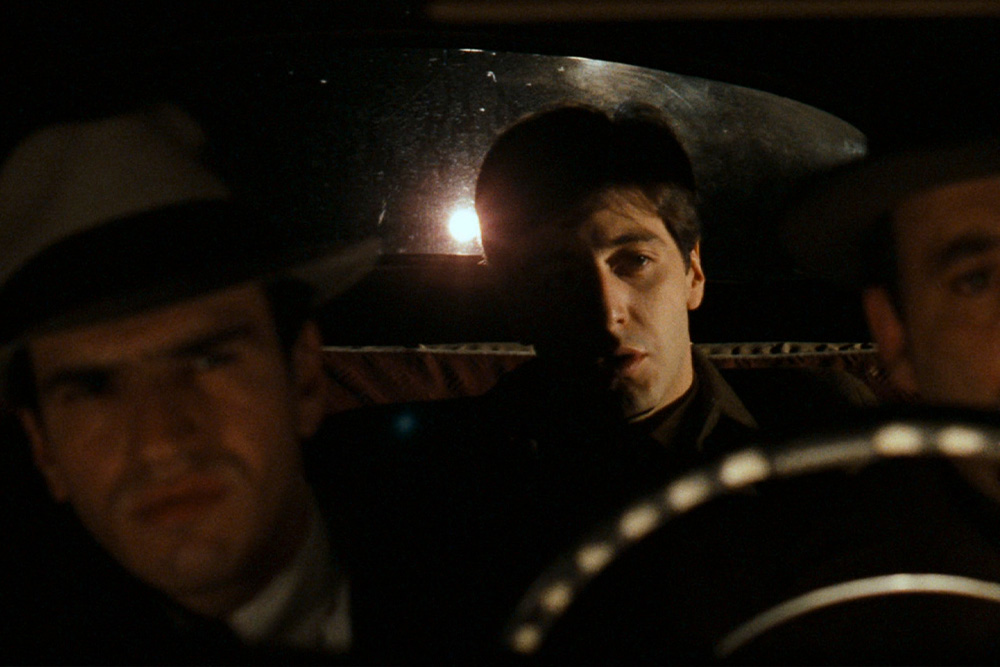
In The Godfather, this act centers around Michael joining up with his family. He protects his father in the hospital, and witnesses firsthand the danger facing the Corleones. After making sure his family is safe, he sits with his brother and they hatch a plan to kill the men who threatened their father. After the initial peace of the first act, where we see the characters revel at a wedding, chase off paparazzi, and quietly ensure the loyalty of the community, the second act serves to threaten that stability.
We also get to see much more of Michael’s character in this rising action. Here’s an excerpt from a review of the film on Letterboxd that highlights this character growth:
As Coppola slowly pushes in on Michael sitting in a chair in his father’s study, we see what we think is the beginning of a transformation. Michael looks for all the world like the new Don, insisting that he is keeping business and personal separate while conflating them to the point of complete overlap, and calmly maintaining that termination with extreme prejudice is the answer to all of the family’s problems. Yet we soon come to realize that this is not the beginning of anything other than Michael’s ruin — Michael is in that instant fully transformed, having unleashed the diabolical tyrant that his father had preferred he keep hidden.
Act 3: Climax
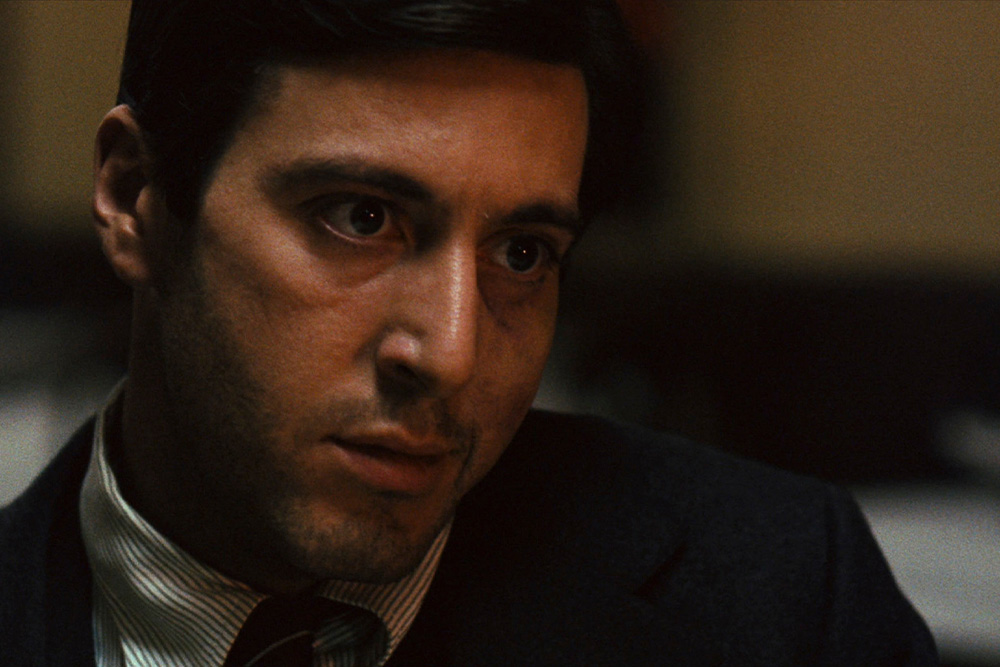
The third act is where the tension builds to a crescendo and the audience gets a moment of catharsis. The climax is the moment to test your protagonist’s mettle. No matter how much they’ve trained, no matter what weapons and talent they have at their disposal, the climax is about bravery and character. The protagonist meets the antagonist on the field of battle and something monumental happens.
Maybe the protagonist wins and maybe they don’t. Regardless of what you choose, this is a short act with a lot of action. Relieve the tension you built up in the first act with something decisive.
In The Godfather, the climax manifests in a tense scene where Michael’s plan is executed. The scene is mostly in Italian with no English subtitles; the audience is forced to just watch the faces of the people in the scene. We see how tense Michael is and watch him consider if he can really pull it off. He manages to work up his courage and shoots the two men responsible for the hit on his father. This is the turning point. There’s no going back now. Michael is now deeply tied to the family business and peace is no longer an option. It’s all downhill (at least in terms of tension) from here.
Act 4: Falling Action
Having broken the tension, you can let the story unfold at a more relaxed pace in the fourth act. This is where we see characters sort out the aftermath of the climax and catch their breath. Things have changed quite a bit and the audience gets some time to process everything.
Show your reader how the world is changing as a result of what’s happened. How has the protagonist changed? What can they do now that was unavailable to them before? Answering these questions will flesh out your fourth act.
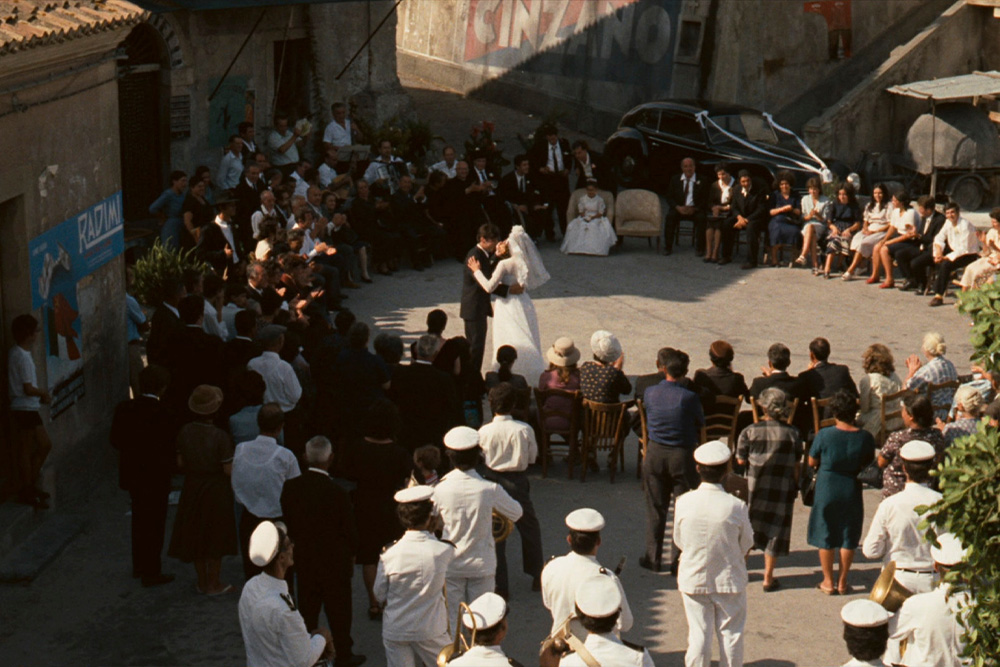
In The Godfather, Michael’s fourth act is pretty peaceful even as violence continues at home. He flees to Italy and falls in love with a local woman. They get married and things seem to be looking up. Back home, there’s all out war. Michael’s brother is killed, forcing Don Corleone to assume control of the family again. He calls for peace, just as Michael’s new wife is killed in Italy. You might be asking; how is this less tense than the previous acts? Tension is interpreted as danger and unrest for the protagonist; though there’s plenty of bloodshed in this act, it all sets up Michael returning home for the final act. He’s dealt with the changes that have taken place and is ready to assume power.
Act 5: Resolution
The last act is the end of your story, where you tie up all the loose ends. The reader gets to see the new world, reshaped due to the events of the plot. The protagonist has transformed as well and we see how they fit into this new world. Whatever dilemma had them in conflict at the start of the story gets resolved here. Show the audience what has come of the other important characters and address any unanswered questions. The fifth and final act of your story should bring your theme full circle.
The resolution of The Godfather shows us the last stages of Michael stepping into his role. We see him grow into the position. Don Corleone has died of natural causes, but he manages to leave Michael with advice on spotting the traitor in their family.
When Michael discovers the traitor, he acts swiftly. In one fell swoop, as Michael’s son is being christened, the traitor and the heads of the competing families are assassinated. The story is over. There’s a new Godfather and order is restored (albeit a violent one).
Your story weapon: Map the tension in your story
Okay. Frankly, my personal belief is that the Five-Act Structure is actually the Three-Act Structure in disguise. The five acts that are being referenced are really “five sections” of the play or screenplay. In other words, you can just as easily break down the Three-Act Structure of the aforementioned plays and film into five acts as follows.
- Beginning to inciting incident
- Inciting incident to end of Act One
- End of Act One to Midpoint
- Midpoint to End of Act Two
- End of Act Two to end of Act Three
How you choose to structure your story is up to you. The most important thing is to map the tension through your protagonist’s dilemma in order for the story to build in meaning as it progresses.
To order your story beats and keep the narrative alive, outlining in detail is key. This lets you know when to put the pedal to the metal and accelerate the pace of the story with important events that raise the stakes. It also tells you when that tension needs to break, when your audience needs the pace to slow down.
With story structure to guide you and a clear tension arc, your story has strong bones to rest on. You’ll have plenty of room to innovate and color in the details of your world.
Give your characters room to make unexpected decisions and surprise you. Let curiosity lead you as you walk through the Five-Act Structure to the end of your rough draft.
A strong command of structure allows you to guide your reader’s experience with intention, shaping not only what happens in your story, but how it feels as it unfolds. See how structure can support your creative instincts in one of my next workshops: The 90-Day Nov, The 90-Day Memoir, Story Day.