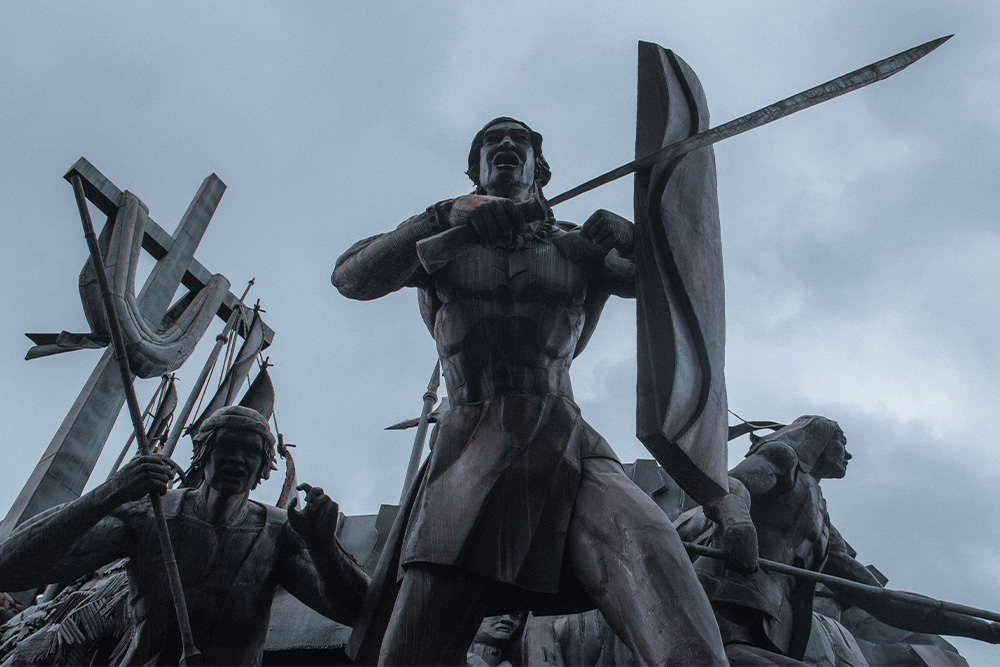


One of the oldest and most enduring patterns in storytelling is the Hero archetype.
All stories require a main perspective for the reader to follow. This is the character who the reader can track through all the danger, confusion, loss, and transformation. This character’s path will be a reflection of our own. It’s one of the most widely-used and familiar characters in storytelling, but it can sometimes be misunderstood.
The Hero isn’t necessarily the strongest person in the room. They might not have the most courageous spirit, the most skill, or even the most clear direction — at least, in the beginning. A Hero character is typically defined by their capacity for change.
In this article, I’ll show you what the Hero archetype is, where it comes from, what it demands from a story, and how to write one that feels genuinely earned rather than assembled from familiar parts. Lastly, I’ll give you a Story Weapon to connect with your readers.
The Hero archetype is not defined by strength or courage but by the capacity for change — the willingness to answer a call that demands the surrender of safety, certainty, and a version of the self the character was attached to. From Frodo Baggins to Andy Dufresne, the Heroes that endure are the ones who almost gave up, paid a cost they couldn’t recover from, and arrived transformed in ways that feel specific, earned, and emotionally true.
What is the hero archetype?
Before we dive into it, let’s define what the term “archetype” means. An archetype is a universal character type that can be found in stories across many cultures and storytelling traditions throughout history. The Hero, the Sage, the Creator, the Trickster, and more are the titles given to these recognized patterns. They’re so much a part of the way humans tell stories that we can see them even if we don’t put a name to them. The Swiss psychologist Carl Jung was among the first to systematically chart these patterns and show how they tap into the human psyche. I have an overview on Jungian archetypes here.
The Hero is a character who is not necessarily strong or courageous, but who has the greatest ability to change. The Hero starts the story one way and ends the story transformed. The path between those two versions of the same character is the story.
One thing that sets the Hero apart from other characters is their connection to “the call” — the point at which the world this character has been living in is upended and they are asked to enter a new, larger, more challenging, and more dangerous world than the one they have known. This is where the archetype is fully realized in their response to that call, and we experience what it costs them.
Origin of the hero archetype
The Hero is the most ancient of all the archetypes. It’s in the epic of Gilgamesh, the Greek myths, the Norse sagas, the oral traditions of Indigenous peoples, and other fairy tales that have been passed down for centuries, because there was a kernel of truth in them, a human experience that resonated.
Joseph Campbell focused on the “why” of the Hero archetype. The Hero with a Thousand Faces is his groundbreaking book that identified the story pattern he termed “the monomyth.” The Hero’s Journey forms a whole story structure model found in many cultures around the world, and it’s remarkably consistent.
The Hero departs from the normal world. They cross a line to the unknown. They go through trials, they face their greatest fear, and come back changed with something to bring back to the community they left.
Campbell’s insight on the Hero wasn’t that all stories are the same. It was that all these stories are responding to the same fundamental human experiences — the experience of leaving safety behind, of facing the unknown, of being tested beyond what we thought we could endure, and of discovering, in the process, who we actually are.
That’s why the Hero archetype has lasted. We don’t just want stories about fearless people doing impressive things. There would be no arc, no lesson, no transformation. And besides, our idea of “fearless people” is a fictional construct, rather than the truth, which is that all humans struggle with fear. We are drawn to stories about people like us, about the boundaries we fear to breach, and the new selves we have the chance to become on the other side.
The hero is imperfect
The Hero is not a peerless warrior, the perfect protagonist who comes to fight evil and save the day. This is a flattening of the archetype into something much less interesting than the original.
The true Hero is one who is vulnerable, not invulnerable. They are defined by starting from a place of doubt, not certainty. They’re willing to keep going despite fear, but they are not free from it.
A Hero that never doubts is no Hero. They’re a power fantasy.
Power fantasies, though fun fluff to read now and then, don’t change you. Transformation takes place when your readers can identify with the protagonist. It’s very difficult to identify with someone who doesn’t suffer or struggle the way you do.
The Heroes that remain with us are those who almost gave up. Those who make the wrong decision sometimes and must deal with the consequences. Those who arrive at the end of the story not as the person they always were, but as someone they had to fight, and suffer, and lose something real to become.
The call to adventure

All Hero stories start with a disruption. The familiar, comfortable or uncomfortable world is disrupted by something that calls for a response.
The call may come in a variety of forms. A death, a discovery, a letter, a stranger at the door, a war breaking out, an indisputable fact coming to light, and so on. What is important here is that it makes the protagonist’s old life impossible to live — or at least, makes it feel like a death of their old identity.
At first, nearly all Heroes refuse the call. This is one of the most psychologically true elements of the archetype. That call asks for something enormous: the surrender of safety, of certainty, of the known. And the human instinct, faced with that demand, is to find a reason not to answer.
The refusal of the call is not a weakness. It’s honesty. When you craft it well, when you give your Hero an opportunity to say no to the thing that wants to make them grow, then the time they finally say yes is one of the most powerful moments in the story.
Examples in literature
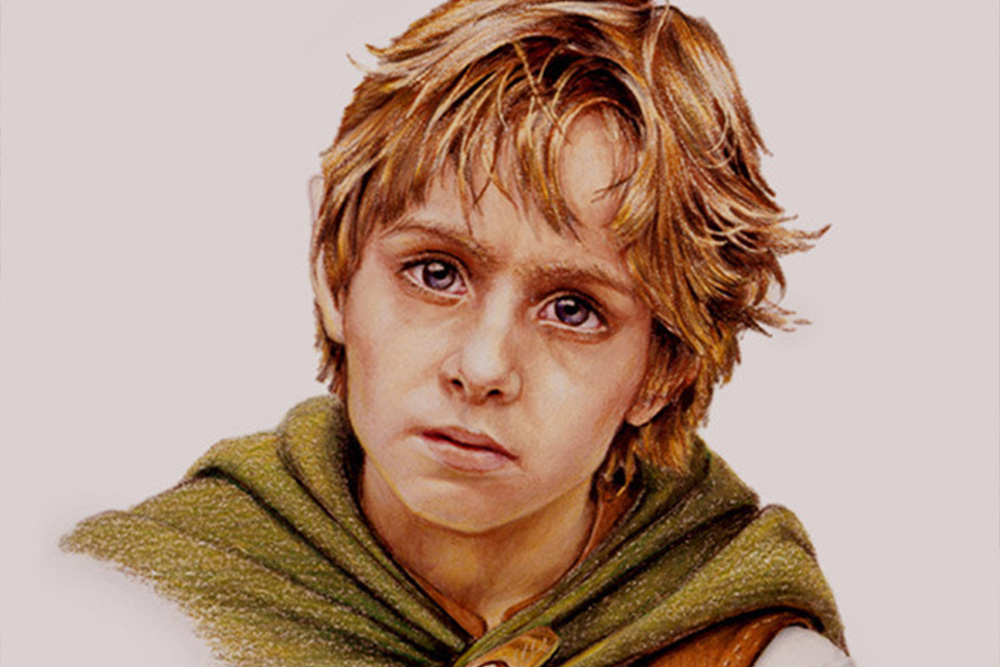
Frodo Baggins in The Lord of the Rings is a textbook example of the Hero archetype in modern literature. He is not the strongest, or the most skilled, or the most obviously heroic character. He’s selected not for what he can do, but for what he is: stubborn, enduring, and quietly resistant to corruption. His heroism is in holding on for another step when all instincts are telling him to give in. This is the truth of the Hero archetype and what has made Frodo an enduring favorite for generations.
Atticus Finch in To Kill a Mockingbird is a Hero of a different kind — one whose battlefield is moral rather than physical. He battles with honor, in court, in a town that has voted against him. His heroism is the readiness to do the right thing despite the cost and when the results are uncertain. Harper Lee understood that this kind of heroism — quiet, steady, and largely unrewarded — is rarer and more demanding than the dramatic kind.
Celie in The Color Purple gives us a Hero whose journey is entirely internal. The novel opens with Celie down on her luck: impoverished, abused, and told from the start that she is not worth anything. Her heroism is the slow, painful, extraordinary decision that she deserves to exist, despite all evidence. Alice Walker’s novel reminds us that there is no need for a dragon or a quest for the Hero’s Journey. Sometimes the threshold the Hero has to cross is the one inside themselves.
Examples in film
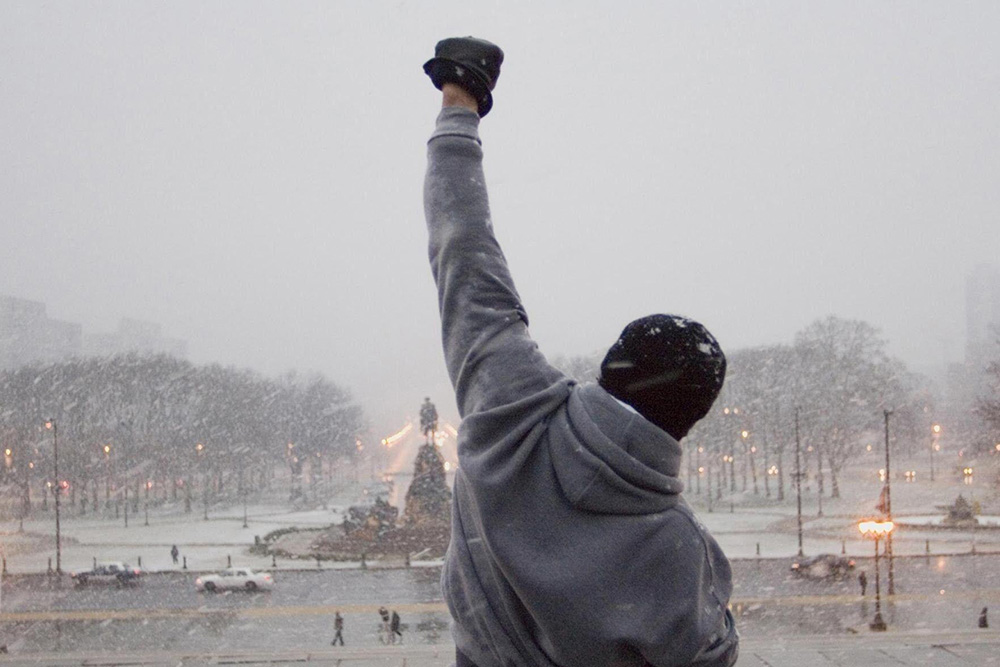
Rocky is one of the cleanest Hero stories to ever be filmed, and it’s because Sylvester Stallone knew one thing: the outcome of the final battle is irrelevant. Rocky doesn’t win. He goes the distance. He survives. And in surviving, he proves something to himself that no victory could have given him. The external conflict is the boxing match. The inside story is whether Rocky Balboa is someone worth being. That’s the Hero archetype working exactly the way it should.
Moana follows the Hero’s Journey, adapted for a modern audience. We can see the call, the refusal, the crossing of the threshold, the trials, the moment of greatest darkness and her transformation, all dealt with with true emotional intelligence. Moana’s quest is not only to save her island, but to find out what she can do.
The Shawshank Redemption gives us a Hero in the most unlikely of settings — a prison, where agency is stripped away and hope is systematically extinguished. Andy Dufresne’s act of heroism is his refusal to be defined by the institution. He does not fight. He does not lead a rebellion. What makes him heroic, in the deepest sense of the archetype, is his refusal to surrender. Wrongly convicted, Andy carries something the institution cannot take from him no matter how hard it tries: an interior life that remains his own. While the prison systematically breaks the other men, Andy finds ways to persevere and build evidence to reveal the corruption in the prison.
The hero archetype at its most powerful is not about physical courage. It is about the Hero’s refusal to surrender their essential self under pressure that would justify surrender. Andy’s dilemma is not whether he can escape. It is whether he can remain himself long enough to deserve the life waiting on the other side of that wall.
How to write a compelling hero
- Start them in the “wrong place.” In the beginning, the Hero should be incomplete in some way — they are missing something, avoiding something, or believing something about themselves or the world that is not quite true. That incompleteness will be the focus of the story. If your Hero is already fully formed on page one, there’s nowhere for them to go.
- Make the call expensive. The call the Hero must answer must come at a great cost. Comfort, safety, a relationship, a version of their life they were attached to. The more expensive the cost of their journey, the more significant their acceptance becomes.
- Let them fail. A Hero who succeeds at everything isn’t interesting and isn’t believable. Character is shown in failure. Losing is a lot more revealing about a Hero than winning ever will be: whether they give up, adjust, or dig even deeper, it’s a good indicator of who they are.
- Specify the transformation. Don’t just take it on faith that your Hero has developed. What is the false belief that they no longer hold on to at the end of the story? What can they do now that they couldn’t do before — not physically, but emotionally, morally, or spiritually? The more specific you can be with your answer, the more satisfying the character arc will be.
- Let the cost be real. There should be something that’s lost and can’t be retrieved. The Hero who comes back at the end of the story with all the pieces put back together — the quest accomplished, their relationships intact, their wounds mended without any scar – hasn’t really been on a quest. They’ve been on a vacation.
Your story weapon: Step into your true power
There’s something that often gets lost in conversations about the Hero archetype what with the structure model, mythology elements, and narrative mechanics.
The Hero exists to give the reader permission.
Permission to believe ordinary people — terrified, flawed, unsure people — can do extraordinary things. They give us permission to believe that the barriers in our own lives are surmountable, and to trust that what lies beyond our own fear and resistance may be worth the price.
That’s what the Hero archetype has always been for. Not to impress us with visions of grandeur, but to remind us (as only a story can) that we have a choice. It’s a direction, and everyone has the option to walk in it.
I believe that the desire to write is really the desire to evolve by resolving an inner dilemma. Our story ideas come to us as opportunities to challenge a limiting belief we have about ourselves or the world — and to let it go.
By exploring your core idea and challenging this belief, you are led to a deeper understanding of who you are, and you move in the direction of a greater sense of freedom.
When you let go of the result and lose yourself in the creative process, you begin to step into your true power, and embody the hero within. And when you write a Hero archetype from this place of truth, you will have written something that we are going to want to read.
Every memorable hero begins with a call to growth. As writers, we face a similar invitation when it comes to developing our craft. Deepen your understanding of character, story structure, and transformation in one of my next workshops: The 90-Day Novel, The 90-Day Memoir, Story Day.