

At some point, after the manuscript is finished and the relief of typing “the end” has worn off, you start to think about the next steps. You might be wondering, How much is this going to cost to publish?
The answer is that it depends on the path a writer chooses, and the range of numbers floating around online doesn’t make that any clearer. Some sources quote a few hundred dollars. Others quote tens of thousands. Both can be true, depending on which route a writer takes and how much of the work they’re paying someone else to do.
In this article, I’ll walk through the costs on three main publishing paths: traditional, self-publishing, and hybrid, break down where the money tends to go inside a self-publishing budget specifically, and cover a few hidden costs that catch some writers off guard. Lastly, I’ll give you a Story Weapon for thinking about a publishing budget the same way you’d think about a story’s structure, because the two have more in common than you might think.
How much does it cost to publish a book? Depends on the path: traditional publishing has little upfront cost but lower royalties and a long timeline, self-publishing can range from under $1,000 to $6,000 depending on production quality, and hybrid publishing typically runs $5,000–$25,000. Within a self-publishing budget, editing and cover design carry the most weight, accounting for roughly 60–80% of total spend. The smartest budgets prioritize these load-bearing costs rather than simply spending more.
Three publishing paths and their costs
Traditional publishing
Writers usually assume this is the “free” option, and in terms of upfront cost, that’s largely accurate. A traditional publisher typically covers editing, cover design, formatting, printing, and distribution, and pays the writer an advance against future royalties rather than the other way around. There’s no standard invoice for any of this.
But having “no upfront cost” isn’t quite the same as “no cost.” Traditional publishing tends to involve a long runway — querying agents, waiting through submission rounds, and even if you sign a deal it can take eighteen months to three years before you see the book on shelves.
Many writers also choose to invest in developmental editing or a few rounds of professional feedback before they ever submit their work to agents and publishers. They want to make the manuscript as competitive as possible — which can mean spending anywhere from several hundred to a few thousand dollars before a single query goes out.
Once a book is published traditionally, the royalty share tends to be modest, often somewhere in the 5–15% range, which is one way the cost shows up later rather than upfront.

Self-publishing
For writers who prefer more control over the process, the picture changes considerably. Self-publishing fundamentally changes the equation. Instead of handing those responsibilities to a publishing house, you become the publisher yourself. That means paying for editing, cover design, formatting, ISBNs, and marketing — but it also means keeping a much larger share of the royalties. Depending on the platform and your pricing, authors often retain between 35% and 70% of each sale.
If authors do their own formatting, use beta readers instead of hiring a professional editor, and use a pre-made cover, a self-published book with minimal production could cost less than a thousand dollars total.
A more professionally produced book — one that has gone through various stages of editing, custom cover design, and professional formatting by a book designer — will often cost between $2,500 and $6,000 according to numerous estimates from professional and indie publishing resources. These numbers can vary according to length and the author’s personal cost-sharing choices for publishing services, as well as genre and complexity.
An average-length novel can cost less to edit than a big fantasy series, and illustrated picture books may cost more than anything else due to the artwork required.
Hybrid publishing
Not every writer wants complete independence or a traditional publishing contract. Hybrid publishing exists to bridge that gap.
A hybrid publisher behaves much like a traditional one in handling production and distribution. But in this case the writer contributes financially. Costs here tend to run higher than self-publishing alone, often somewhere in the $5,000 to $25,000 range, since the writer is essentially paying for a coordinated team rather than assembling freelancers individually.
It’s worth being selective here — legitimate hybrid publishers operate quite differently from vanity presses, which charge significant fees without offering a meaningful return, so this is a path worth researching carefully before committing any money.
Where the money actually goes in a self-publishing budget
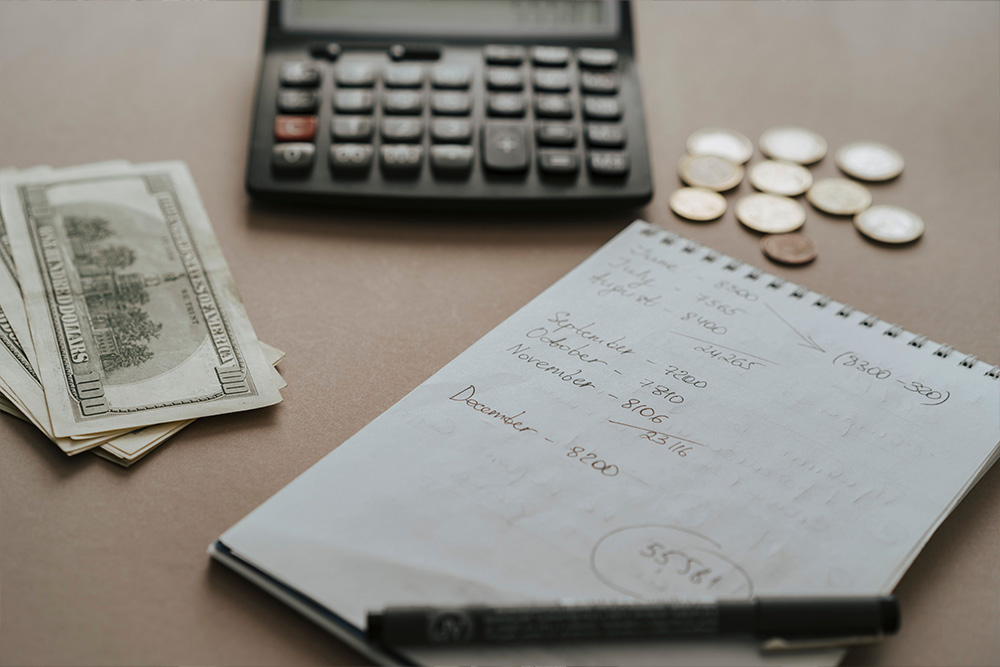
For writers leaning toward self-publishing, it helps to know which line items carry the most weight, since editing and cover design alone typically account for somewhere around 60–80% of total spend.
Editing
This often accounts for the greatest expenditure, and this happens at different levels. A developmental edit deals with story structure, flow, and characterization — the work done at the macro level prior to language issues. A copy edit will focus on clarity, consistency, accuracy, and grammar at the sentence level.
The final proofread picks up the dregs after all other forms of revision have taken place.
You may not need all of these services for each project; a manuscript that’s undergone numerous critique cycles or critique group participation may need less intervention than one that hasn’t. Prices usually go by word count. A solid copy edit for a typical novel-length manuscript often lands in the $1,500 to $2,500 range, and developmental edits tend to be higher.
Cover design
A good cover design is the next major investment, and for good reason. It’s often the first, and sometimes only, signal a potential reader gets before deciding whether to look closer. A premade cover adapted from an existing template can run a few hundred dollars. A fully custom cover, designed around the specific details of a book, tends to run somewhere between $500 and $2,500.

Formatting
This takes a completed manuscript into a ready-to-publish book, complete with all the necessary elements: appropriate page margins, chapter headings, and a tidy ebook file compatible with various devices. This could be done using affordable software tools if you’re willing to get your hands dirty with them, or you can use a professional formatter who might charge from $50 up to $500.
ISBN and distribution
These are also expenses to keep in mind, albeit smaller ones. Some marketplaces, such as Amazon Kindle Direct Publishing (KDP) can provide a free ISBN in connection with your listing on their platform.
Other companies, like IngramSpark, might impose a per-title charge or charge a percentage of sales for extensive reach across numerous retailers and distributors.
The cost of printing physical books — typically just a few dollars per unit through on-demand printing — will be deducted from the author’s royalties at the time of sale.
Marketing
Often, a writer will focus on the financial aspects of editing and design and only afterward, with a meager slice of the available budget remaining, remember that their book needs some promotional heft behind it. Conventional wisdom suggests authors should plan for their marketing budget to equal their production costs; thus, a $3,000 book likely warrants a similar amount for marketing during its initial year to effectively generate readers rather than expect them to magically appear.
Some hidden costs worth noting
Several fees can surprise first-time authors when they attempt to write a book, particularly because they are not immediately obvious.
For non-fiction books, indexing is an extra service that is usually in the ballpark of $70-$500.
If a writer is compelled to make changes to the file they have already uploaded, revision fees on certain distribution platforms may accumulate; for instance, IngramSpark charges revision fees for each change made.
Ad spending, distinct from marketing budgets, represents an additional cost primarily relevant to self-published authors. Advertising on Amazon is a pay-per-click type of spending, and a starting budget that is somewhere around $150–$300 a month should suffice to begin experimenting and learning.
Finally, for writers who choose to go with a traditional publisher, it is important to remember that “no upfront cost” doesn’t mean “no cost at all.” In addition to giving away time and control over the content, you give away a greater portion of the royalties as well.
Which path is worth it?

There’s no single right answer, and that’s not a dodge — it genuinely depends on what you’re optimizing for.
A writer looking for speed, complete creative control, and the highest possible royalty cut will usually fare better self-publishing.
A writer looking for the validation of a traditionally published name on the spine, access to booksellers’ shelves, or with no desire to involve themselves in the publishing side of things, may feel that the cost and longer process are worth the trade.
A writer with cash to invest, who desires professional support without doing all the heavy lifting may likely get it from a reputable hybrid.
The key to successfully navigating the publishing industry, regardless of your chosen approach (even if you’re on a limited budget) is to maintain realistic expectations based on accurate data. Avoid a blind commitment to one extreme, whether that means pursuing a free publishing option or investing tens of thousands of dollars.
The writers who publish successfully aren’t always the ones with the biggest budgets. More often, they’re the ones who understand which investments actually move the book forward and which ones don’t.
Your story weapon: Think about a publishing budget like a story outline
Here’s another way to think about a publishing budget — one that may feel more intuitive to you as a writer.
Every story has moments that carry more weight than others. Experienced writers know where those moments are and invest most of their attention there.
Your protagonist’s dilemma carries the full weight of your story’s throughline, while a secondary character plays a lesser role.
A publishing budget operates by the same logic. The load-bearing elements are editing and cover design. These significantly influence a reader’s decision to pick up the book and assess its content. Additionally, investing time and money in these areas typically yields the greatest impact.
Less crucial expenses, such as an expensive ISBN service, advanced software versus a cheaper one, or an extra few hundred dollars of marketing funds at launch time, are more like transitional scenes.
They are useful, but they are not what holds up the entire book. A writer with a budget limitation will usually find a way to scale back these parts or do without them, and no damage will be done. When you’re creating a publishing budget, it is helpful to ask a question similar to those used in the revision process: What essential elements does this book need to function, and which aspects are merely supplementary?
Focus your investment on the parts that carry the greatest weight, then adjust everything else around them. Just as a strong story depends on a handful of scenes that support the entire narrative, a successful publishing budget depends on a handful of investments that support the entire book. A bigger budget doesn’t automatically create a better book. A smarter budget often does.
Developing the knowledge to make confident publishing decisions is just as valuable as completing the manuscript itself. If you’re ready to strengthen every stage of your writing journey, from planning and revision to publication, join one of my next workshops: The 90-Day Novel, The 90-Day Memoir, Story Day. Each workshop provides practical instruction, expert guidance, and a supportive learning environment to help you create your strongest work.