


We’ve all been stuck in the messy middle of a story.
Inspiration strikes like raw lightning, bringing a new idea into your awareness. The sea parts and you dash to the blank page on the other side. As you start to nurse the idea to life, however, something unfortunate happens. It starts to lose its shine and you’re stuck in the middle of a draft with no end in sight.
What happened? It was such a good idea, but now you’ve stalled. All the confidence and playfulness has vanished, and has been replaced with dread and torpor. Perhaps you feel like your brilliant premise has soured and the characters that felt so alive now feel like stiff pieces on a chess board that you are moving around in an attempt to keep the story interesting.
Don’t panic. I can help.
The messy middle is often where the story starts to falter. In this article, I’ll outline some advice for clarifying and dramatizing the messy middle in order to set up a dramatic third act. Lastly, I’ll give you a Story Weapon to analyze the structure of your story and take it in new directions.
The messy middle happens when story momentum weakens, character desire loses clarity, or the plot drifts into unnecessary detours. This article explores how to strengthen causal tension using “but” and “therefore,” deepen your protagonist’s dilemma, and re-outline your story to uncover more surprising and meaningful turns.
“But” and “Therefore”
This piece of advice comes from Matt Stone and Trey Parker, the creators and head writers of the television show South Park. To keep their stories interesting, especially after so many seasons of the show, they stick to a simple rule to clarify story beats.
Writers often string together events of a plot with the words “and then.” The prince falls sick, and then the healer comes into town, and then the daughter of the healer falls for the prince, and then the healer turns out to be of royal blood.

This might work for a little bit, but as the messy middle approaches, the events start to feel less motivated.
Instead, Stone and Parker recommend linking each story beat with the words “but” and “therefore.” The prince falls sick, therefore a healer is called to town, but the healer’s daughter falls for the prince. Their love is forbidden, but the healer turns out to be of royal blood, therefore they have to find the usurper of their throne.
It may seem like a minor change, but all of a sudden the events start to flow more naturally. It establishes a causal connection between everything that happens, and the reader is naturally motivated to continue to the next page to see how these things resolve.
This is a good reminder that what keeps a story taut and lean is the efficient use of tension. If you’ve got a messy middle, try writing out the story beats you have thus far and see if there are any examples of “and then” you can approach differently.
If your story beats are sound, the premise should promise the end and the end justifies the beginning. It should unfold with a sense of inevitability.
Here’s a wonderful description of this from French dramatist Jean Anouilh’s commentary of Sophocles’ Antigone:
This is what is so convenient in tragedy. The least little turn of the wrist will do the job. Anything will set it going: a glance at a girl who happens to be lifting her arms to her hair as you go by; a feeling when you wake up on a fine morning that you’d like a little respect paid to you today, as if it were as easy to order as a second cup of coffee; one question too many, idly thrown out over a friendly drink–and the tragedy is on. The rest is automatic. You don’t need to lift a finger. The machine is in perfect order; it has been oiled ever since time began, and it runs without friction.
Too little fuel, or too long a route

It’s a long road from the start of the story to its conclusion. In the words of novelist E.L. Doctorow, “Writing a novel is like driving a car at night. You can only see as far as your headlights, but you can make the whole trip that way.”
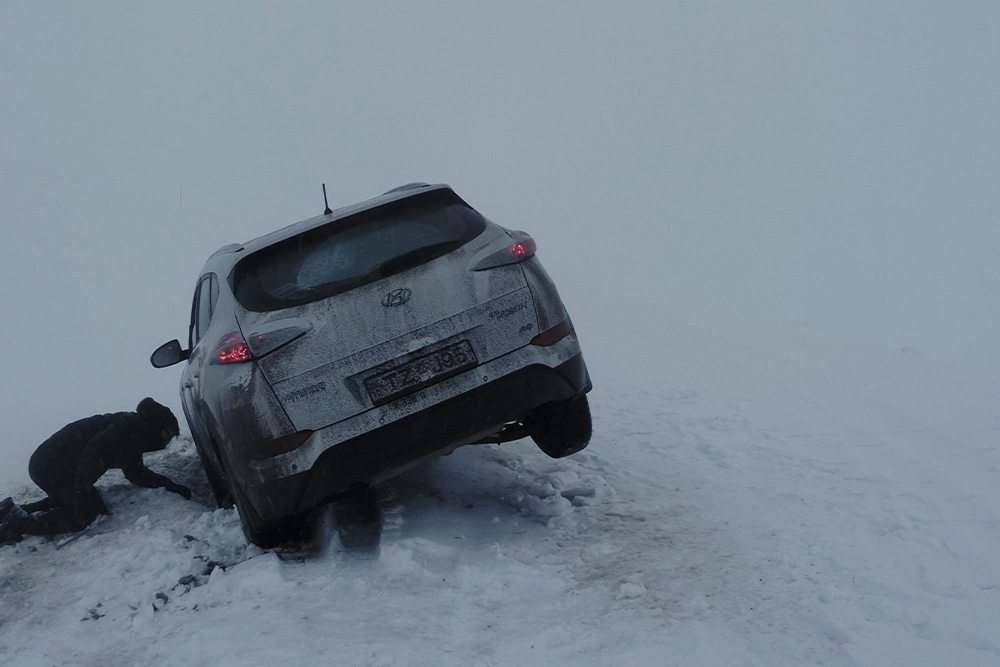
As you’re diagnosing what’s led to your car getting stuck in the muddy middle, there are a few options here. Two common problems are the fuel in your tank and the length of the journey. Let’s see how you can remedy these.
“When you are in the middle of a story it isn’t a story at all, but only a confusion; a dark roaring, a blindness, a wreckage of shattered glass and splintered wood; like a house in a whirlwind, or else a boat crushed by the icebergs or swept over the rapids, and all aboard powerless to stop it.”
– Margaret Atwood
The fuel of your story
For a story to start, you need a dilemma. Not just a problem that can be ignored or easily addressed, but a problem that can’t be solved without creating another one.
As you’re examining your protagonist’s desires that make this dilemma a demand on their time, try to differentiate between what they want and what they need. We might want to be moral, healthy, admired, or loved, but what do we need to justify our lives? If your character is pursuing fame, why do they need it to feel any sort of satisfaction? Why would they sacrifice comfort and safety to achieve it? What’s the need behind the want?

The more potent the fuel in your tank, the more easily your car will make it to the end of the road. Even the best fuel, however, won’t make it across an endless road.
Mapping the journey
Your story might be meandering because you’ve mapped a route unfit for your vehicle. There are all sorts of interesting aspects to the world of your story, but only some of those are pertinent to the story.
Are there detours and side quests you can take out? Has your worldbuilding taken center stage over the characters? By keeping your story focused on essential elements, you’re respecting both the time and intelligence of your reader. You can still allude to the other parts of your world, but perhaps we only catch glimpses out of the window as we speed along your protagonist’s journey. You’ll admire the view of the less messy middle in your rearview mirror.
Your story weapon: Do a new outline
Though it’s always wise to outline a beginning, middle, and end to your story, a messy middle can be a sign that you’re ushering the story in a direction that doesn’t quite fit. For some reason, the characters are resisting going in that direction. If this is the case, the key is to hold your story loosely.
This is a completely normal part of writing a first draft. You’ve mapped out a route that you think will work, but you’re only estimating where the journey will take you.
Retrace your steps and see where the road signs might suggest another direction is possible. I always say that if you know the story is going right, then you must go left.
Let me give you an example:
In the middle of the film, It’s a Wonderful Life, Mr. Potter offers George Bailey a job. He sees that while George is his chief rival in town, if he can get George to work for him, he will succeed in controlling the town. He offers George a great salary and the opportunity to leave Bedford Falls to travel to New York and Europe. And what does George do with this offer? Well, ultimately, he tells Potter to go to hell (if not in those exact words), but first he considers taking the job!
Why?
Because this is how meaning gets conveyed.
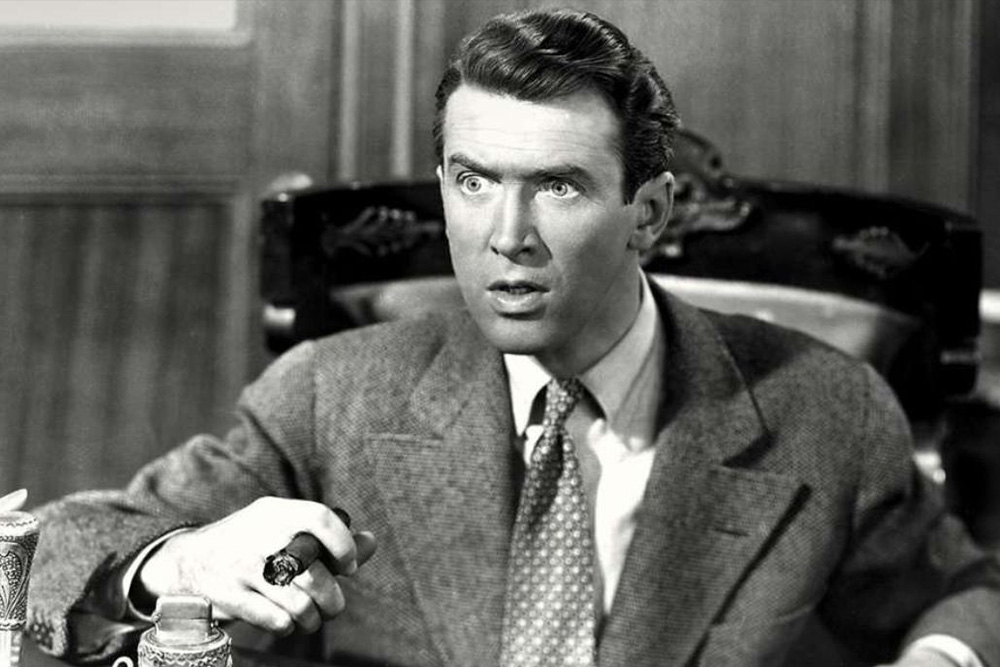
If you know you’re going to go right (George refuses the offer) you must go left (George considers accepting the offer.) In this way, we understand the nature of his dilemma. George is so desperate to leave Bedford Falls that he considers making a deal with a man who is ostensibly a stand-in for the devil.
Notice if there are choices your protagonist might make that you’re resisting. Is there a part of this world that you’re afraid to explore? Is there something that feels forbidden? Odds are, that’s exactly where you need to take the story. Exploring the shadows of your psyche and your story is part of the reason we write at all. It’s why the characters evolve and why the writer does too.
You might look at this like a detective on a case, looking for clues to the final destination of the story. Trust that the facts are all there.
As you revisit the motivations and desires of your characters, and walk back to the places you’ve visited so far, stop where you can feel the heart of the story clearly. From there, having relinquished your attachment to the way you think the story should go, see where it leads you.
This is an exciting part of the journey. You’re creating an ending that even you couldn’t have seen coming from the messy middle.
Working through the messy middle is not a sign of failure, but an essential stage in developing a story that can truly sustain itself. Navigate this process with greater focus and support in one of my next workshops: The 90-Day Novel, The 90-Day Memoir, Story Day.