


An allegory is like taking a step back in an art gallery to analyze a painting in its entirety. Characters become like colors in a painter’s toolbox. Their actions portray the subject of the painting.
Stories often operate on more than one level, and allegory is one way writers can layer meaning below the surface narrative. Characters, events, and settings become symbols that convey moral, political, philosophical, or spiritual truths. In this article, I will explore what makes a story allegorical, go over examples from literature and film, and I’ll give you a Story Weapon on how to enrich your own writing with allegory.
Allegory is a storytelling technique you can use in which characters, events, and settings symbolically represent deeper moral, political, or philosophical ideas, allowing a narrative to operate on multiple levels at once. This article explains how allegories work, offers well-known examples, and provides guidance on how to incorporate allegory effectively into your own writing.
What is allegory?
Allegory is a literary device in which a character, event, or place represents deeper ideas or meaning throughout a story. It has been used to showcase moral or political values, illustrate complex or abstract ideas, and comment on society in ways that make it accessible to a broad audience.
This is more than simple metaphor, symbolism, or even extended metaphors. Allegory uses these elements to convey a grander idea that might have political, moral, religious, or ethical connotations. Symbolism and metaphors are building blocks of allegories.
“A man’s life of any worth is a continual allegory, and very few eyes can see the mystery of his life, a life like the scriptures, figurative.”
– John Keats
Core elements in allegory
For an allegory to be effective, it must have the following characteristics.
- Extended symbolism: Symbols in an allegory are not confined to single moments, but extend through the entire narrative.
- Dual meaning: They have two layers of interpretation. One is a literal, surface-level story, and the other is a deeper, more symbolic meaning.
- Didactic purpose: Allegories are vehicles for complex ideas and can be used to teach an important moral lesson, express a philosophical idea, or make a political comment. Some are on the nose, like Aesop’s fables, while others approach their message more tactfully.
- Need for interpretation: While allegories can often be easy to spot, sometimes there is a need for greater interpretation, as readers must engage in critical thinking and analyze the story to discern the hidden meaning.

Allegory examples
There is no simpler example than the Tortoise and the Hare. By putting these friendly faces on something more nebulous — impatience and patience — we sneak lessons into the bedtime stories we tell our children. Fables, specifically, are a very short type of allegory meant to teach a clear moral point.

Some more complex examples you may be familiar with include:
- “The Lottery” – This short story shows how blindly following a group mentality can have dangerous or even fatal results.
- Animal Farm – The farm represents a historical period and real-life figures in Russia during the Bolshevik Revolution. George Orwell explores themes of power and corruption, class struggle and inequality, propaganda, totalitarianism, and more.
- The Matrix – This movie written and directed by the Wachowski Sisters embodies Plato’s own allegory of the cave: the people unaware they’re prisoners living in a false reality.
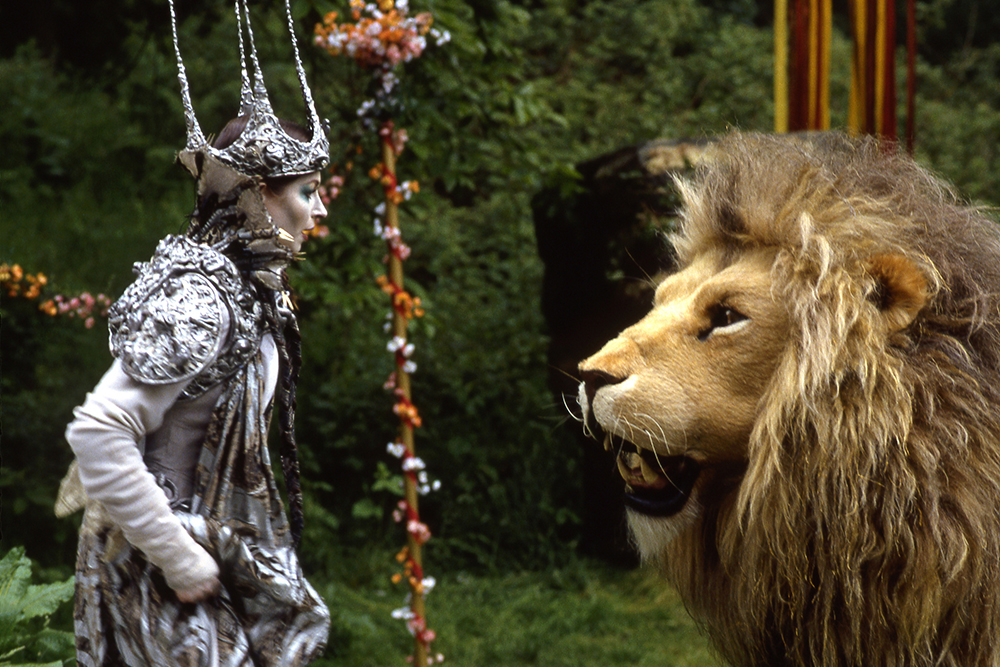
- The Lion, the Witch, and the Wardrobe – C.S. Lewis’ tale is a classic example of a Christian allegory in a children’s novel. Many characters and events in the story symbolize people and events from the Bible. Aslan represents Christ, and his death on the stone table and subsequent resurrection are allegories to the biblical narrative of sacrifice, death, and rebirth.
- The Lorax – Here Dr. Seuss warns of the dangers of industrialization and consumerism as they slowly destroy the natural world. The Lorax symbolizes trees and nature to teach an important lesson about preserving the natural world before it’s too late.
- Paradise Lost – This epic poem contains subtle political allegories wrapped in a story about the fall of Lucifer from heaven. While being a biblical story, Milton uses it as a metaphor for the political turmoil of the English Civil War. With this backdrop, the story explores the themes of authority and rebellion, freedom and punishment.
The driving purpose behind an allegory can be historical, religious, political, moral, or even philosophical. Allegories invite readers or viewers to engage with the story on multiple levels. Symbolic clues help them peel back the layers to the narrative, and explore themes both literally and figuratively.
Your story weapon: How you can use allegory
There is nothing more enduring than a well-told allegorical story. The thing to remember is that allegory thrives best in subtlety. By using an indirect approach to sensitive topics, you can reach readers that might not otherwise connect with your message.
Think of the idea you want to express to your readers or audience. Does it relate to the society you currently live in? Plan out how you will translate real-world events and people into fictional scenes and characters. Are you touching on something at a more personal or intellectual level? Think of ways you can make that experience universal in a symbolic way that is easy to understand.
When assigning your characters and writing scenes, make sure they have something in common with their real-world counterparts. However, trust your audience to determine who represents whom and what on their own. Let them know to read between the lines by leaving subtle clues. This will create intrigue.
While the allegory is important, the surface story must be able to stand on its own. It must have a beginning, a middle, and lead to a satisfying conclusion that supports the underlying message. Sometimes, the underlying message can be abstract and difficult to discern for a wider audience; as such, the inherent plot must be entertaining in its own right to invite readers to absorb the story at whatever level suits them.
In writing a compelling allegory, the key to remember is consistency and clarity in maintaining the relationship between your story and the message you’re trying to convey.
Join one of my next workshops to refine your craft, strengthen your storytelling discipline, and develop work that invites readers to engage deeply and think critically: The 90-Day Novel, The 90-Day Memoir, Story Day.