




Once you’ve completed an editing checklist on your manuscript, you may find that your story requires a more substantial rewrite.
Often dreaded by writers, this process involves opening up the hood of your story, and plunging your hands into the engine.
Something isn’t working properly — maybe your plot has a hole in it, the protagonist lacks motivation, or the ending doesn’t ring true. Whatever the case may be, it takes nerves of steel to dismantle the story you’ve spent care in creating, in the belief that a more dynamic and compelling version exists on the other side of the rewrite.
In this article, I will explain the logic of rewriting a story, offer an example from a popular television show, and finally, leave you with a Story Weapon on trusting your original vision.
The rewrite is crucial to protecting your vision for your story. Think of your story as an “emotion machine” and simplify while protecting your vision in order to get it flight-ready. By rearranging your story with care you can stress-test your work to focus on life instead of efficiency alone.
Story as machine
Stories are “emotion machines.” In creating a story, you are marrying the wildness of your imagination to the rigor of story structure to create a compelling narrative that leads to some kind of transformative experience for your protagonist.
There’s an apt image which depicts the progress in rocket engines at SpaceX:
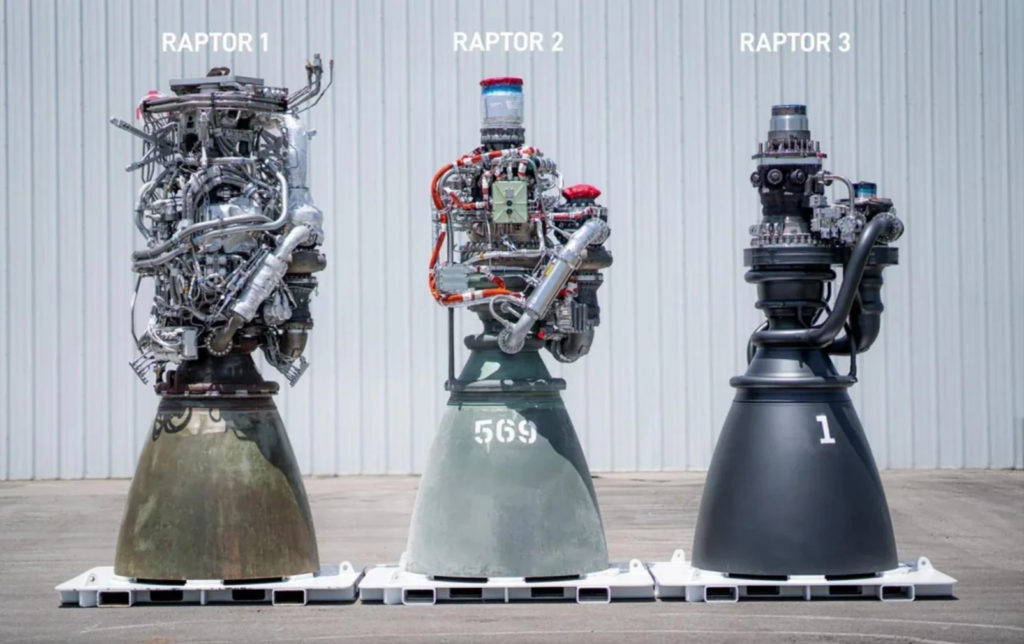
You can see how the design progresses across three iterations. The first has clunky, external plumbing — an extreme complexity, which gets simplified more and more across the next two iterations into a streamlined design. Perhaps the engineers realized that certain wires were redundant or found ways to consolidate parts, combining separate pieces with different functions into a single structure.

Rewriting a story is much the same as designing a rocket in this way. Both attempt to “escape the atmosphere,” and require a certain “escape velocity” to truly succeed. You want to propel your reader’s attention from the first line to the last, and capture the attention of the marketplace at large.
Spare parts, in the form of unnecessary story beats, redundant characters, and general inefficiencies in the way the story is told, all drag it back down and prevent your story from truly taking flight.
Disney’s Andor
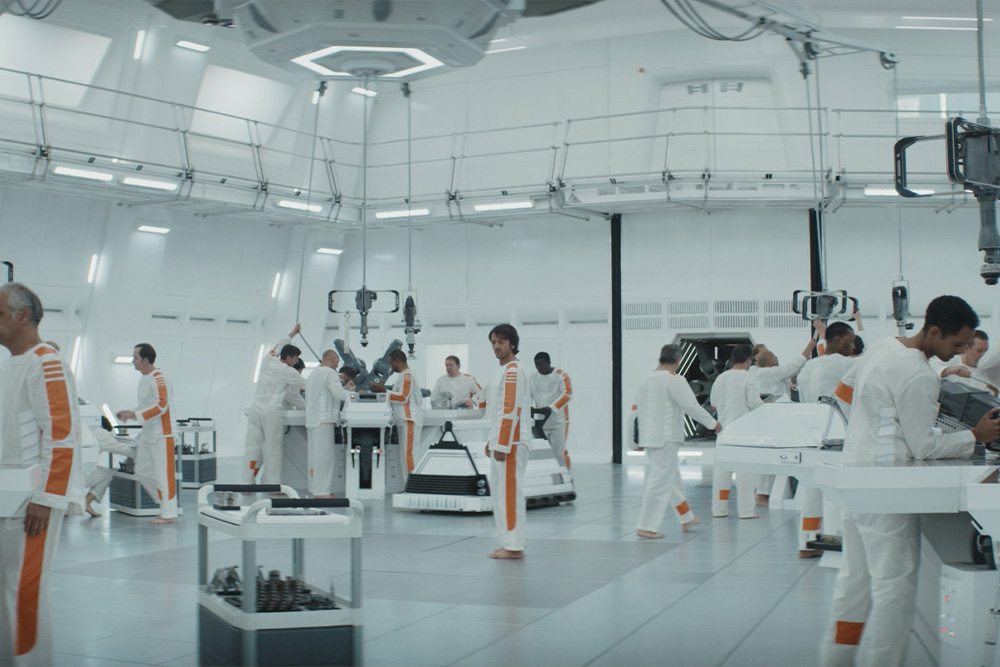
To understand this, it may help to examine a television show, a Disney series called Andor. The story is set in the Star Wars universe, and follows a thief, Cassian Andor, as he transforms into a leader of the rebellion. Here’s a quick breakdown on part of Andor’s storyline:
- In the show’s first episode, Cassian kills two imperial guards who were trying to bully him while he was attempting to track down his long lost sister.
- He returns home to a planet called Ferrix, where he attempts to hide and form an alibi. Luckily, only a handful of allies connect him to the crime based on the vague description put out by the authorities.
- His friend’s love interest, Timm Karlo, ultimately reports Andor to the authorities — jealous of Cassian’s past relationship with his girlfriend. Authorities swarm Ferrix to arrest Cassian. He narrowly escapes with the help of a mysterious stranger who then hires him to steal a massive sum from the Empire.
- Following the success of the heist, Andor returns to Ferrix to convince his mother to leave the planet with him. When she refuses, he takes his money to a beach planet to live in luxury, only to be arbitrarily arrested by the Empire.
- Taken to prison, Andor soon escapes. He returns again to Ferrix upon hearing of the death of his mother — where the finale takes place.
While this show is rightfully praised for its writing and superb character development, there are still areas where the story could be tightened.
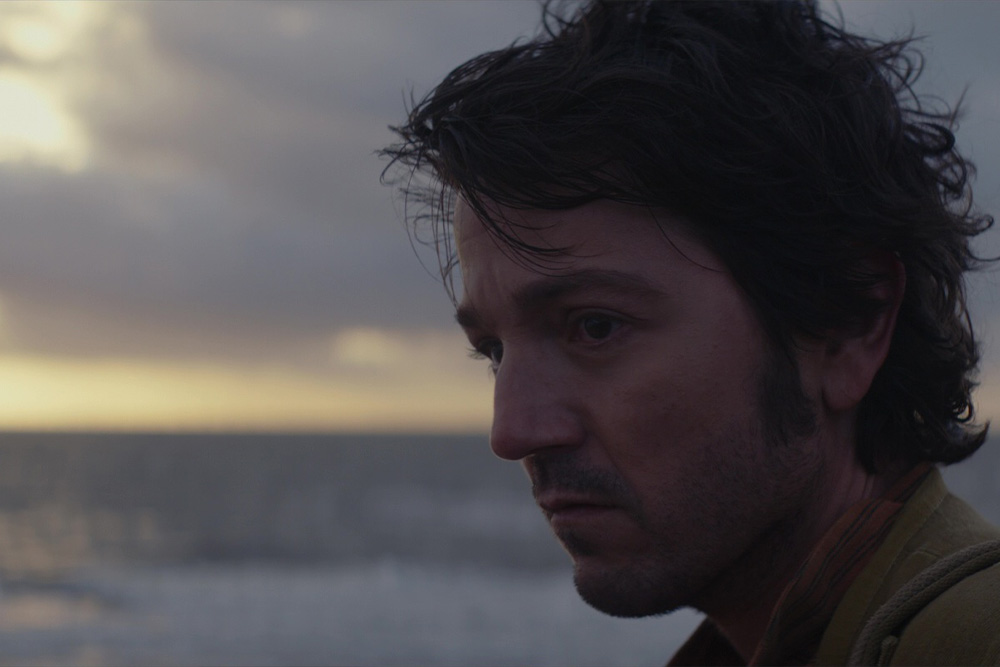
For instance, Andor’s return to Ferrix in point four above serves little purpose. It dampens the impact of his second homecoming in point six. The story could increase efficiency by having a single, compelling reason for him to return to Ferrix, rather than two, semi-compelling reasons.
Additionally, Andor’s arrest in point four is deliberately random: he was simply walking down the wrong street, at the wrong time. While this is written to emphasize the empire’s oppression, there are other examples which serve this same purpose throughout the story.
Meanwhile, Andor commits two serious crimes which could reasonably land him in prison, which feels like a missed opportunity to:
- Remove a redundancy: The viewer understands that the Empire are the villains without the added example of an unjust arrest.
- Inject purpose: Having Andor face serious consequences for his actions could give the story a stronger throughline. Instead of committing a crime, narrowly escaping, committing a second crime, narrowly escaping again, and finally getting arrested for no reason — the story could weave these elements into a causal string of events.
Streamlining story beats

One way to think about rewriting is to imagine the same core pieces arranged in a different order, creating a cleaner line.
In Andor, you have powerful ingredients: a protagonist who kills imperial officers, a brutal prison, a mysterious stranger with a high‑stakes heist, and a home planet with people he cares about.
A more streamlined version of this arc might look something like this:
- Andor accidentally kills two imperial guards while searching for his sister, then returns to Ferrix, where he is identified, reported, and arrested.
- In prison, Cassian encounters a mysterious stranger, and together they escape. A detained leader of the rebellion, the stranger then recruits Cassian to help steal a massive sum from the Empire.
- After taking his cut from the mission, Andor returns to Ferrix to reunite with his mother — only to find that, during his detention, she has passed away. Driven by grief, he is finally pushed to join the fight against the Empire.
Obviously, this rearrangement throws the rest of the story into disarray. Side characters, subplots, and emotional beats would also have to be rearranged in order to accommodate that change. But that is exactly what a rewrite does.
It’s like throwing a rock into a pond, and watching the ripple effects.
Your story weapon: Protect your vision
There is real value in the process of stress-testing each piece of your story and making sure scenes are building in meaning as it progresses. You’ll understand it more deeply by asking, “What would happen if this came before that?” or “What if this character disappeared entirely?”
But there is a difference between revising a story and losing faith in it. If you’re not careful about protecting the heart of your story, then at some point your changes might start to quietly drain it of the very quality that made it worth telling in the first place.
So here is the test. When you put your second draft next to the original, ask yourself not which one is more efficient, but which one is more alive. If the rewrite has become too sterile, that’s still not a failure. That’s information. Take what the rewrite process taught you, honor the vision you started with, and carry on with the next draft. That’s how writers grow.
Each revision offers not only an opportunity to refine your story structure and clarity, but to better align your work with its original intent. Join my Rewrite Master Class for support in navigating this stage of your writing with greater precision and confidence.